Technology
Impedance Flow Cytometry for Comprehensive Pollen Analysis
Game-Changing Technology for the Seed Industry
Why Conventional Pollen Assessment Methods Are Limiting
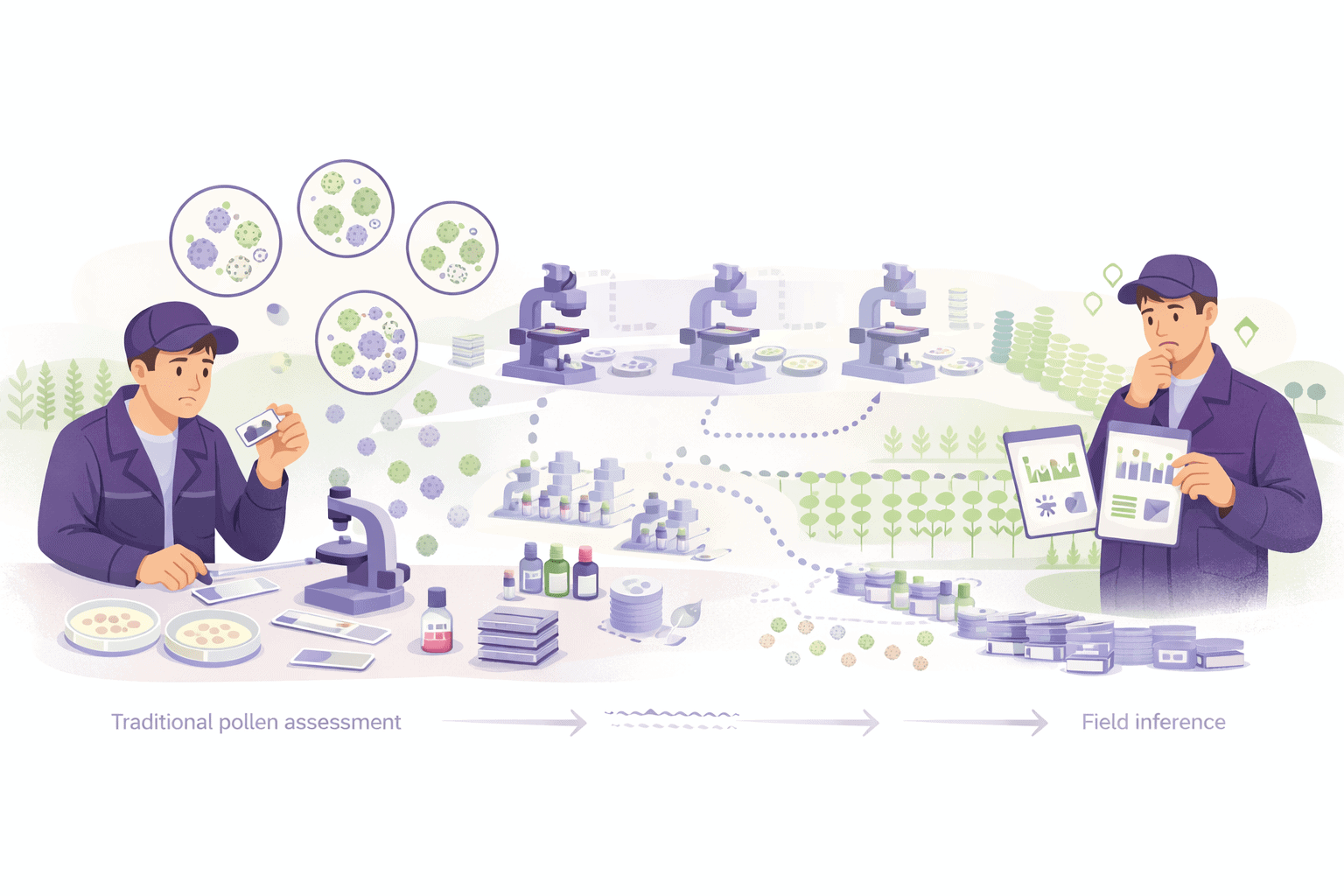
Traditionally, pollen analysis methods include pollen germination and staining to determine pollen viability, as well as visual assessment to estimate the amount of pollen released.
However, these approaches have several limitations and are no longer adequate in today’s environment where reliable data is essential:
- Operator-dependent variability
- Limited reproducibility
- Sensitivity to inconsistencies in staining protocols
- Excessive workload for high throughput
- Not applicable to pollen from all crops
- Very limited information content (viability)
Consequently, to address today’s challenges in plant breeding and seed production, this level of information does not provide the necessary detail to build knowledge about the reproductive traits of individual lines and to improve breeding and seed production processes.
Without Knowledge about Line-Dependent Reproductive Performance No Improvement in Breeding and Seed Production Processes
- Optimization of seed yield
- Optimized female-to-male ratios
- Improved breeding results
- Better breeding performance
- Earlier selection of pollinator lines
- Identification of stress-prone and stress-resistant lines

See the Measurement Principle in Action
Understanding the physical measurement principle clarifies why impedance-based analysis provides objective and reproducible results.
More specifically, this short explainer video illustrates how the system electrically characterizes individual pollen grains within a precisely defined microfluidic channel.
The Measurement Principle: Impedance Flow Cytometry
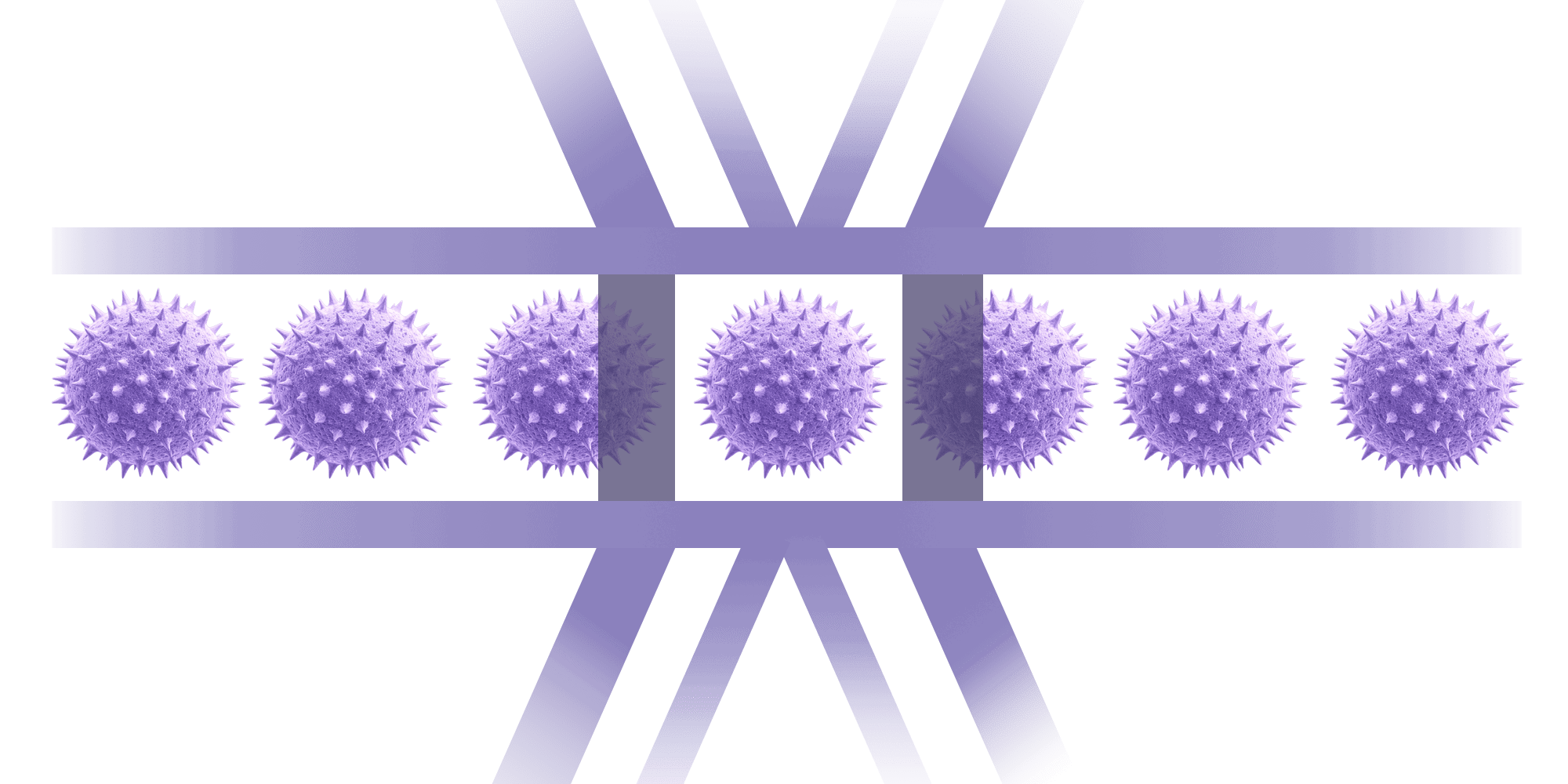
Impedance flow cytometry is an analysis technique based on the characterization of single cells flowing through a microfluidic channel with an applied electrical field.
Single-Cell Flow through Microfluidic Chips
Electrical Impedance Measurement
- Cell size and volume
- Membrane capacitance
- Cytoplasmic conductivity
- Internal structural integrity
Population-Level Data Generation
By measuring thousands of individual pollen grains within seconds, the technology obtains statistically robust population distributions.
As a result, this enables objective classification and quantitative comparison between samples.
What Is Measured — and Why It Matters
Impedance-based pollen analysis provides measurable biophysical parameters such as:

Membrane Integrity
Reflecting structural stability and viability-related characteristics.
Cytoplasmic Conductivity
Providing insight into intracellular composition and physiological state.
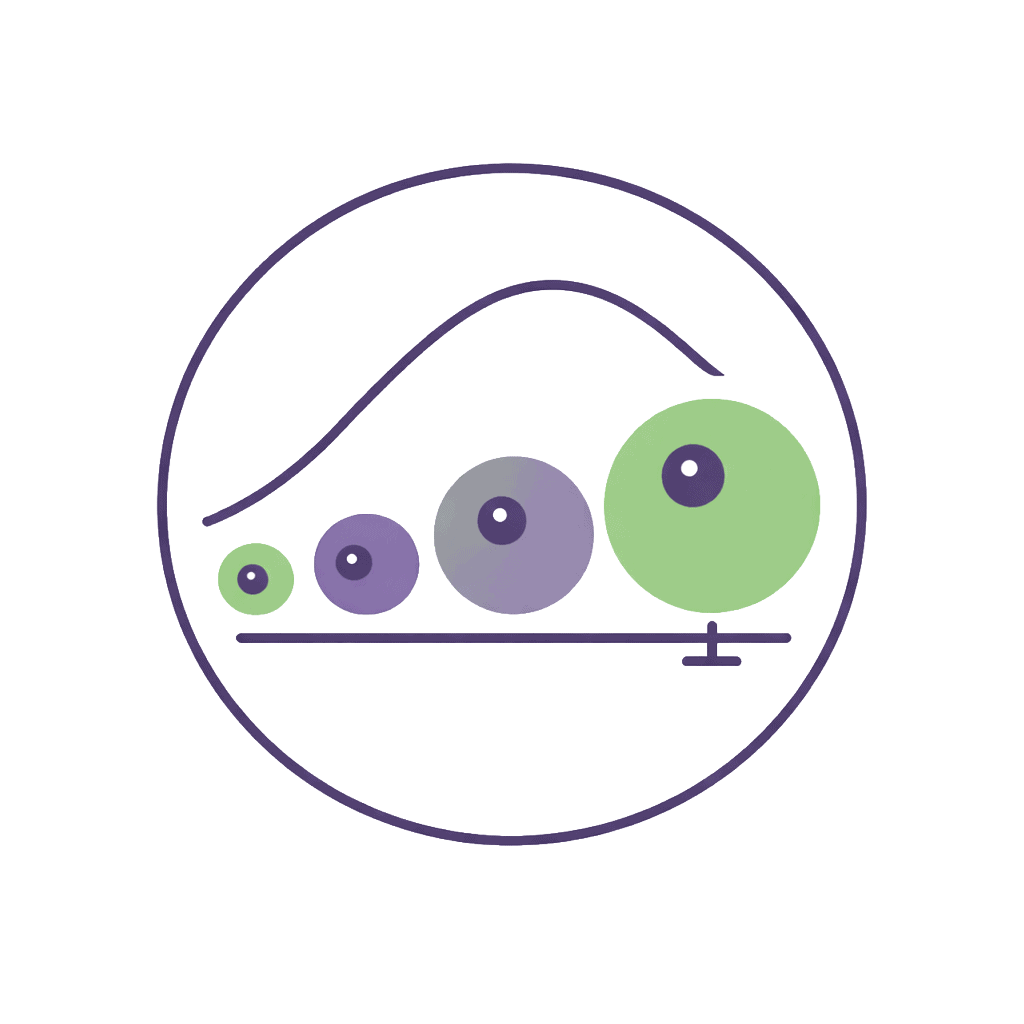
Cell Size and Volume Distribution
Enabling detection of morphological variation and developmental stage differences.

Population Heterogeneity
Identification of subpopulations that may influence fertilization performance.
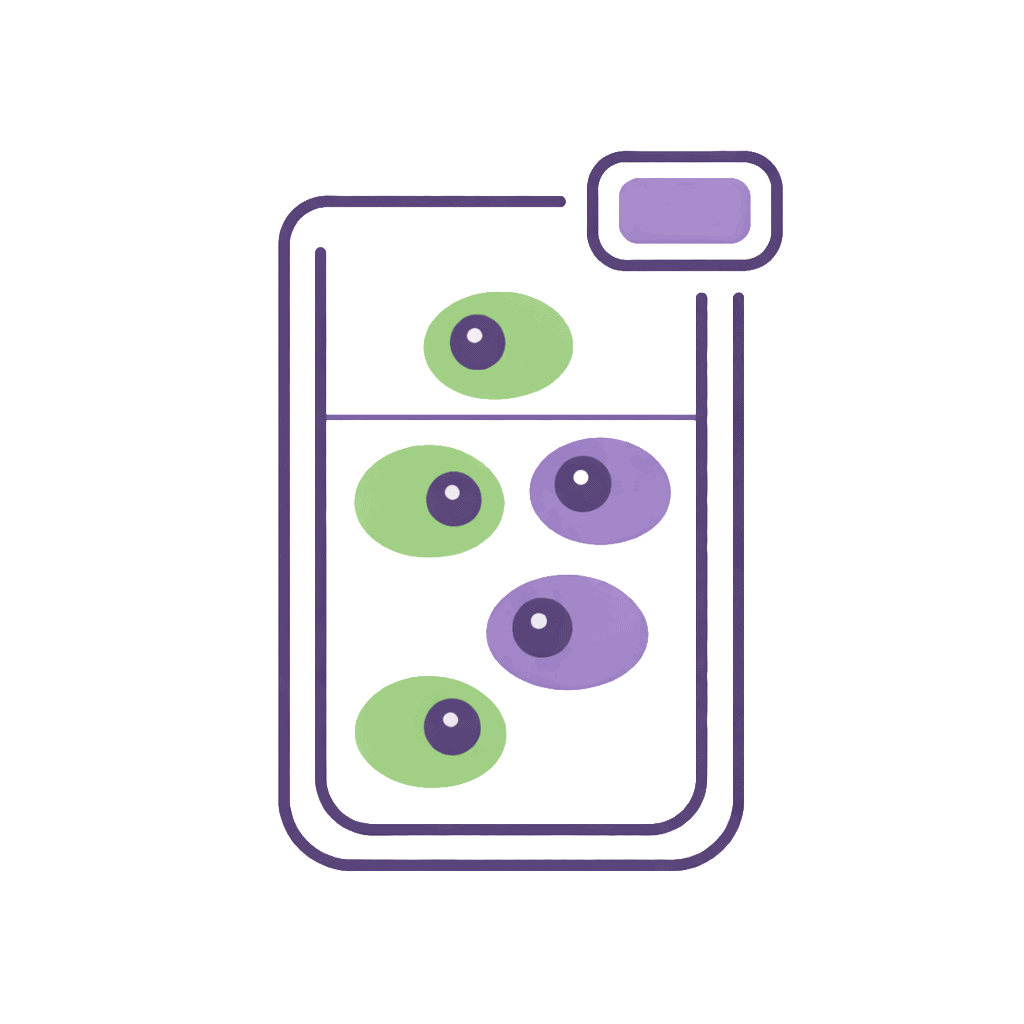
Concentration per Sample
Precise counting of each single cell.
Together, these parameters enable objective assessment of cell quantity and cell health status. As a result, they support reliable line-to-line comparison, evaluation of environmental impacts, informed early-stage optimization decisions, and consistent cross-site benchmarking.
Designed Specifically for Plant Reproductive Biology
Importantly, Amphasys has specifically adapted and optimized impedance flow cytometry — the underlying technology in the Ampha Z40 and Ampha P20 Pollen Analyzers — for the analysis of pollen cells in the seed industry and academia.
The measurement ecosystem consists of:
Dedicated instrument platform Crop-specific and universal microfluidic measurement chips Integrated data analysis softwareThis specialization distinguishes plant cell focused impedance flow cytometry from conventional biomedical flow cytometry systems.










Frequently Asked Questions
How does impedance-based pollen analysis differ from conventional methods?
Conventional methods such as pollen germination and staining rely on the visual assessment of stained or germinated pollen cells. Because these assessments are subjective and vary depending on the user, the results are not reproducible.
Impedance flow cytometry electronically measures the intrinsic biophysical properties of each individual pollen cell, thus providing quantitative and statistically robust population data that are independent of visual interpretation.
Does Impedance Flow Cytometry still classify viable and non-viable pollen?
Yes. Electrical impedance parameters reflect membrane integrity and internal cell properties, thus enabling an objective classification of viable and damaged pollen populations. In addition to assessing viable/non-viable pollen, this provides significantly more in-depth information about the health and status of a cell.
How many pollen grains are measured per sample?
Can heterogeneous pollen populations be detected?
Is the measurement reproducible across different sites and standardizable?
Yes. The measurement relies on electrical cell parameters, which the system measures and evaluates automatically. This reduces operator errors, improves comparability between different locations, and makes the method standardizable.
Explore your application with Amphasys
Ready to improve your breeding efficiency or seed production yield? Our experts are here to help you find the right solution for your specific needs.