Other crops and Seed Industry Applications
Quantitative pollen analysis for reproductive knowledge and improvement of breeding and seed production processes.
From Reproductive Challenges to Measurable Improvements
From systematic pollen analysis and crop-specific reproductive problems to individual research questions, Amphasys offers label-free, quantitative analysis of pollen from all crops. Amphasys technology thus supports data-driven optimization in plant breeding, seed production, and applied research.
Reproductive success is the decisive factor for efficiency and consistency in breeding programs and reliably high yields in seed production. Regardless of the crop, important decisions depend on understanding reproductive performance early, objectively, and comprehensively.
The optimization questions that drive seed industry decisions
In both plant breeding and seed production, reproductive performance is rarely considered in isolation. Even though it is ultimately one of, or even the decisive, factor, many other parameters influence the selection of a certain line and its later commercialization. For efficient breeding and seed production, the knowledge about reproduction is decisive for:
- Early selection of the best pollinator lines
- Assessing the pollination performance of different lines with respect of abiotic stress influences
- Optimizing the male-to-female ratio in hybrid seed production
- Improving the efficiency of double haploid production
- Investigating the causes of differing seed sets or fertilization success
Knowing reproductive properties of lines improves plant breeding and seed production.

Why knowledge about reproductive characteristics is indispensable

Despite its importance, knowledge about the reproductive performance of genetic material is not yet systematically collected. This leads to:
- Late or unfavorable selection of lines
- Delays in the breeding process
- Failure to recognize the influence of abiotic stress
- Non-optimized male to female ratio
- Loss of pollen viability due to poor storage protocols
- Use of unnecessary pollen quantities and waste of material
Knowledge of reproductive traits based on systematically collected measurements of pollen quality can change these deficiencies and improve processes and results.
What Amphasys measures — and why it matters
Amphasys technology enables the quantitative and systematic characterization of pollen quality using label-free impedance flow cytometry.
This allows users to:
- Precisely determine pollen viability and quantity
- Measure the influence of abiotic stress on pollen development
- Uniquely characterize the pollen quality of all crops
- Compare the pollen quality of different lines and select the best lines
- Optimize seed production processes and increase yield
Systematic measurements of pollen quality provide insights into reproductive traits, leading to improved results in breeding and seed production.
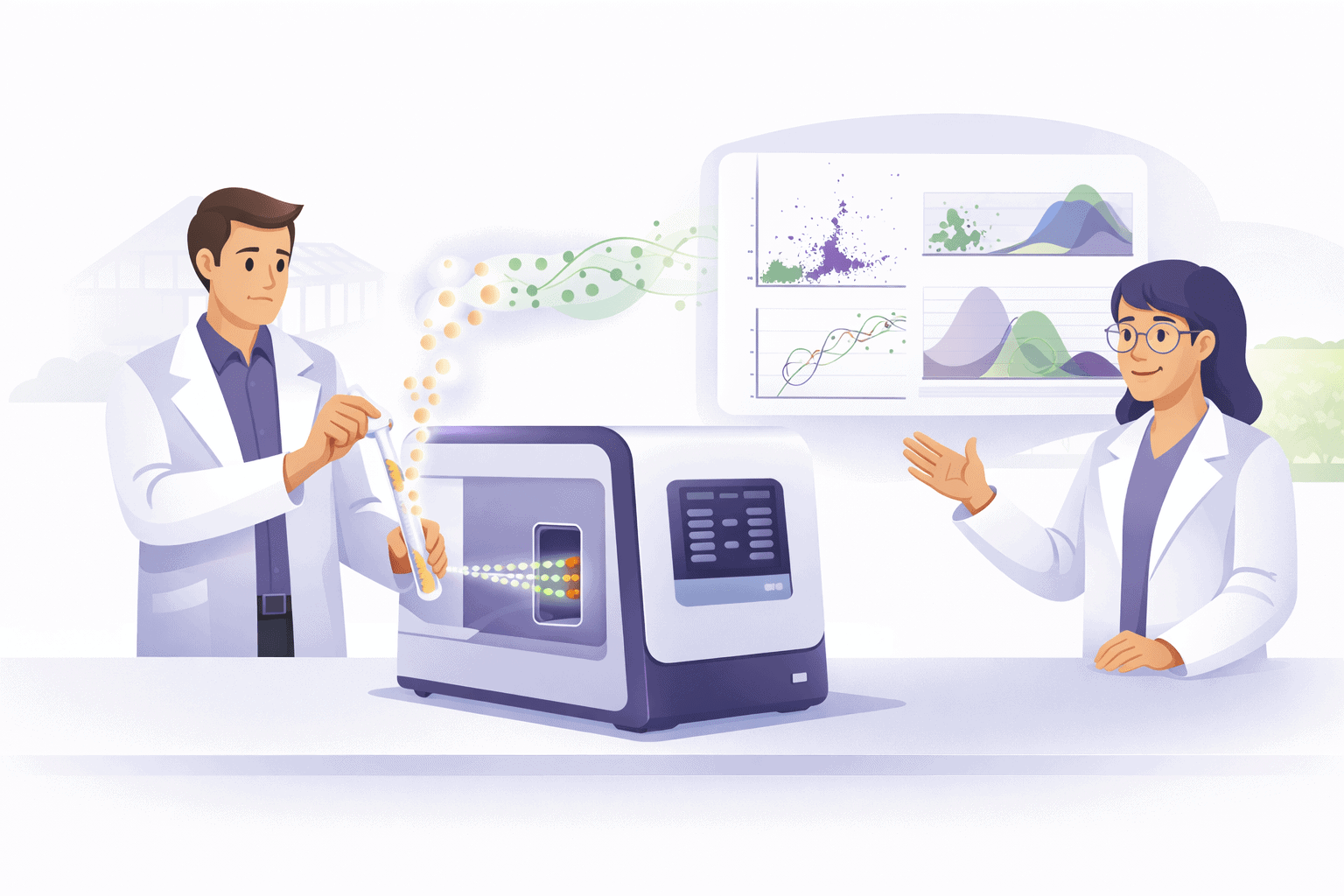
Technology for seed industry applications
Amphasys provides a flexible technology platform for applied seed industry workflows — from exploratory reproductive studies to routine screening in breeding and seed production.
The combination of a robust pollen cell analyzer and adaptable chip technology enables objective pollen and reproductive cell analysis across a broad range of crops and applications.
Ampha Z40
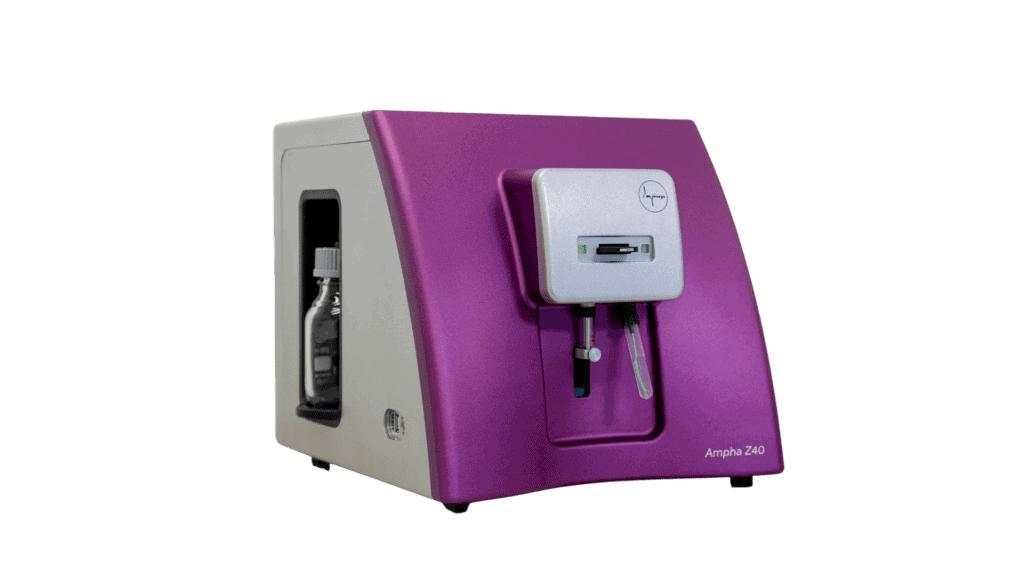
Label-free pollen quality analysis for research, breeding and seed production
Designed for high-throughput and detailed research, the Ampha Z40 is ideal for all tasks from R&D to seed production. With full protocol flexibility, advanced analytics, and compatibility with all Amphasys measurement chips, it provides deep insights into pollen performance whether it be in breeding programs or seed production research.
Pollen of any plant can be measured with Amphasys technology, determining viability, pollen quantity, and the ratio of aberrant cells. Amphasys provides templates and measurement recommendations for more than 250 crops.
AmphaChip
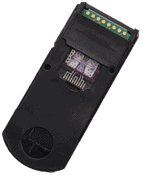
Flexible chip technology for all kinds of pollen and applications
The AmphaChip technology enables label-free, single-cell analysis of all kind of plant pollen. Measurement chips with different channel diameters guarantee high sensitivity and optimal measurement conditions according to the size of the pollen grain. Recommendations for a large variety of crops are available in the Amphasys Pollen Analysis Instructions. For all other plant species, please contact Amphasys.
Combined with the Ampha Z40, AmphaChips allow customers to address a wide range of applications in the seed industry and academia— even when no standardized application protocol exists.
Pollen Projects
Project-based pollen studies with Amphasys: a structured entry point for exploratory applications.
At Amphasys, we offer tailored, project‑based services to help customers explore and validate pollen‑related questions with confidence. Whether you want to run a proof‑of‑concept, or conduct targeted research—such as pollen storage studies, heat‑tolerance assessments, climate‑impact evaluations, or line characterization—our experts are ready to support you.
We also provide knowledge‑extension projects for teams needing deeper insights and application support, and Results‑as‑a‑Service for customers who temporarily require skilled specialists to perform measurements.
Whatever your goal, we deliver clear, actionable data to accelerate your decision‑making and strengthen your breeding or seed production research efforts.
Pollen Projects allow to:

Evaluate specific reproductive performance questions

Overcome the temporary shortage of skilled workers

Explore the benefits of Amphasys technology

Explore new crops, breeding systems, or production scenarios
Pollen Projects are often used as a first step before transitioning to routine in-house measurement.














Frequently Asked Questions
Is Amphasys technology limited to specific crops or applications?
No. While Amphasys supports established, crop-specific workflows with specific templates and recommendations, the technology is applicable across pollen of all plants.
Do I need a fully defined application or protocol to get started?
No. Whatever pollen cells you want to study, either protocols and recommendations are available or our Amphasys experts support you. Many use cases start with a biological or production-related question rather than a finalized measurement protocol.
When is this approach particularly useful?
This approach is ideally suited for systematic pollen quality analysis in breeding and seed production. Without knowledge of the reproductive performance of lines, decisions are based on assumptions rather than data. This approach enables well-founded decisions for an efficient breeding process and optimized seed production.
Is pollen quality analysis relevant beyond breeding and seed production?
Yes. In addition to plant breeding and seed production, Amphasys technology is used in applied and academic research to investigate reproductive performance, variability or environmental influences in all plant species. Identifying QTLs, assessing ovule viability, and predicting embryo yield after microspore induction are examples of such research.
How much training is needed to use the system?
Minimal. The training on the Ampha Z40 includes several sessions. However, the device is easy to use and the software is very intuitive, allowing the creation of templates for simplified measurement processes.
Explore your application with Amphasys
Ready to improve your breeding efficiency or seed production yield? Our experts are here to help you find the right solution for your specific needs.