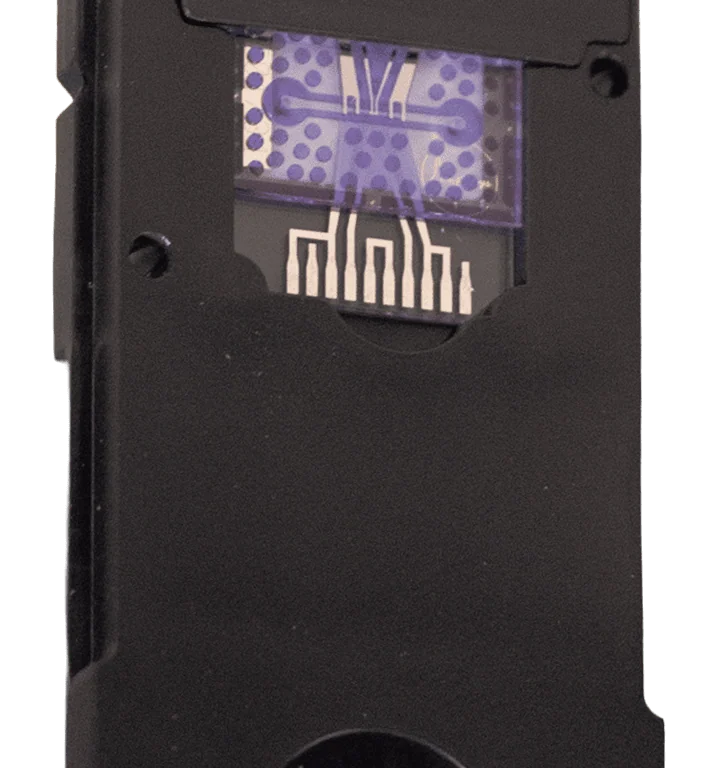
AmphaChip
Microfluidic chips for impedance-based pollen measurements: where the insights are gained
Microfluidic Chips for Pollen Analysis
The AmphaChip is a patented microfluidic chip through which the suspension of a buffer with the pollen cells during a measurement flows. Electrodes generate an electric field, and the system measures the response of the cells to this electric field. As a result, different channel sizes ensure the highest sensitivity according to the size of the pollen cell.
In addition, the microfluidic chips are compatible with both the Ampha Z40 and the Ampha P20 for impedance-based pollen measurements.
Chip Types
The AmphaChip measurement chip portfolio comprises two categories: universal chips and crop-specific chips.
Amphasys offers universal chips in four channel sizes, depending on the size of the pollen being analyzed. A chip of a defined channel size can therefore measure pollen from all crops of that size. Furthermore, recommendations for buffer-chip combinations for over 250 crops are available.
In contrast, each crop-specific chip targets a single crop and enables automated data analysis, triggered by the chip. The results are then automatically available immediately after measurement.
Amphasys guarantees 1,000 measurements per chip.
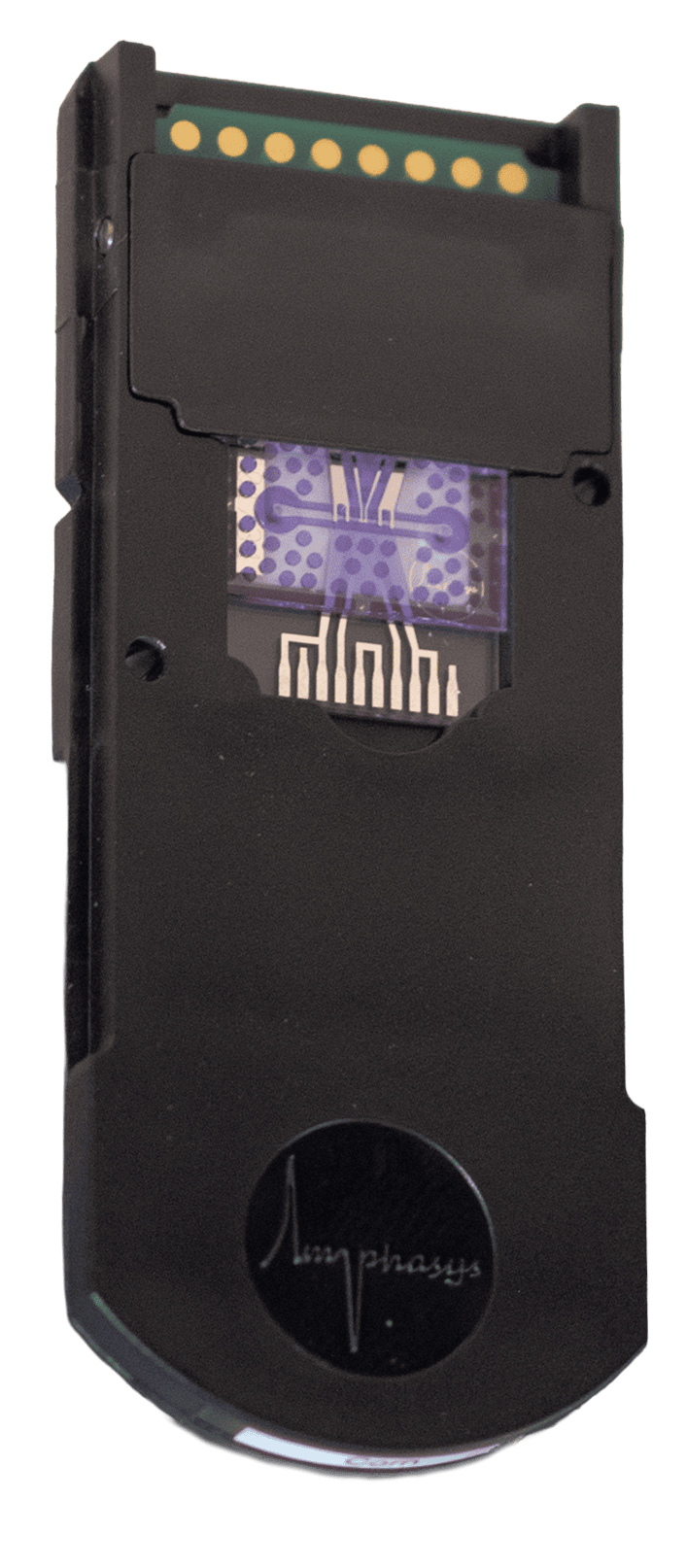
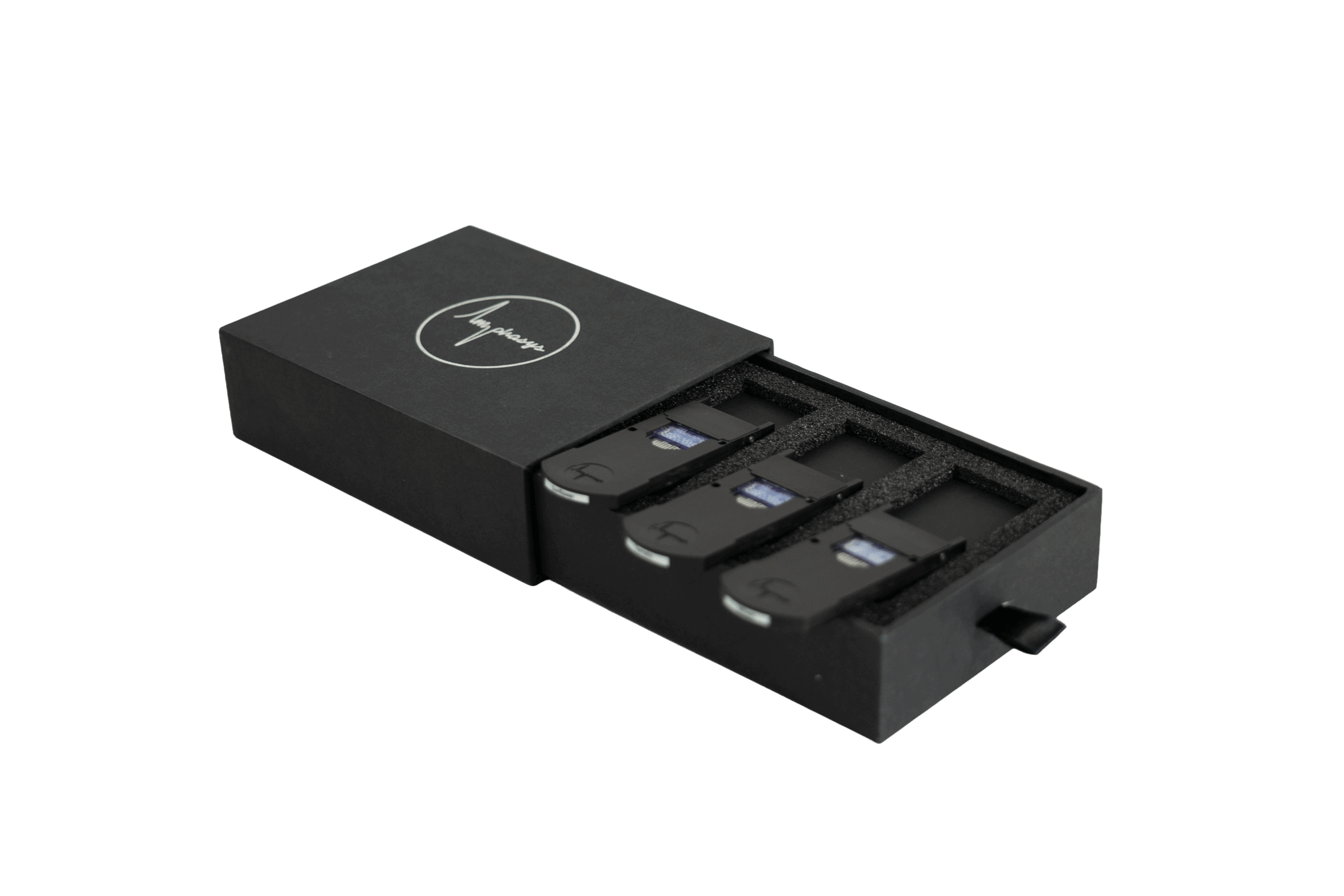
Universal Chips
Universal chips are available with microfluidic channel sizes of:
- 80 µm
- 120 µm
- 250 µm
- 300 µm
To achieve optimal measurement results, users select the ideal channel dimension based on the pollen cell size. In addition, recommendations for over 250 plant cells are available.
Universal chips:
- Measure pollen of all plants
- Provide full flexibility for research applications
- Allow user-defined gating strategies
- Support custom sampling protocols
However, universal chips are compatible only with the Ampha Z40.
Crop-Specific Chips
Crop-specific chips are available for the most common crops.
In combination with the Ampha P20 they provide:
- Pollen measurements with automated data analysis
- Immediate results after measurement
- Minimum training requirements, no gating strategies required
- Sample preparation wizards
- Guided workflow on touchscreen
Crop-specific chips are intended for:
- Systematic screening
- High-throughput workflows
- Routine quality analysis
Although the crop-specific chips are primarily designed for use in the Ampha P20, they are also compatible with the Ampha Z40.
Available Crop-Specific Chips
Crop-specific chips are available for the most important crops.
Each chip contains all the necessary information to define the correct parameters for measurement and automated data analysis for the respective crop. Therefore, this makes it ideal for line screening, routine pollen quality control, and high-throughput workflows.






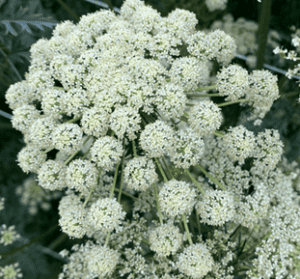
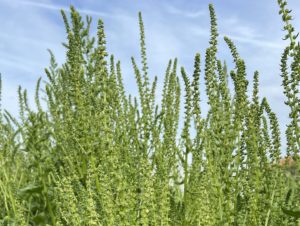

More applications under development
Frequently Asked Questions
Can I measure pollen of any plant?
Yes. In fact, Amphasys provides universal chips which cover the whole range of pollen cell sizes, including microspores, protoplasts, and ovules. Our range of crop-specific chips are available for selected crops and are intended for standardized screening and routine workflows.
How do I select the appropriate channel size?
First, you select the chip with the appropriate channel size based on pollen size. Universal chips come in multiple channel dimensions to ensure highest sensitivity across different cell sizes. Additionally, Amphasys provides Pollen Analysis Instructions for over 250 species to help you find the best chip-buffer combination.
Can universal chips be used for method development?
Yes. Universal chips provide full flexibility for research applications, in-depth pollen iinvestigations, custom sampling protocols, and user-defined gating strategies.
Is it possible to develop a new criop-specific chip for an additional crop?
Yes. Amphasys can develop crop-specific chips within collaborative projects to address specific crop requirements and workflow objectives.
Questions About Chip Selection or Crop-specific Chip Development?
Whether you require guidance on selecting the appropriate chip configuration or are interested in developing a crop-specific chip within a collaborative project, our team can support you.