Optimize Cucurbit Breeding and Seed Production Through Quantitative Pollen Analysis
Cucurbit Pollen Quality Analysis
Characterize pollinator performance and ensure efficient reproduction with pollen quality assessment for cucumber, melon, watermelon and other cucurbits
In cucurbits crops such as cucumber, melon, and watermelon, successful reproduction depends on sufficient quantity of viable pollen. While pollen viability in these crops is generally high and not an issue, pollen quantity per flower can vary significantly and quantitative assessment remains difficult.
For phenotyping of lines, gravimetric or visual methods do not provide reliable or reproducible measurements of pollen quantity. As a result, breeding and production programs often lack the quantitative data needed for line selection, identification of abiotic stress impacts, and optimization of seed production.
Quantitative pollen measurement is therefore a key parameter for phenotyping and line selection in cucurbit breeding and for ensuring efficient, reproducible seed production.
Challenge:
Missing Key Phenotypic Parameters
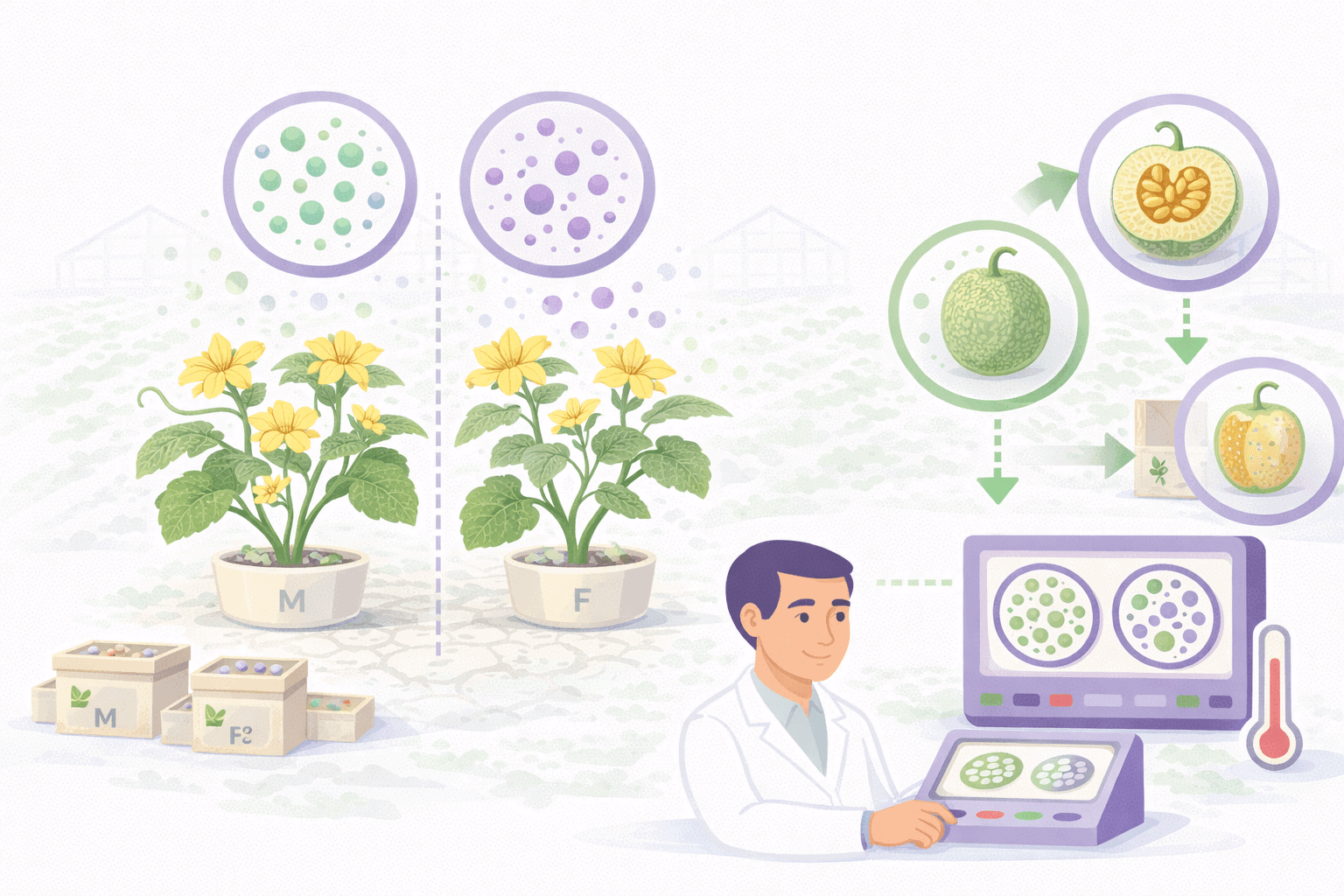
In cucurbits, pollen viability is typically high, yet the total pollen quantity per flower varies significantly between lines. Traditional visual or gravimetric methods fail to measure this reliably. Consequently, breeders lack the data to distinguish high-yielding pollinators from low-productivity lines. Selecting lower-performing lines due to lack of data can lead to delays in market launch and productivity problems in seed production.
Amphasys Pollen Analyzers measure within a minute in parallel pollen viability, pollen quantity, and proportion of aberrant cells. This automated, label-free analysis enables breeders to objectively phenotype lines, ensuring the selection of superior pollinators with high pollen output.
Challenge:
Undetected Abiotic Stress Impact
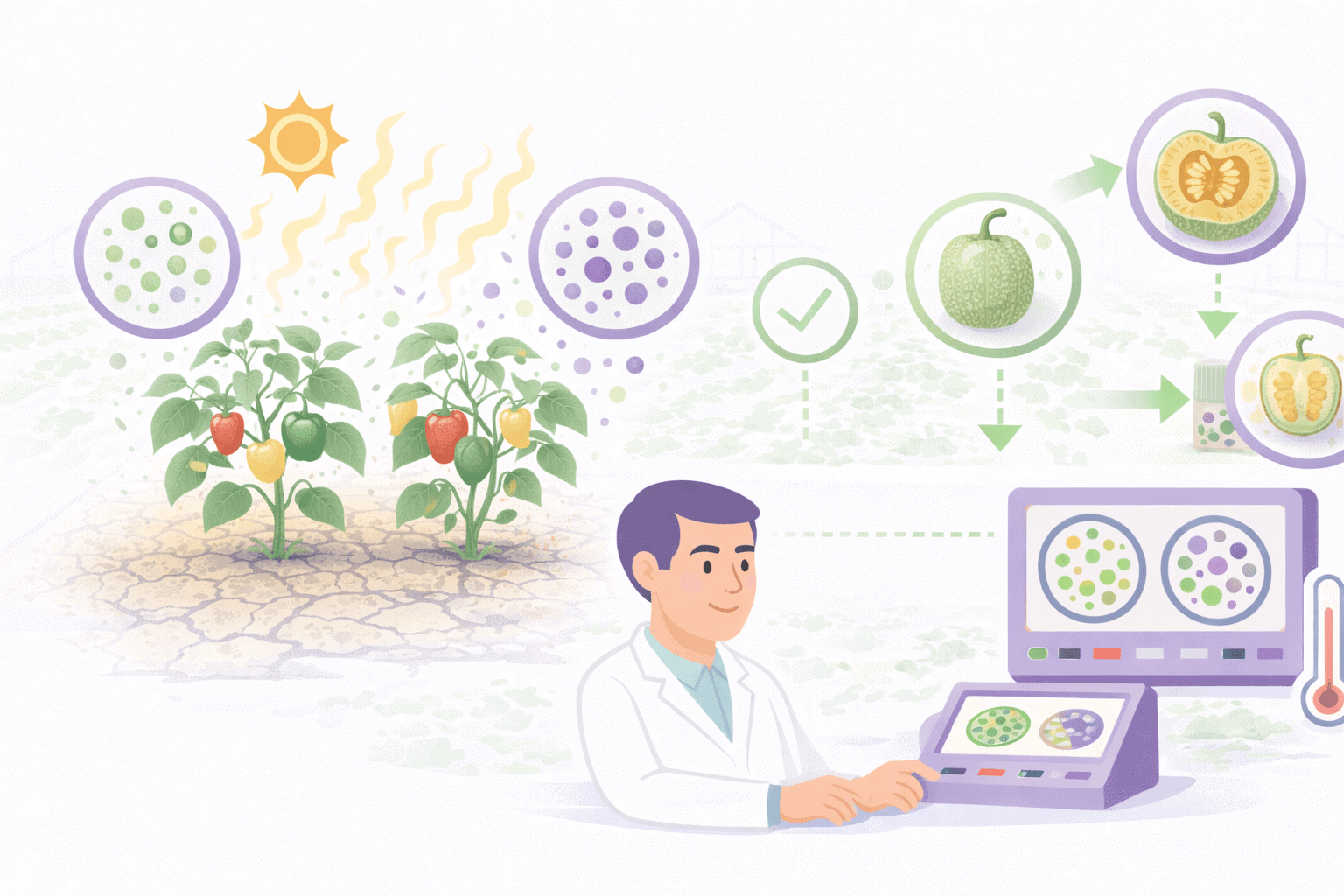
Abiotic stress often impairs reproduction because it leads to abortion of pollen cells in development, thus reducing the quantity of viable pollen cells necessary for reproduction. Without precise quantification, these specific effects remain invisible until seed set. This has implications for plant breeders in line selection and for seed producers in crop placement and design of efficient production processes.
Amphasys’ technology allows to identify stress-prone and stress-tolerant lines by precisely determining the reproductive characteristics of each line under specific environmental conditions. This ensures the optimal selection of pollinator lines in breeding and the determination of the right locations for crop placement in seed production.
Challenge:
Inefficient Production Processes
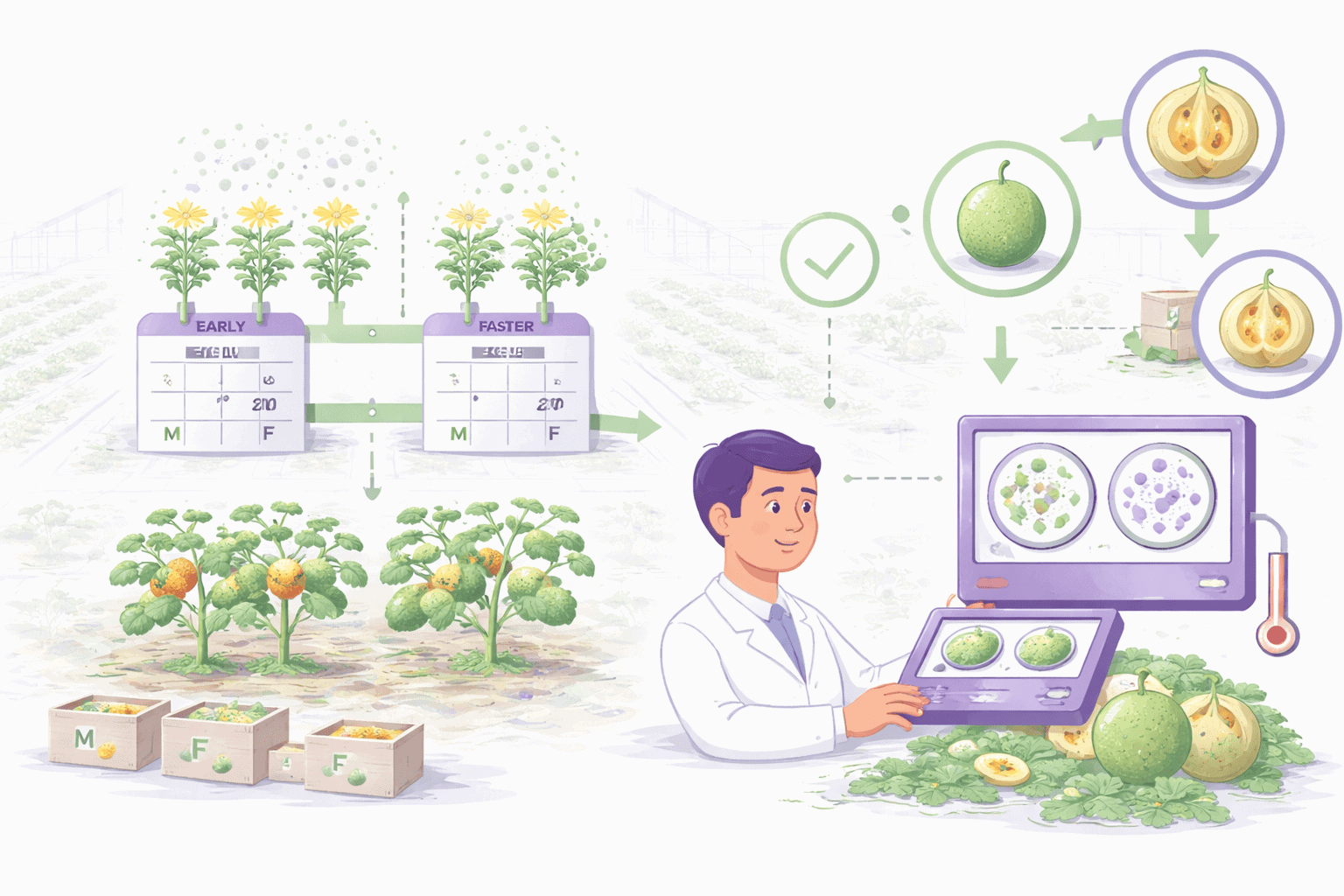
Without relevant data, efficient seed production remains a guessing game – it’s about finding a balance between reliable forecasts and cultivating just enough male plants. If the reproductive characteristics of the different lines are unknown, precise ratios of female to male plants cannot be determined, nor can the amount of viable pollen necessary for complete pollination of the female flower.
Routine pollen quality analysis transforms seed production into a data-driven process. Based on the knowledge out of measurement data from systematic line screening, seed producers can exactly determine the optimal female-to-male ratio, determine the exact number of flowers necessary for a complete pollination, and adapt crop placement according to the stress tolerance of lines.
The Right Tools for Cucurbits Pollen Analysis
To support cucurbits breeders and seed production teams in making fast, data-driven decisions, Amphasys offers a powerful combination of pollen analyzers and crop-specific microfluidic chips. Whether you work in the lab, greenhouse, or field, our tools are designed to deliver accurate, real-time insights into pollen quality—when and where you need them.
Ampha Z40
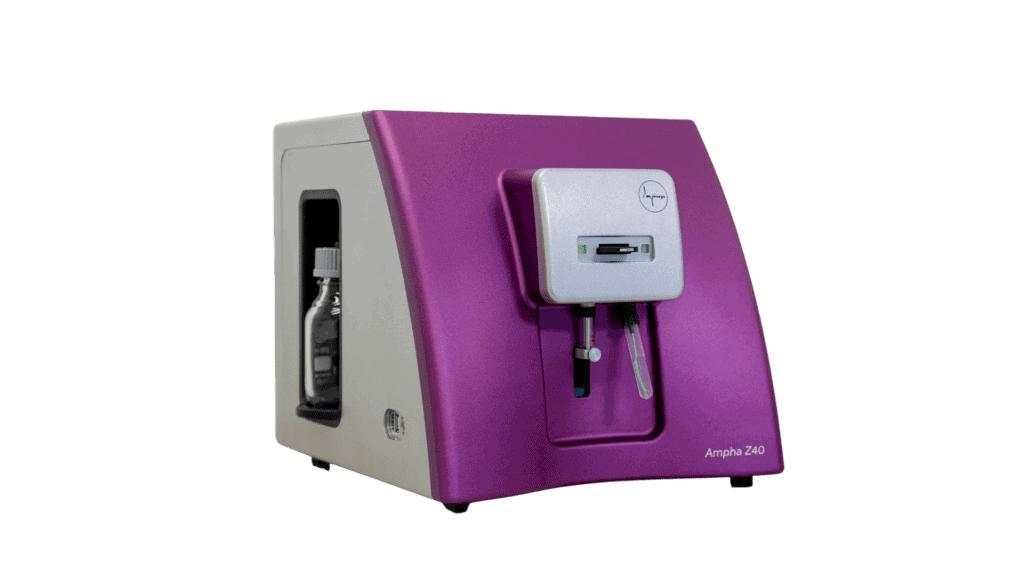
Designed for high-throughput and detailed research, the Ampha Z40 is ideal for all tasks from R&D to seed production. With full protocol flexibility, advanced analytics, and compatibility with all Amphasys measurement chips, it provides deep insights into pollen performance whether it be in cucurbits breeding programs or seed production research.
Ampha P20

The portable, robust, and battery-powered Ampha P20 is ideal for remote measurements in greenhouse and field environments. It delivers real-time viability and concentration data, supported by automated data-analysis with the crop-specific AmphaChip Cucurbits. Perfect for plant breeders and seed production teams who need fast and straightforward results without lab infrastructure
AmphaChip Cucurbits
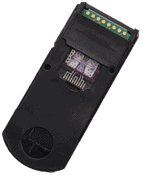
This chip, specifically designed for cucurbit crops with small pollen sizes is calibrated to the size and properties of cucumber, melon, and watermelon pollen cells. It delivers precise and reproducible results on viability and quantity within one minute—whether you are screening lines in breeding or seed production. With its high sensitivity and plug-and-play handling, it is ideal for systematic screening in the lab, greenhouse, or field.
How Cucurbits Pollen Analysis Works in Practice
For plant breeders and seed producers pollen quality control is crucial for achieving efficient breeding processes and high seed set in production. Amphasys Pollen Analyzers allow you to integrate pollen quality monitoring directly into your workflows—before issues arise.
Breeding: Data-Driven Line Selection for Improved Reproduction
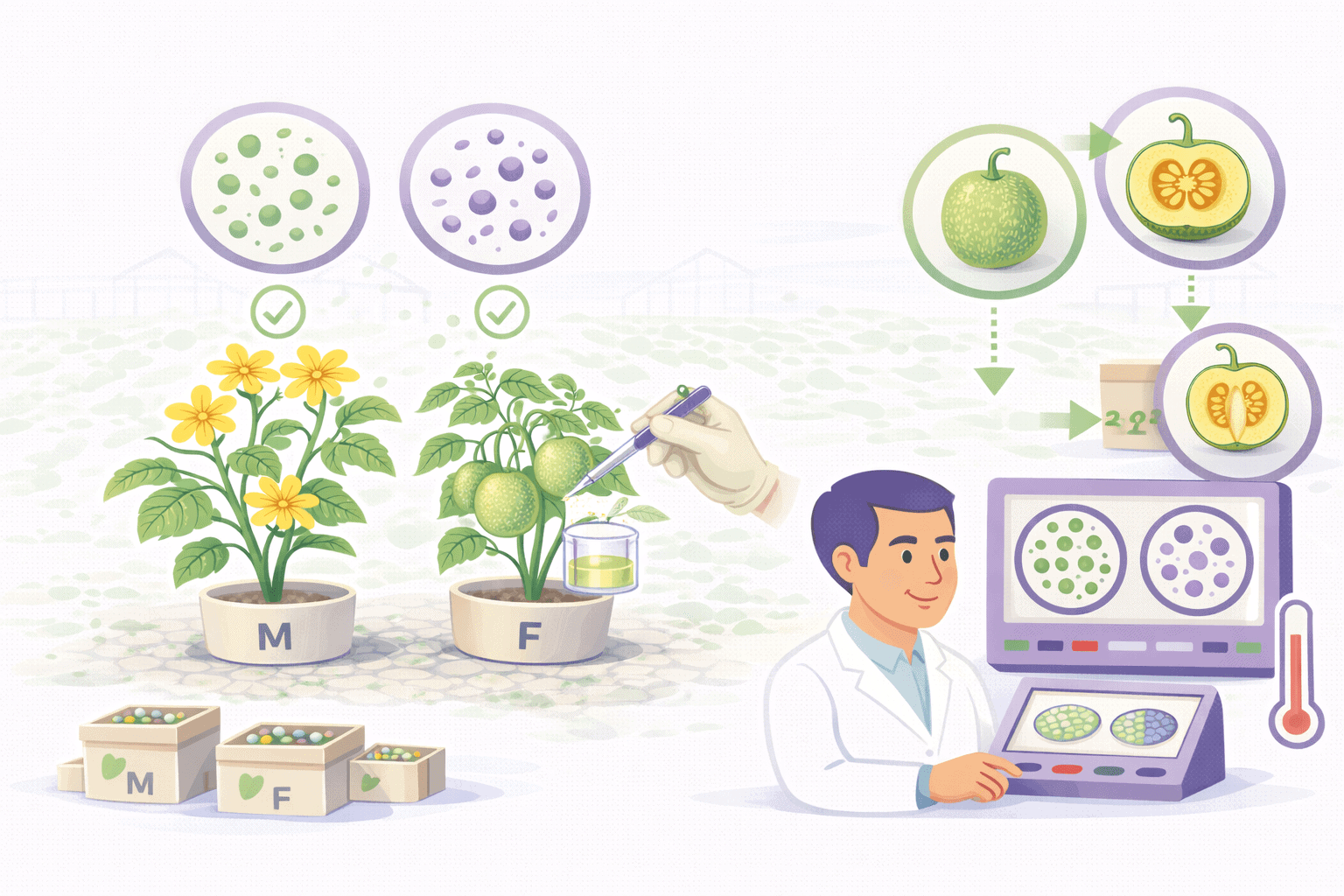
In cucurbits breeding, pollen viability is less relevant for the reproduction success. Generally, pollen viability is quite high and shows low variability among different lines. However, pollen quantity per flower can vary significantly among different lines. While visual or gravimetric methods do not provide exact data about pollen quantity, line selection becomes a major issue.
Systematic screening of pollen quality allows breeders to:
- Characterize each line for pollen viability, quantity, and proportion of aberrant pollen cells
- Detect and identify lines which are heat-sensitive or prone to abiotic stress
- Select high-performing pollinator lines with a high number of viable pollen early in the breeding program
- Screen a large number of lines systematically and build up knowledge of reproductive properties
Seed Production: Efficient and Reliable Seed Production
Data-driven decisions contribute to process optimization and increased efficiency. In the seed production of cucurbits, the amount of pollen per flower plays a crucial role, yet this information is often unavailable. Determining the right production parameters, the optimal growing location, and reliable planning thus becomes a guessing game. Systematic pollen quality analyses provide the necessary information, based on knowledge of reproductive characteristics, to optimize seed production processes.
Quantitative pollen quality data help seed producers to:
- Determine the optimal number of male flowers required per female
- Optimize female-to-male ratios
- Develop pollen storage protocols for optimized pollen usage
- Ensure synchronization of flowering for efficient pollination
- Adjust crop placement according to line-specific stress tolerance
- Plan pollination activities according to availability of pollen in the right quality
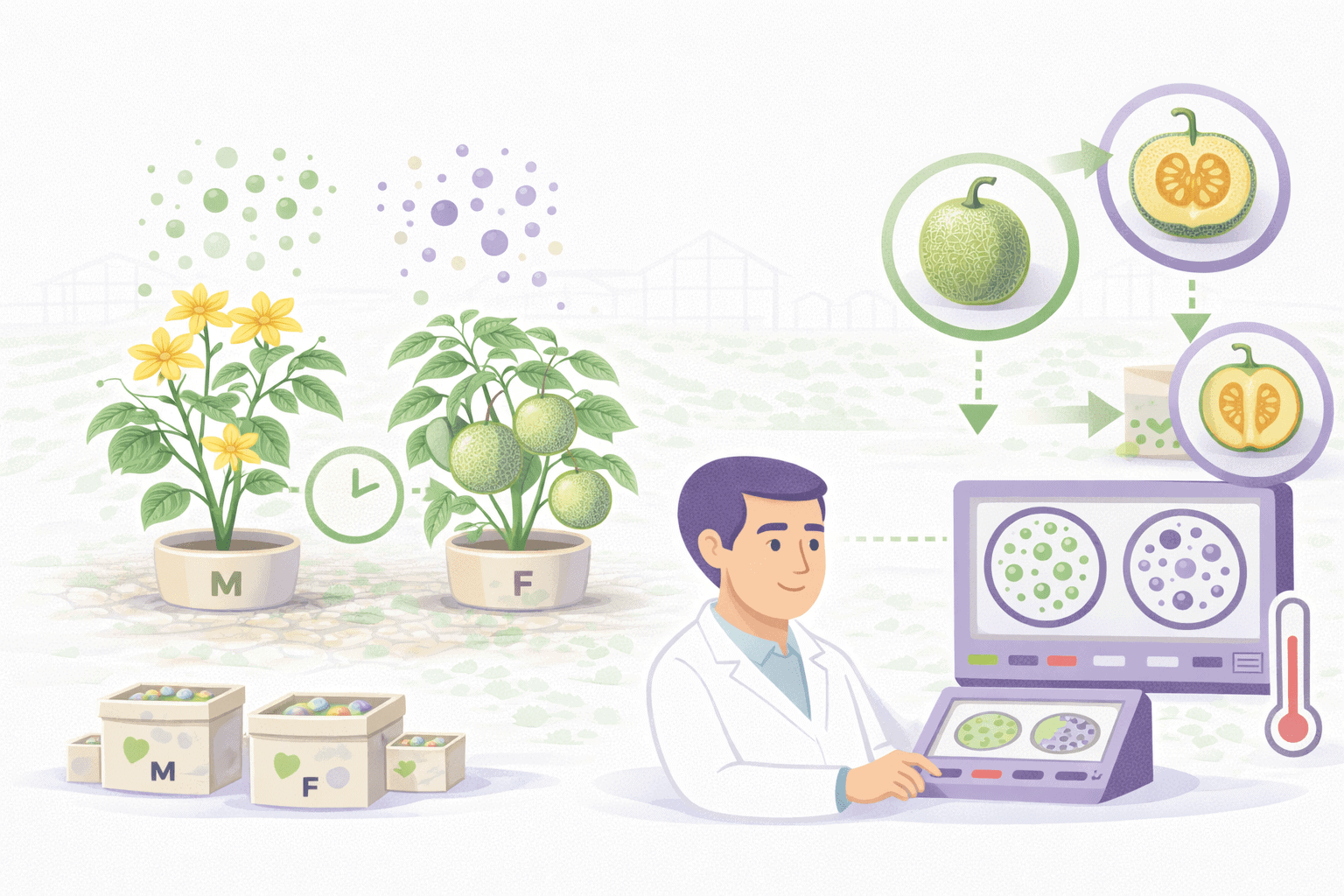
Bottom line: Amphasys offers a technology for real-time pollen quality measurements. Expand your knowledge of your lines’ reproductive traits for better, data-driven results in plant breeding and seed production.

Exact quantification of pollen quantity per flower
Select high-yielding pollinator lines with precision

Detect impact of abiotic stress

Optimize female-to-male ratios for efficient seed production
Learn More
Deepen Your Knowledge & Drive Better Results
Download expert resources to dive deeper into cucurbits pollen viability, measurement technology, and real-world results.
Video
Introducing Ampha P20
The Ampha P20 Pollen Analyzer is an ideal instrument for the measurement of a large number of pollen samples and for routine measurements wherever they are needed
Video
Added Value in Breeding and Production
In this online session, Darío Sánchez talks about the importance and benefits of systematical pollen quality monitoring.
Video
Applications of Pollen
During this session Dr. Gorka Santos introduces Amphays’s technology and explains how pollen analysis and in particular our pollen analyzers be used to:
Video
Tomato Pollen Viability Measurement
Discover how the innovative Pollen Analyzer, the Ampha P20 is used to perform a tomato pollen viability measurement.
Video
Why is it important to monitor pollen quality in tomato seed production?
Cyril Dufloux from BAYER explains the critical role of pollen quality monitoring in tomato seed production.
Video
The Mutual Project for the Development of Onion, Carrot and Beet Crop-Specific Chips
Laura Rojas (Bejo) and Grit Schade (Amphasys) present their collaborative project on developing crop-specific analysis chips for onion, carrot, and beet.















Frequently Asked Questions
Why is pollen quantity more critical than viability in cucurbit crops?
In cucurbit crops such as cucumber, melon, and watermelon, pollen viability is typically high and usually not the limiting factor. However, the total amount of pollen produced per flower varies significantly between lines. Insufficient pollen quantity leads to incomplete pollination and reduced seed set, even when viability is high. Quantitative measurement of pollen amount per flower is therefore a key parameter for reliable phenotyping and seed production planning.
How does abiotic stress affect pollen performance in cucurbits?
Abiotic stress in cucurbits negatively impacts the pollen development during maturation in the flowering period. As a result, pollen cells get aborted before full development. this reduces the number of viable cells available for fertilization.
Why are visual or gravimetric methods insufficient for pollen quantification?
Visual assessment of pollen quantity allows only a rough estimate, and gravimetric methods fail due to the imprecise measurement of these minute amounts. Consequently, it is impossible to differentiate between high-performing and low-performing pollinator lines in breeding programs. In seed production, the lack of quantification hinders process optimization and efficient seed production.
Is this approach transferable across cucumber, melon, and watermelon?
Yes. The same workflow for quantitative pollen analysis is applicable to all cucurbits, including cucumber, melon, and watermelon. Using the crop-specific AmphaChip Cucurbits, standardized protocols ensure reproducible measurements and comparable data across different species, thus supporting both plant breeding and seed production.
How much training is needed to use the Ampha P20 Pollen Analyzer?
Minimal. The pollen analyzer is designed to be intuitive and user-friendly. Most users can operate it safely after a short training session. Automated data analysis, simple sample preparation, and intuitive user guidance make it equally suitable for laboratory technicians, plant breeders, production staff, and seasonal workers.
Talk to a Cucurbit Pollen Expert
Ready to improve your breeding efficiency or seed production yield? Our experts are here to help you find the right solution for your specific needs.