Enhance Sunflower Breeding and Seed Production with Precision Pollen Analysis
Sunflower Pollen Quality Analysis
Success in Sunflower Breeding and Seed Production - Quantitative Sunflower Pollen Quality Assessment
Sunflower pollen quality analysis is key to breeding and seed production success. Efficient pollination requires male lines with high pollen viability and sufficient pollen quantity.
Pollen performance can vary significantly depending on genotype and environment. The knowledge of a line’s reproductive characteristics based on precise, quantitative data of pollen viability and quantity therefore enables an efficient breeding and seed production. A systematic approach to measuring pollen quality is essential to improve breeding processes, and seed production performance and reliability.
Challenge:
Hidden Genotypic Variation

Pollen performance can vary considerably between different sunflower lines, making it difficult to select the best-performing pollinator lines. Conventional methods offer neither the necessary throughput for systematic line screening nor a high level of information. If data-driven information on reproductive performance is not used for line selection, breeding programs risk promoting low-performing pollinator lines, leading to inefficient selection and delayed breeding progress.
Amphasys Pollen Analyzers, based on label-free impedance flow cytometry, assess pollen quality, quantify pollen viability and quantity within one minute, thus enabling high throughput and a high information content. This automated screening allows breeders to measure reproductive performance of each line and use the data to identify high-performing lines early on – for efficient line selection and an effective breeding program.
Challenge:
Undetected Stress Sensitivity

Abiotic stress, such as heat and drought during early flowering, leads to the abortion of pollen in maturation, resulting in dead, shrunken cells. These aberrant cells drastically reduce reproduction potential and decrease the number of viable cells. Without accurate detection of these aberrant cells, breeders and producers overlook the sensitivity to environmental factors, resulting in pollination deficiencies and reduced seed set.
Amphasys’ technology specifically identifies and quantifies aberrant pollen cells, providing an early warning system for abiotic stress. The identification of stress-tolerant and stress-sensitive lines allows breeders to select appropriate pollinator lines for further breeding progress. Seed producers can ensure correct crop placement and mitigate climate-related risks thus increasing seed yield and reliability.
Challenge:
Unreliable Seed Yields

Sunflower seed yield depends on successful reproduction, which requires high pollen viability and a sufficient quantity of pollen. Efficient seed production depends on the right production patterns and the optimal location. Without quantitative data on pollen quality, these parameters cannot be optimized, and seed production will fall short of its potential.
Amphasys Pollen Analyzers allow seed producers to routinely screen pollen quality. These measurement data provide the needed information to optimize production strategies. Line-dependent data on pollen viability, pollen quantity and proportion of aberrant cells allow for precise female-to-male ratios, crop placement, and flowering synchronization. By basing decisions on quantitative data, seed producers achieve improved yield stability and reduced production variability.
The Right Tools for Sunflower Pollen Analysis
To support sunflower breeders and seed production teams in making fast, data-driven decisions, Amphasys offers a powerful combination of pollen analyzers and corresponding crop-specific chips. Whether you work in the lab, greenhouse, or field, our tools are designed to deliver accurate, real-time insights into pollen quality—when and where you need them.
Ampha Z40
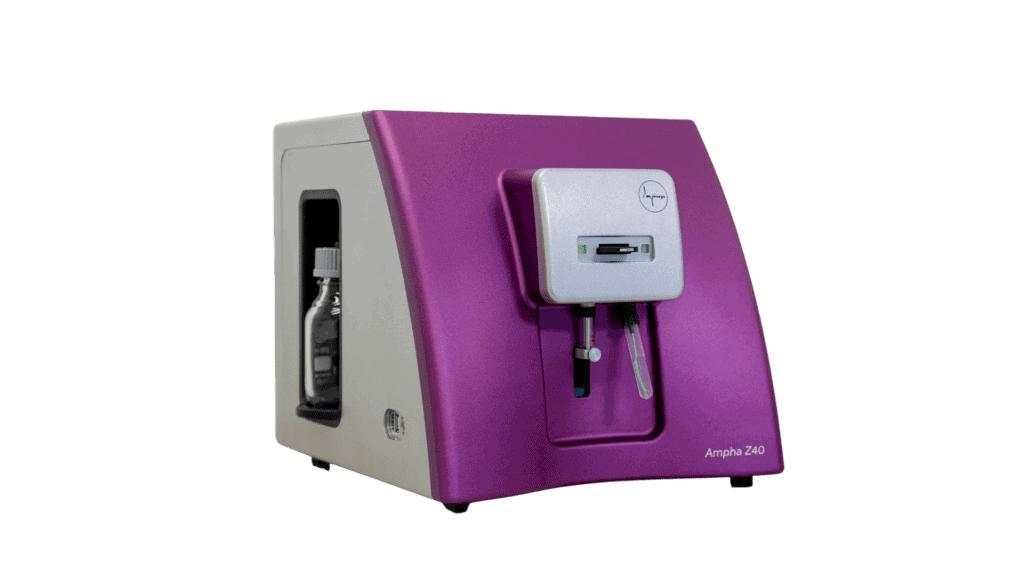
Designed for high-throughput and detailed research, the Ampha Z40 is ideal for all tasks from R&D to seed production. With full protocol flexibility, advanced analytics, and compatibility with all Amphasys measurement chips, it provides deep insights into pollen performance whether it be in breeding programs or seed production research.
Ampha P20

The portable, robust, and battery-powered Ampha P20 is ideal for remote measurements in greenhouse and field environments. It delivers real-time viability and concentration data, supported by automated data-analysis with the crop-specific carrot chip. Perfect for plant breeders and seed production teams who need fast and straightforward results without lab infrastructure.
AmphaChip Sunflower
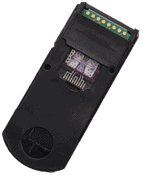
This chip, specifically designed for sunflowers is calibrated to the size and properties of sunflower pollen cells. It delivers precise and reproducible results on viability and quantity within one minute—whether you are screening lines in breeding or seed production. With its high sensitivity and plug-and-play handling, it is ideal for systematic screening in the lab, greenhouse, or field.
How Sunflower Pollen Analysis Works in Practice
Quantitative pollen quality analysis supports data-driven decisions across both breeding and seed production workflows in sunflower.
Breeding: Early Line Selection and Stress-Resilient Pollinator Identification
Characterization of Line-dependent Pollen Quality
A high quantity of viable pollen is essential for successful pollination. As pollen quality varies between lines, screening of pollen quality across sunflower lines provides insights into reproductive performance and stress sensitivity.
With Amphasys’ pollen analyzers, breeders can:
Screen all lines systematically to map pollinator performance
Quantify aberrant cells to detect early signs of abiotic stress
Select best-performing pollinator lines for advancement into seed production
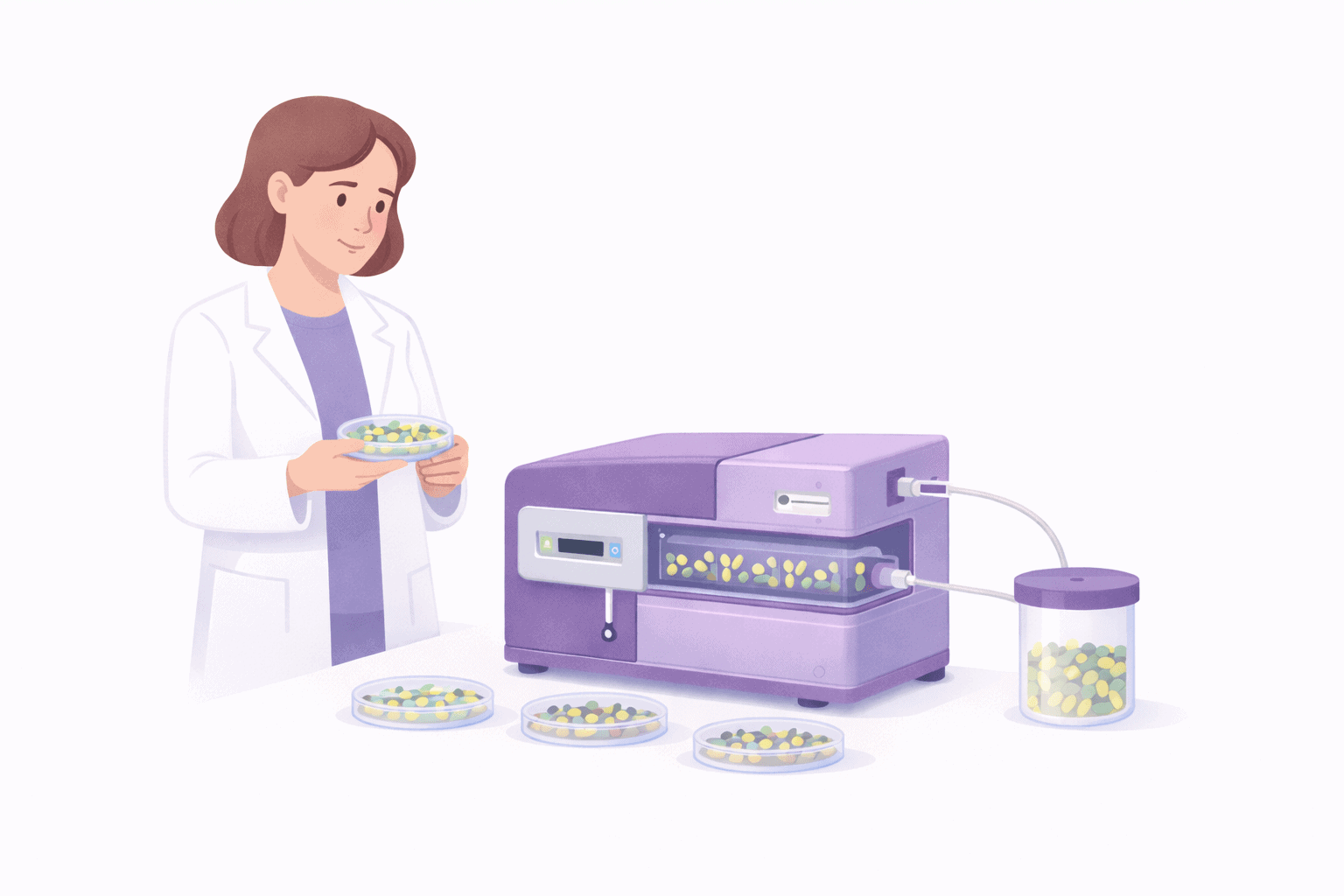
Analyses across sunflower lines have shown substantial variation in pollen quality. Knowing about the differences enables breeders to focus resources on high-performing lines and continue with data-driven decisions in the breeding process.
Seed Production: Improved Pollination and Yield Stability
Pollen Phenotyping for Improved Seed Production
Seed yield in sunflower production is strongly influenced by production parameters such as female-to-male ratio and crop placement. Monitoring pollen viability and quantity enables seed producers to optimize production patterns and mitigate risk.
Quantitative pollen analysis allows seed producers to:
Characterize precisely pollen quality to avoid pollination deficiencies
Determine efficient female-to-male ratios for optimized seed yield
Identify stress-sensitive lines for targeted crop placement
By quantifying viable and aberrant pollen cells, as well as pollen quantity per flower, seed producers can detect environmental impacts early and adapt production strategies to maintain yield consistency.
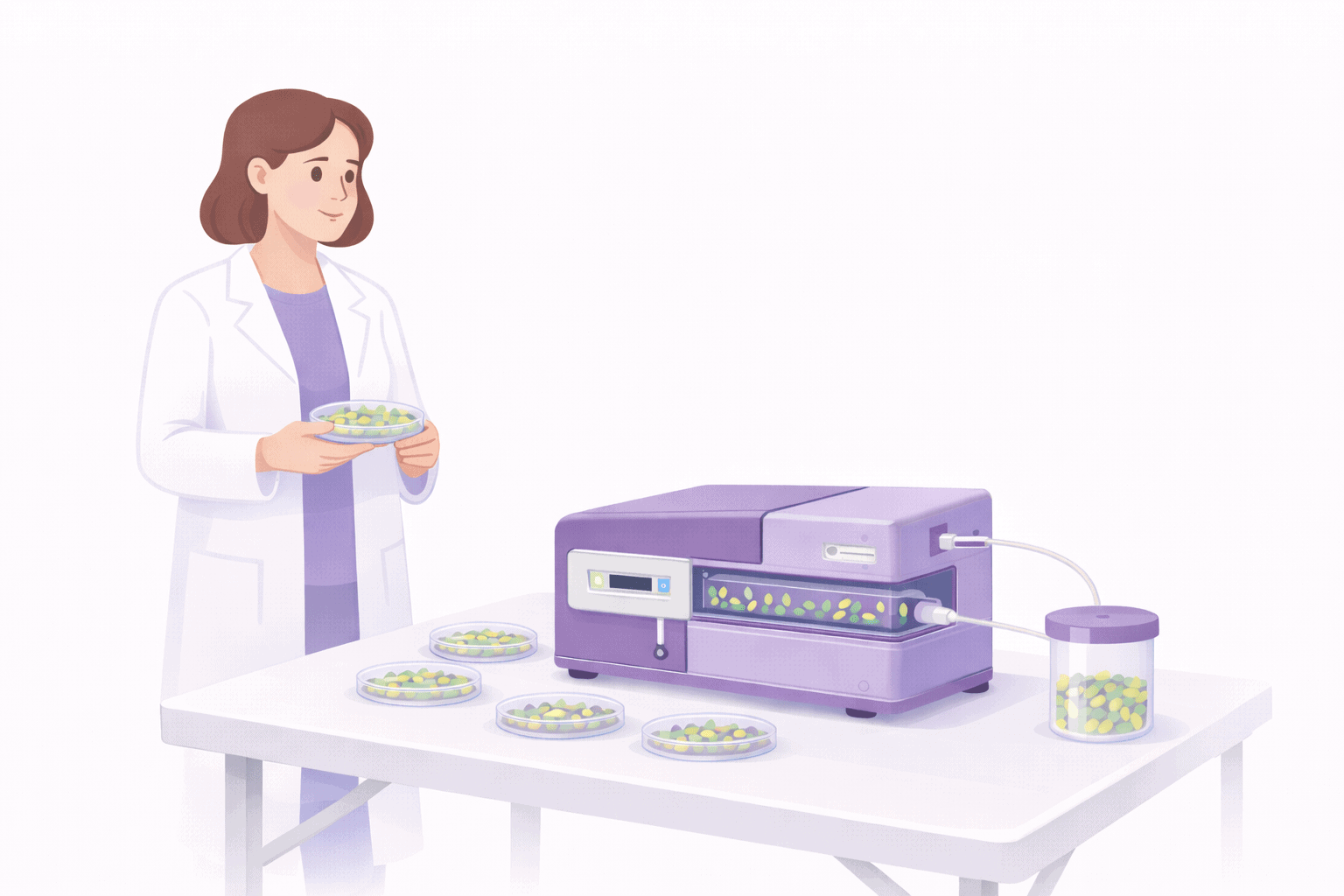
Bottom Line: Amphasys offers a technology for real-time sunflower pollen quality analysis. Expand your knowledge of your lines’ reproductive traits for better, data-driven results in plant breeding and seed production.

Identify high-performing pollinator lines with precision

Detect abiotic stress early via quantification of aberrant pollen cells

Eliminate low-performing lines before proceeding in the breeding program

Optimize crop placement and production pattern for consistent seed yields
Learn More
Deepen Your Knowledge & Drive Better Results
Download expert resources to dive deeper into tomato pollen viability, measurement technology, and real-world results.
Video
How Ampha P20 Could Simplify Sunflower Seed Production
Learn how the pollen quality behavior of sunflower inbred lines have an impact on the seed production quality or potential and how you could adapt the sowing protocol or production location to control a bad pollen quality.
Video
Smart Chips for Brassicaceae and Sunflower
Smart chips with automated data analysis, robust sampling and sample preparation methods for pollen analysis, the effects of abiotic factors on pollen and the measurement of stored brassicaceae and sunflower pollen.
Video
Ampha P20 Pollen Analyzer
The Ampha P20 Pollen Analyzer is an ideal instrument for the measurement of a large number of samples of pollen and for routine measurements wherever they are needed.
Video
Added Value in Breeding and Production
In this online session, Darío Sánchez talks about the importance and benefits of systematical pollen quality monitoring.
Video
Applications of Pollen
During this session Dr. Gorka Santos introduces Amphays’s technology and explains how pollen analysis and in particular our pollen analyzers be used to:















Frequently Asked Questions
Why is pollen quality critical for sunflower breeding and seed production?
In sunflower breeding and seed production, pollen quality is crucial for successful fertilization. High-performing pollinator lines accelerate the breeding process, increase seed yield, and production efficiency. High pollen viability and sufficient pollen quantity ensure complete pollination, making the monitoring of these parameters essential. Without knowledge about the reproductive properties, breeding and seed production risk inefficiencies and reduced yields.
How does abiotic stress affect sunflower pollen performance?
Abiotic stress such as heat or drought during the maturation of pollen cells can trigger their abortion, leading to dead, shrunken pollen cells. This reduces the number of viable pollen grains available for fertilization and leads to incomplete pollination and reduced seed set. Quantifying aberrant pollen cells allows identification of line dependent stress sensitivity. This supports data-driven selection in the breeding process and for crop placement.
Why is systematic screening of sunflower pollinator lines important?
Pollen performance varies significantly between different sunflower lines. Without systematic, high-throughput screening, breeding programs risk selecting low-performing pollinator lines. Quantitative pollen analysis enables breeders to identify high-performing lines early, and focus resources on pollinators with stable reproductive performance.
How does quantitative pollen analysis improve seed yield stability?
Quantitative pollen analysis provides objective data on pollen viability, quantity, and aberrant cell fractions. This enables the optimization of production parameters such as female-to-male ratios and crop placement. By basing production decisions on measured pollen quality rather than assumptions, seed producers achieve more stable yields and reduced seed production variability.
How does pollen quality data support crop placement decisions in sunflower production?
By quantifying line-dependent aberrant pollen cells and comparing among different lines, breeders and seed producers can distinguish between stress-prone and stress-tolerant sunflower lines. Stress-tolerant lines can be placed in more challenging environments, while sensitive lines are allocated to more appropriate locations. This targeted crop placement improves pollination success and helps maintain consistent seed yields across production sites.
Talk to a Sunflower Pollen Expert
Ready to improve your breeding efficiency or seed production yield? Our experts are here to help you find the right solution for your specific needs.