









Pollen Projects

Pollen Analysis for Plant Breeders and Seed Producers as a Service

Pollen Projects – to advance knowledge on pollen quality and line propagation for informed, data‑based decisions

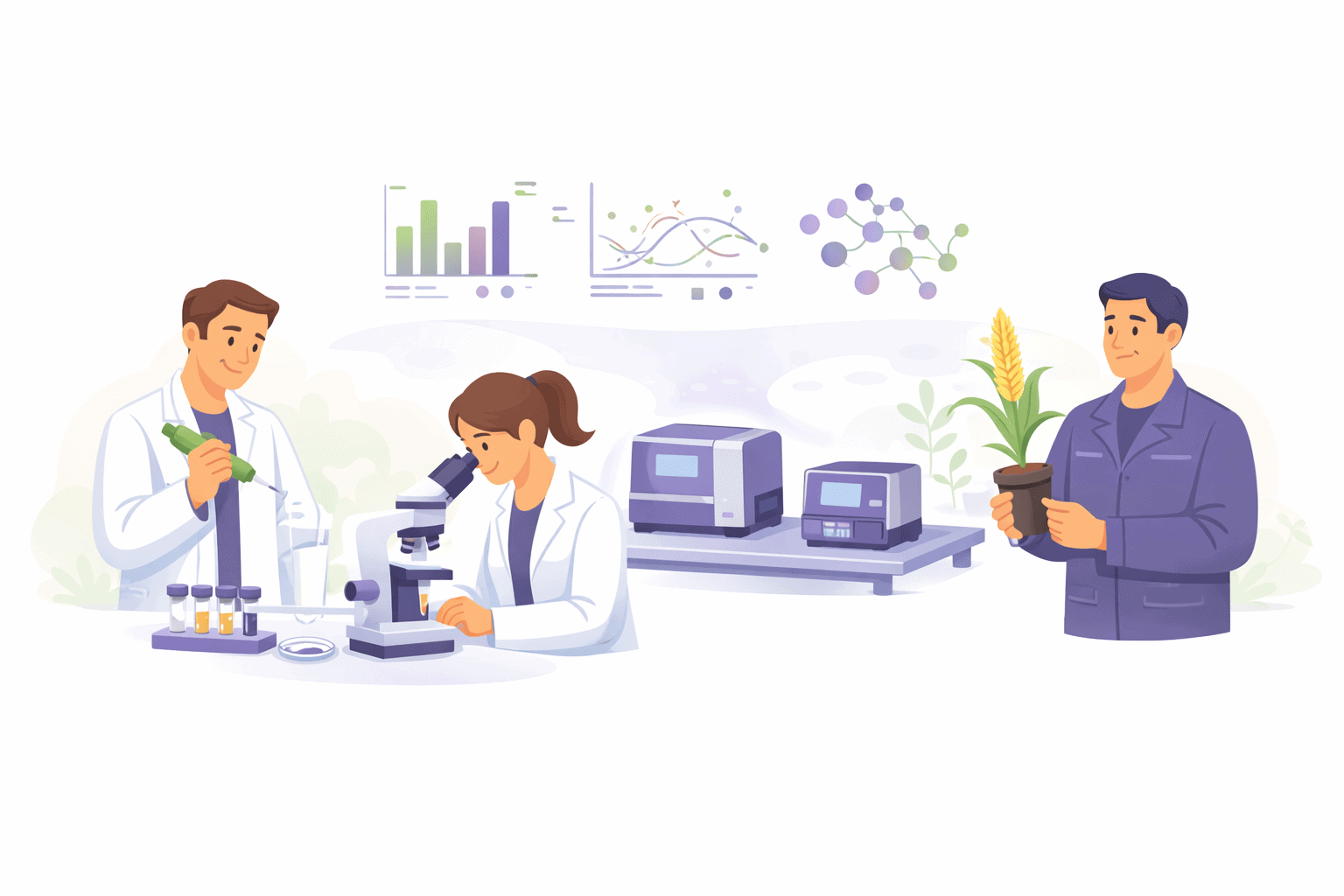
Amphasys Pollen Projects offers structured, project-based pollen analyses performed by experienced application scientists. This service enables plant breeders and seed producers to generate pollen quality data and expand their knowledge of the reproductive traits of their lines.

When Is a Pollen Project the Right Step?

Pollen Projects are designed for situations where:

  • Differences in reproductive performance are suspected but not quantified
  • Hybrid crossing success is inconsistent
  • Line selection need data-based decisions based on pollen measurements
  • Pollen quantity needs to be phenotyped (e.g., quantity per spikes, tassel or flower)
  • Environmental impact on reproductive stability is unclear
  • Production patterns need to be optimized
  • Pollen storage protocols need to be developed and verified
  • Asynchronous flowering harms seed yield 

There are many questions that need answering, and an investment isn’t yet justified, or the right personnel aren’t available.

Amphasys offers full service or support for such projects.

What a Pollen Project Delivers

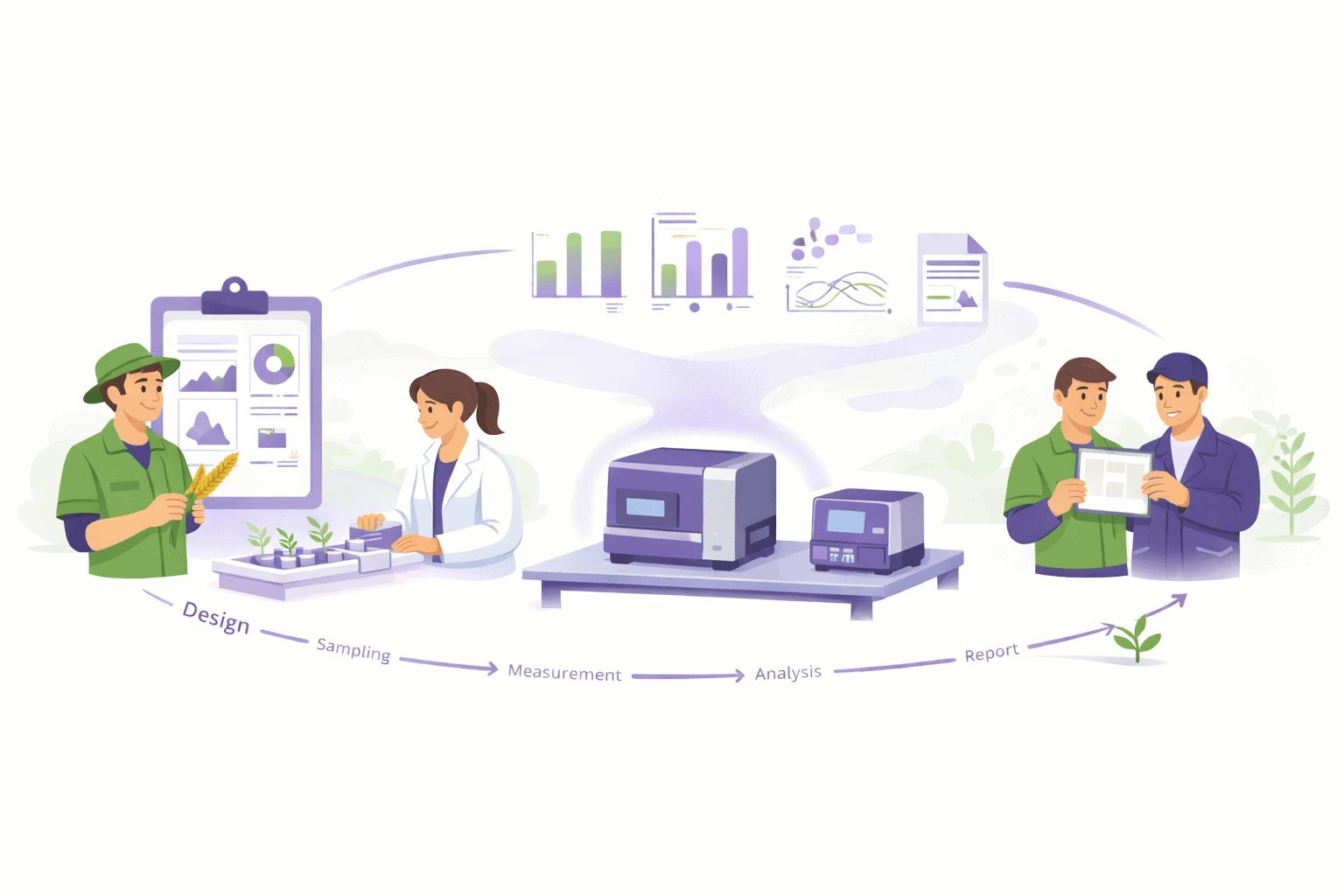
Each project includes:

  • Definition of scope and target
  • Defined experimental design
  • Complete data analysis
  • Clear, documented final report


Depending on the project scope:

  • Full-service execution by Amphasys
  • Or collaborative work sharing with your team

The objective is not only data generation — but actionable interpretation.

For Breeders

Improved Knowledge of Pollen Quality and Reproductive Properties

Pollen Projects support breeders by:

  • Identifying best-performing parental lines
  • Examination of pollen quality of homozygous offspring
  • Distinguishing stress-prone and stress-tolerant lines
  • Phenotyping line -dependent pollen quantity
  • Selection of microspores for DH production
  • Identification of incompatibilities

Explore the benefits of pollen quality analysis and gain insights into the reproductive properties of your genetic material.

For Seed Producers

Improving Seed Production Success with Reproductive Knowledge

In seed production, Pollen Projects enable:

  • Alignment of asynchronously flowering lines
  • Optimization of female-to-male ratios
  • Identification of stress-related performance reduction
  • Development of reliable pollen storage protocols
  • Assessment of the best pollen harvesting time
  • Optimizing seed production processes

Explore the benefits of pollen quality analysis and rely on data-based decisions for a more stable and reliable seed production.

Typical Project Applications

Examples of structured pollen studies include:

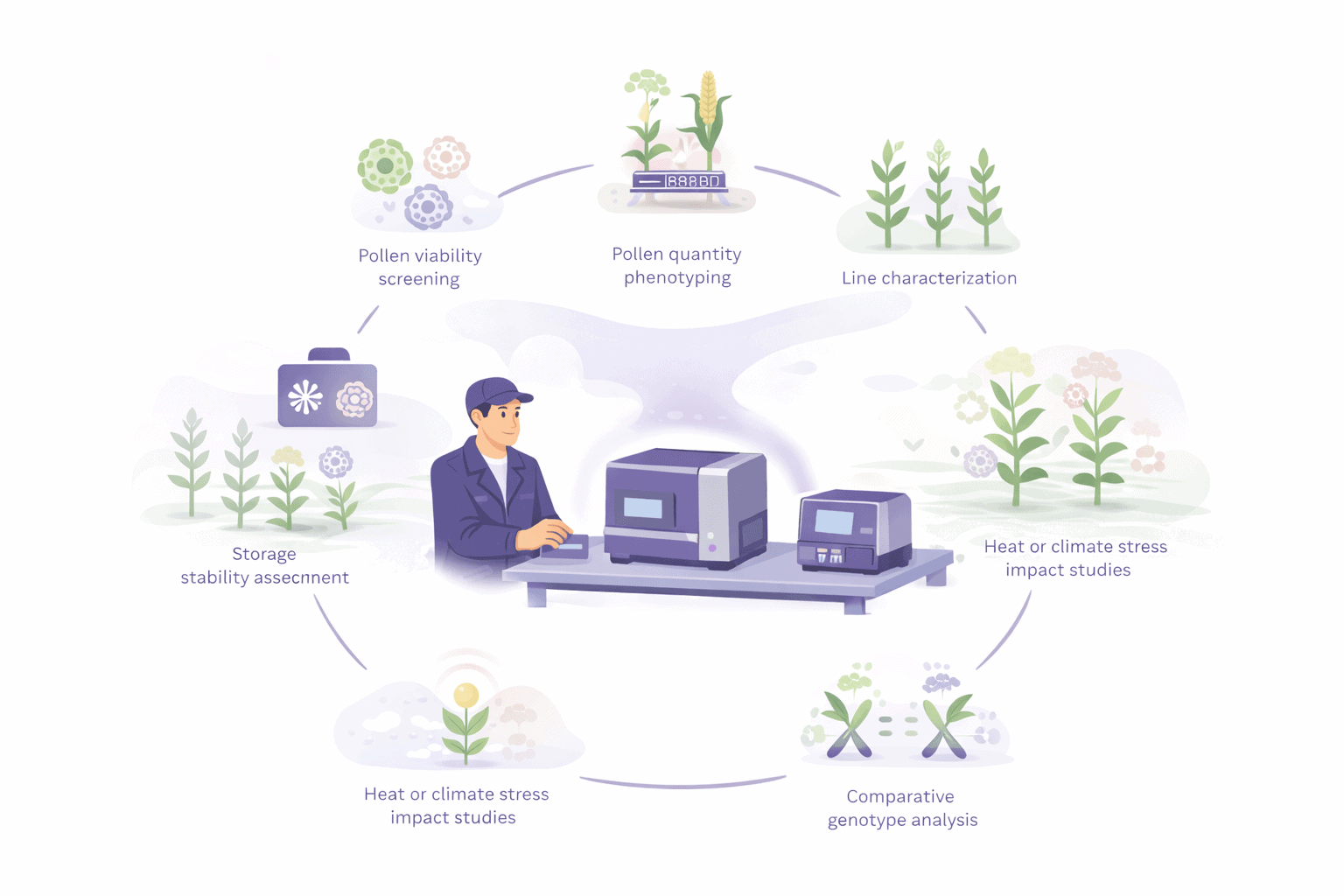
  • Line dependent pollen viability screening
  • Line dependent pollen quantity phenotyping
  • Pollen storage stability assessment and storage protocol development
  • Line dependent screening of heat or abiotic stress impact 
  • Optimization of production parameters
  • Any other pollen related projects customers are interested in

Projects can be exploratory, crop-specific, or validation-oriented.

Project Framework

Projects are:

  • Led by an experienced Application Scientist

  • Defined with clear scope, objectives and timelines

  • Organized with defined timelines and milestones

  • Conducted under agreed experimental conditions

  • Concluded with a meeting and a final report

Costs depend on duration, location, and project scope. Project costs may be partially deductible upon subsequent instrument acquisition.

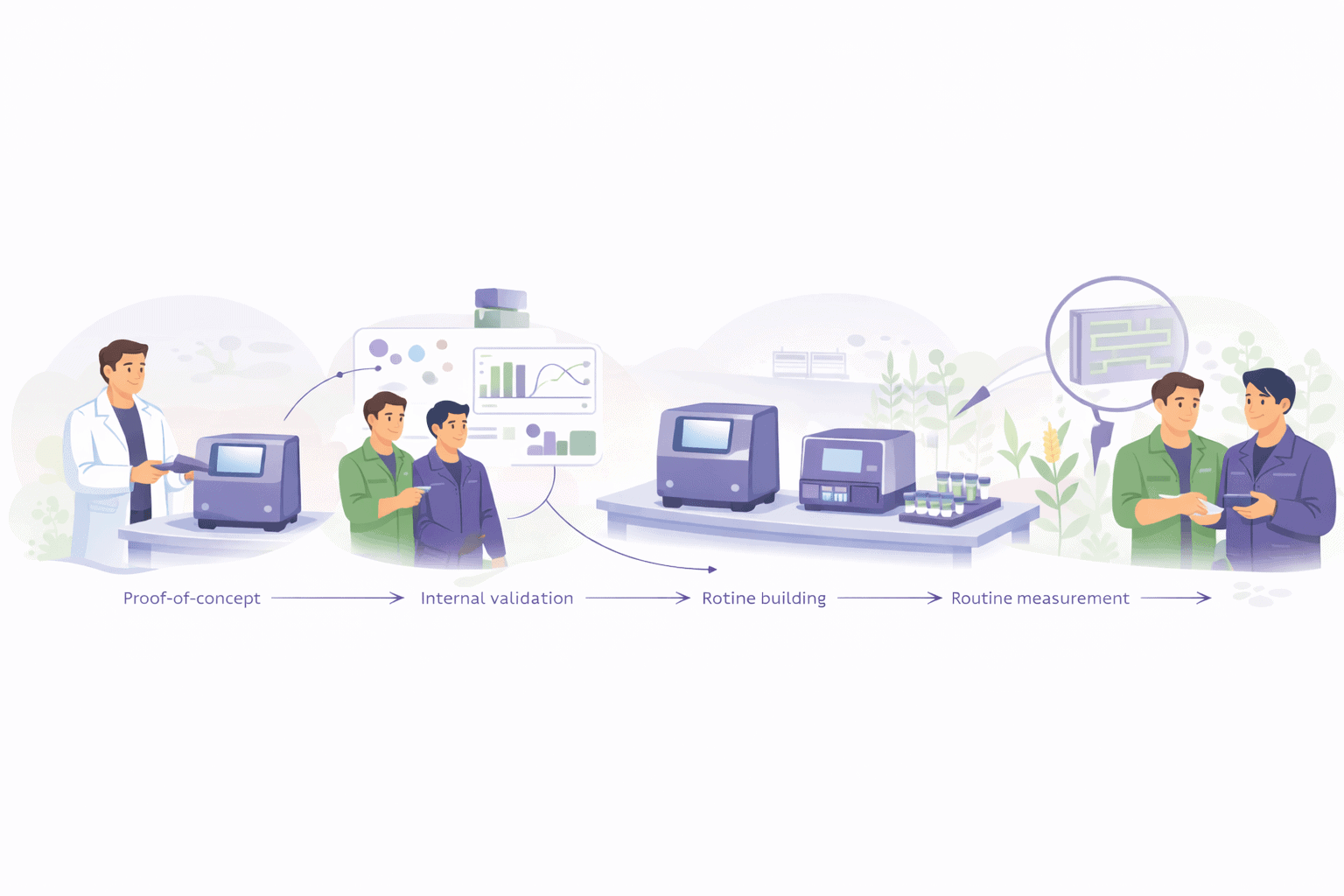
A First Step Toward Routine Implementation

Many customers use a Pollen Project as:

  • A proof-of-concept

  • An internal validation phase

  • A knowledge-building initiative

  • A basis for future in-house measurement

Projects may also serve as a foundation for developing new crop-specific SmartChips in collaboration.

Frequently Asked Questions

How long does a typical Pollen Project take?

There is no typical project, as client needs vary considerably. As a result, project duration depends primarily on the scope and, to some extent, on the availability of samples. For instance, smaller pollen viability screening studies can be completed within a few days, whereas larger studies, such as those aimed at optimizing seed production, can take several weeks.

A defined timeline will be agreed upon during the project planning phase.

Do we need to send samples, or can measurements be performed on-site?

This depends on the type of project; indeed, both options are possible. On the one hand, projects can be carried out at Amphasys' facilities, provided the customer can supply pollen samples, the pollen is sufficiently stable, and there are no transport restrictions. On the other hand, most projects are carried out on-site at the customer's premises, primarily due to the project scope and the availability of pollen samples at the required time.

Is the generated data confidential?

All measurement data and project results are treated confidentially and shared exclusively with the customer (unless explicitly agreed otherwise). Amphasys Hier die Optionen: Option 1 (subtil): "All measurement data and project results are treated confidentially and therefore shared exclusively with the customer (unless explicitly agreed otherwise). In addition, Amphasys will provide templates for a non-disclosure agreement (NDA) upon request.will provide templates for a non-disclosure agreement (NDA) upon request.

Can a Pollen Project support a later instrument purchase decision?

Yes.
Many customers use a project as a proof-of-concept before implementing routine in-house measurements.
Project results can support internal validation and investment decisions.

Can we define our own research questions and parameters?

Yes.
Projects are structured around customer requirements and defined objectives that are agreed upon in advance. Experimental design and measurement strategy are aligned with the specific question.

Is it possible to develop a Crop-specific Chip within a project?

Yes.
If a chip with automated data analysis for a specific crop is not yet available, we can evaluate feasibility and development pathways within a structured collaboration.

Discuss Your Reproductive Question

Whether you are evaluating pollen viability, pollen quantity, stress effects, or crop-specific challenges, we can assess together whether a structured Pollen Project is the right approach.