ampha z40
The High-End Platform for Advanced Pollen Analysis
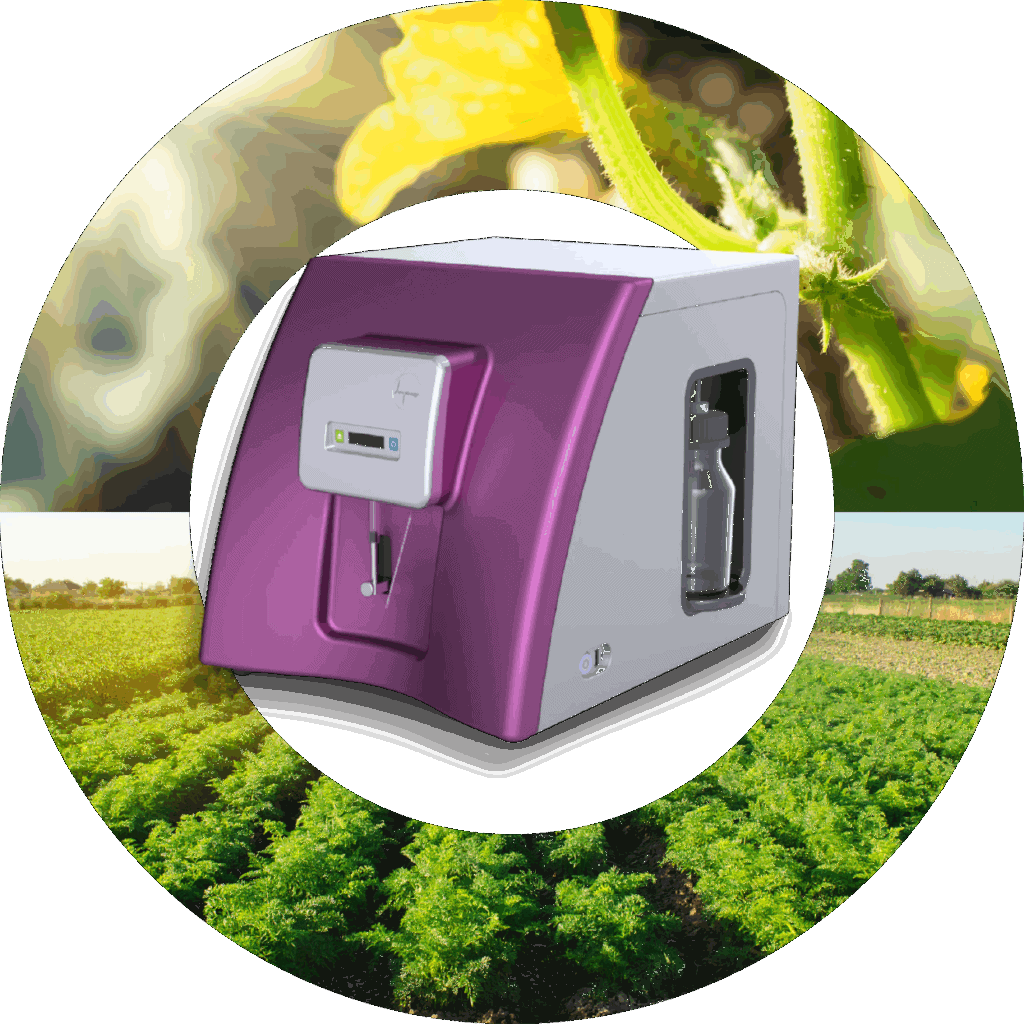
Insights for research, breeding, and seed production
The Ampha Z40 is a high-end laboratory instrument for precise, label-free, high-throughput pollen analysis. It provides information about viability, pollen quantity, ploidy and microspore developmental stage determination– delivering beneficial insights from early research to commercial seed production.

Universal
over 250 crops supported

Efficient
viability, quantity, ploidy & microspore developmental stage

Flexible
customizable protocols and gating strategies
Reliable
proven impedance flow cytometry technology
TRUSTED BY LEADING COMPANIES:










Why Pollen Quality Matters
Pollen quality directly influences reproduction success. Increasing the knowledge of reproductive properties helps improve the results in breeding, production research and seed production.
With robust pollen data you can:
- Make earlier and better line selection decisions
- Detect impact of abiotic stress on pollen development
- Optimize crop placement and production strategies
- Improve flowering synchronization
- Increase reliability of hybrid seed production
What Makes the Ampha Z40 Unique
Unmatched Information that brings you forward
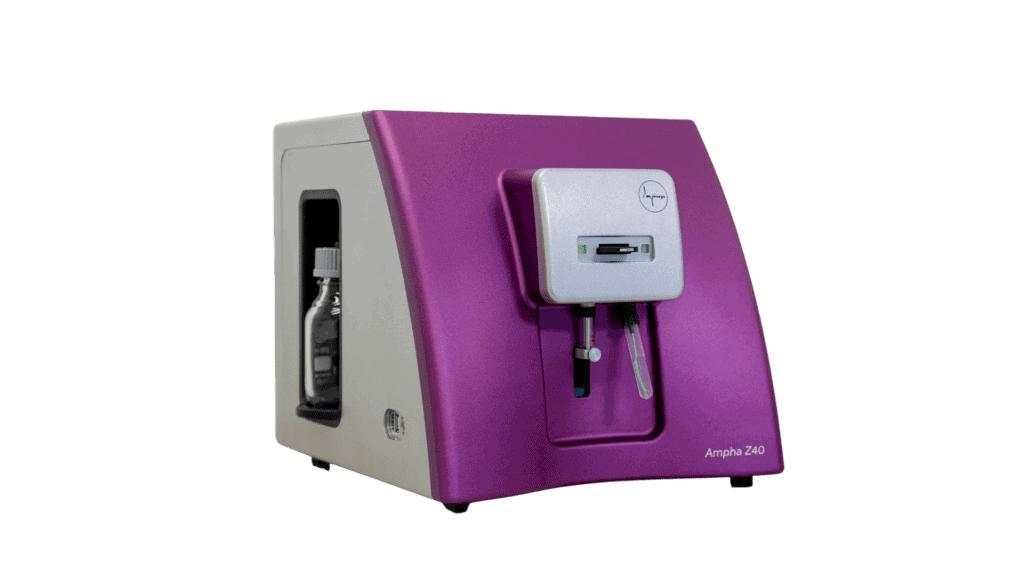
The Ampha Z40 is the universal instrument for the seed industry to determine pollen viability and pollen quantity fast and reliably. Protocols can be adjusted to deep dive into specific research topics. Determination of microspore developmental stages can be used for embryo yield prediction and speed up DH production. Even ploidy of pollen can be determined in combination with viability and quantity.
High Throughput with Reproducible, Operator-Independent Results
Tens of thousands of pollen grains per sample are analyzed within seconds, delivering highly robust and statistically relevant datasets. This offers standardized and comparable measurements around the globe for breeding programs and seed production.
This standardization is the reason the technology is trusted by leading seed companies worldwide.

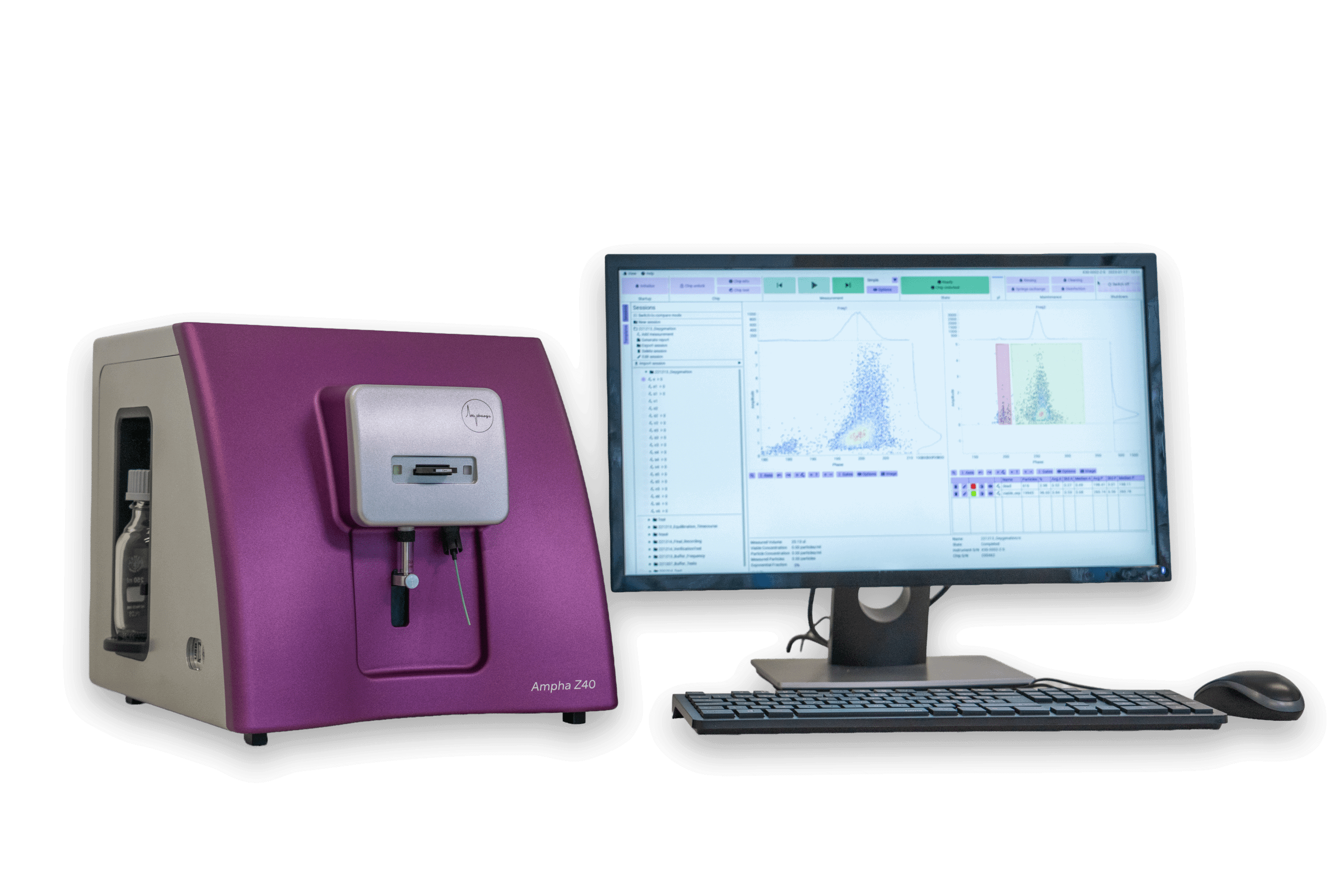
One for all: The Ampha Z40 for all crops
The impedance-based measurement principle measures pollen of all crop types — vegetables, field crops, ornamentals, trees — covering more than 250 validated species.
This universality makes the Ampha Z40 suitable for breeding, DH programs, production research and seed production with one single platform.
One system that delivers precise data, high-throughput reproducibility, and unmatched compatibility across >250 species.
From Research to Seed Production: One Platform for All Pollen Workflows
The Ampha Z40 supports the complete pollen analysis workflow – from fundamental research to routine quality control in seed production.

Doubled Haploid Production
Identify microspore developmental stages
Predict embryo yield for DH production
Correlate pollen traits with parental lines

Plant Breeding
Select high-performing lines based on pollen quality and quantity
Identify lines with pollen sensitive to abiotic stress
Improve breeding through precision pollen phenotyping

Production Research
Optimize female-to-male ratios and pollen usage
Improve flowering synchronization
Select the most appropriate locations for crop placement

Seed Production
Verify pollen viability before pollination
Control pollen quality before and after transport
Develop pollen storage and dilution protocols
Technology: Impedance-Based Single-Cell Cytometry

Impedance-based single-cell flow cytometry is the core technology of the Ampha Z40. As individual pollen grains pass through the microfluidic chip’s sensing zone, an alternating electrical field is applied. Each grain changes the electrical impedance of the medium in a way that reflects its physiological and structural properties. The signal detection allows to differentiate between dead and viable cells as well as the size of the cell.
This allows the Ampha Z40 to quantify label-free and in real time:
Viable, dead and aberrant cells based on their location on the scatterplot
Microspore Developmental stages based on their cell sizes
Distinct Ploidy-related populations based on their different cell size
Pollen concentration in the sample based on counting of every single cell
The systematic comparison of pollen quality characteristics reveals line-dependent differences in their reproductive properties. Knowing these properties enhances breeding and seed production.
Universal and Crop-Specific Chips
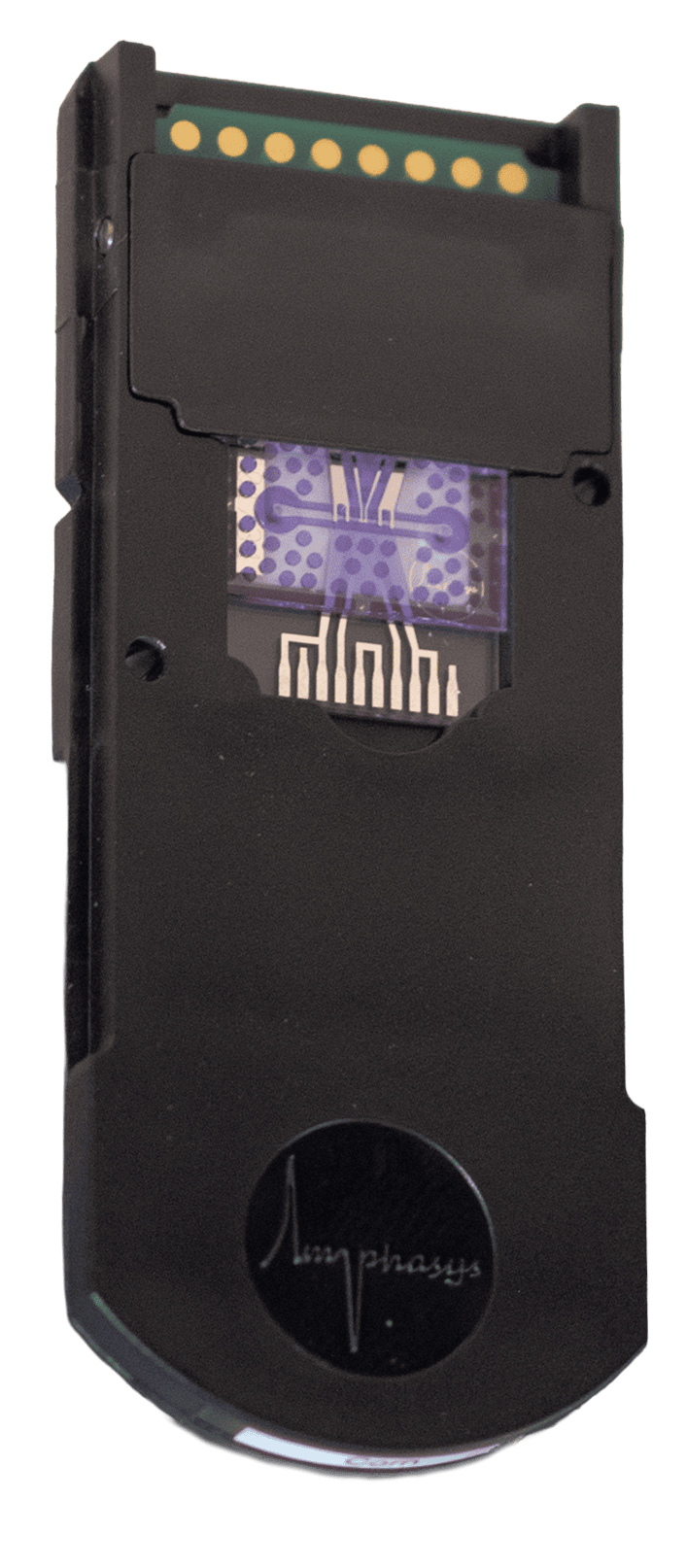
The Ampha Z40 can be operated with universal and crop-specific chips. These patented microfluidic chips are equipped with microelectrodes. Pollen cells flow through precisely engineered microchannels which are available in different sizes, adapted to the size of the cell and optimized for highest sensitivity. The electrodes measure changes of the electrical resistance (impedance) of the fluidic medium when single cells pass through the applied electric field. The detection of cell size, membrane capacitance and cytoplasmic conductivity is translated into cell count, viability, and metabolic activity.
Most relevant chip features:
- Universal chips with microfluidic channels of 80, 120, 250 and 400 mm for all crops
- Smart crop-specific chips for automated data analysis for selected crops
- Guarantee of 1000 measurements per chip
Universal chips provide full flexibility for research, own sampling protocols, and gating strategies. They cover all crops and are used if crop-specific chips are not available.
Smart crop-specific chips are available for the most important crops and offer automated data analysis for systematic screening, high throughput, and routine quality analysis.
Focus Applications








More applications under development




Frequently Asked Questions
How difficult is it to use the Ampha Z40 in routine workflows?
Not difficult at all.
The Ampha Z40 is designed for routine lab use and can be operated confidently after a short introduction.
Most users are fully productive after a half day of training including sample preparation. The sophisticated software AmphaSoft PRO is intuitive and facilitates routine analysis as straightforward as specific research topics.
How reproducible are the results across operators, seasons and locations?
The technology of the Ampha Z40 is based on electrical cell properties. This measurement principle guarantees reproducibility and operator-independent results. Furthermore, it is location independent and does not need any kind of calibration, which leads to standardizable results.— a key reason why major seed companies rely on the technology.
What crop types does the Ampha Z40 support?
The Ampha Z40 measures pollen of all crops. For over 250 species, including vegetables, field crops, cereals, cucurbits, solanaceae, ornamentals and trees, Amphasys provides templates and measurement recommendations, including sample preparation.
Which parameters can the Ampha Z40 measure?
The Z40 measures the electrical resistance (impedance) of single cells passing through an electrical field. This can be correlated to the total quantity of cells, and their status as viable, dead, or aberrant cell fractions. :
- Viable, dead, and aberrant cells – essential for pollination success in breeding and seed production
- Pollen quantity – essential phenotyping parameter for many crops
- Microspore developmental stages – crucial for DH production and embryo yield prediction
- Pollen ploidy– supports breeding and line selection
Ready to Unlock the Full Potential of Your Pollen?
With its innovative technology, Amphasys has revolutionized the seed industry and pollen quality has transitioned from an ignored to a core element of agricultural success.
Don’t ignore this critical aspect of reproduction anymore and apply pollen quality analysis for successful breeding and seed production strategies. Understanding pollen quality is essential for the future of global food production.