ampha P20
Portable Pollen Analyzer for Instant On-Site Insights
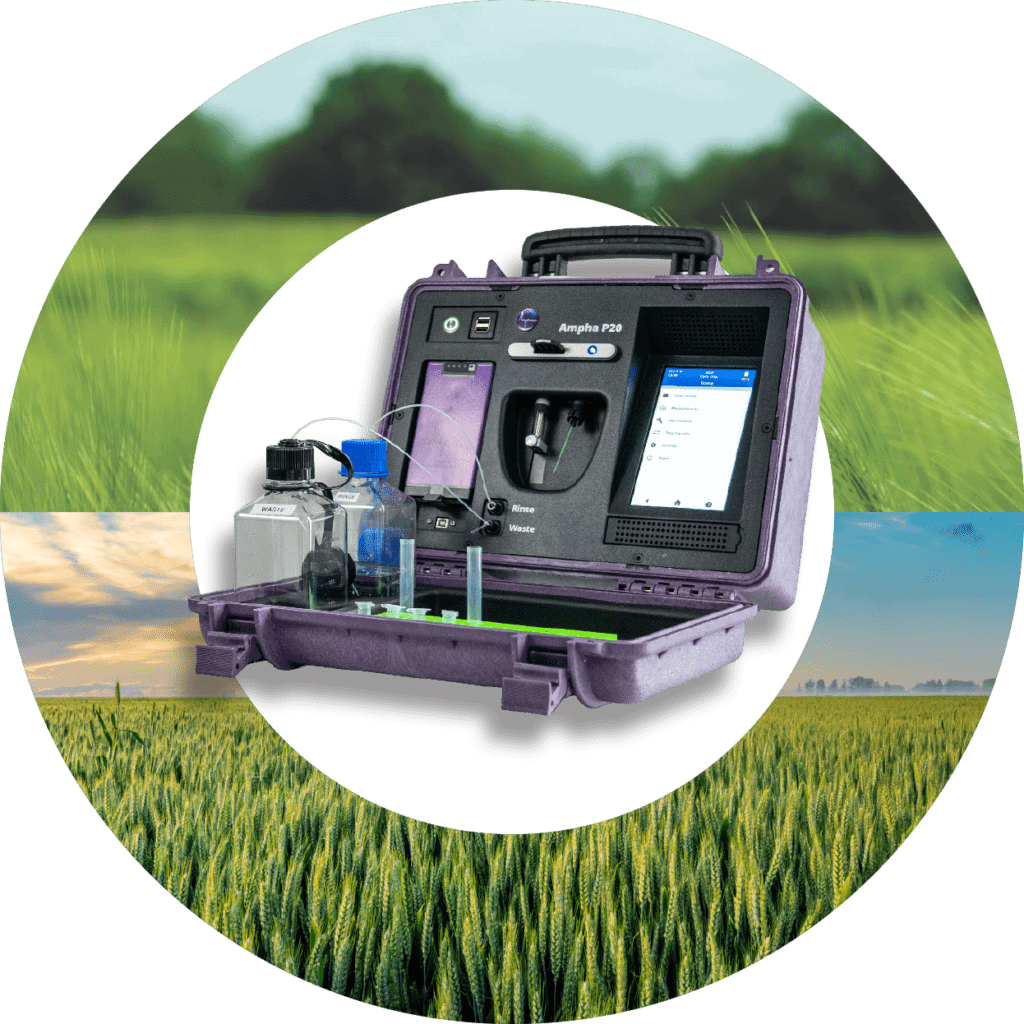
Your portable lab for pollen quality — anywhere you need it
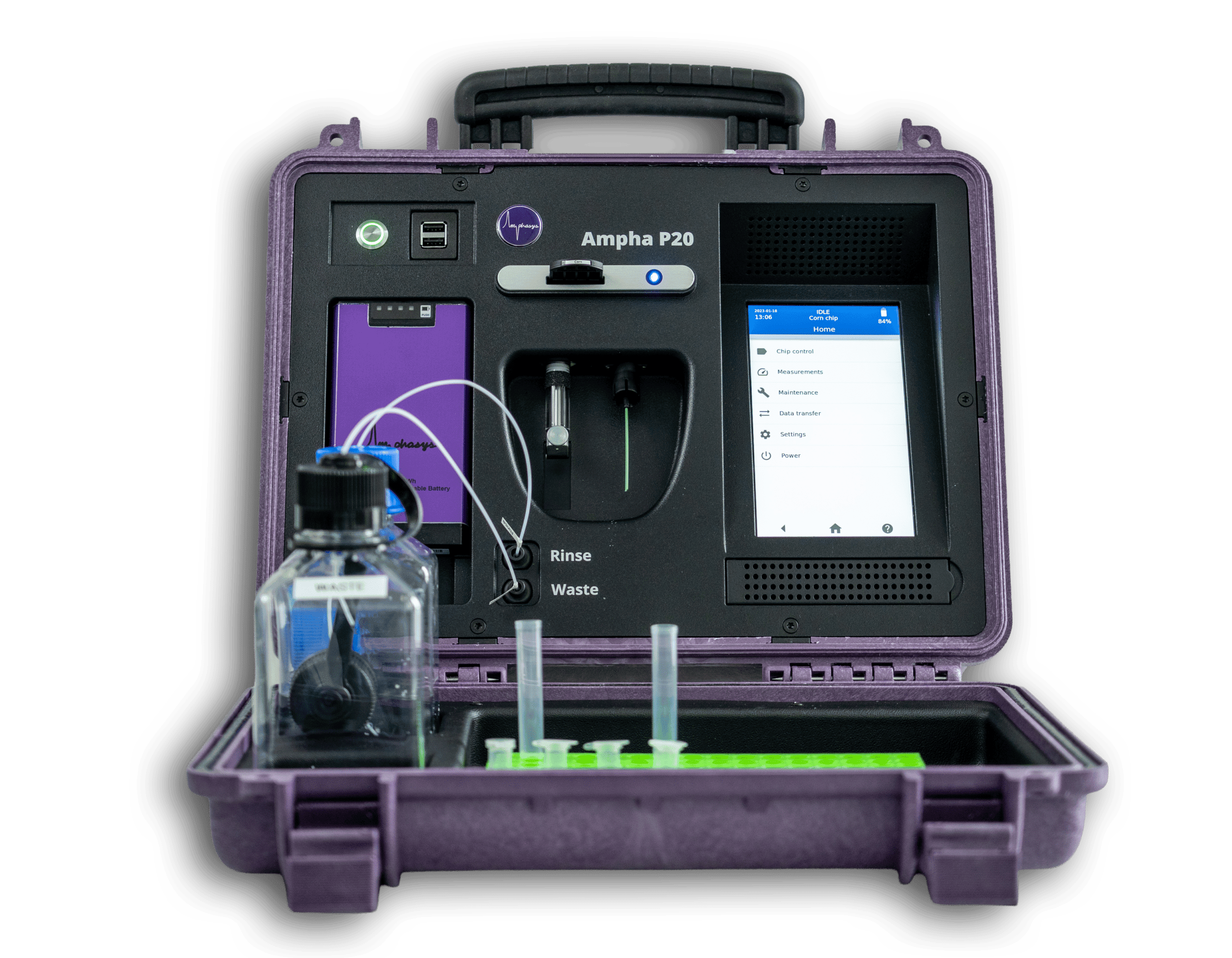
The Ampha P20 is the world’s first fully portable pollen analyzer, bringing laboratory-grade pollen viability and quantity measurements directly to the greenhouse, field, or production site.
With intuitive touchscreen workflows and automated data analysis, it delivers fast and reliable insights — ideal for crops with very short pollen lifetimes such as wheat, rice, and corn.

Portable
Lightweight, battery-powered, and airplane-ready

Easy to Use
Touchscreen interface and operation wizards — no expert training needed
Automated
Crop-specific settings loaded by inserting chip, automated data-analysis immediately after measurement

Reliable
Location-independent, standardizable measurements, no calibration needed
TRUSTED BY LEADING COMPANIES:











Why Pollen Quality Matters
Pollen viability and quantity are critical success factors in plant reproduction with direct impact on breeding outcomes and seed production results.
For crops with extremely short pollen lifetimes — including wheat, rice and corn — fast, on-site measurements are essential for reliable decisions.
With accurate pollen data you can:
- Select better-performing lines
- Optimize flowering synchronization
- Improve female-to-male ratios
- Increase reliability and consistency in hybrid seed production
What Makes the Ampha P20 Unique
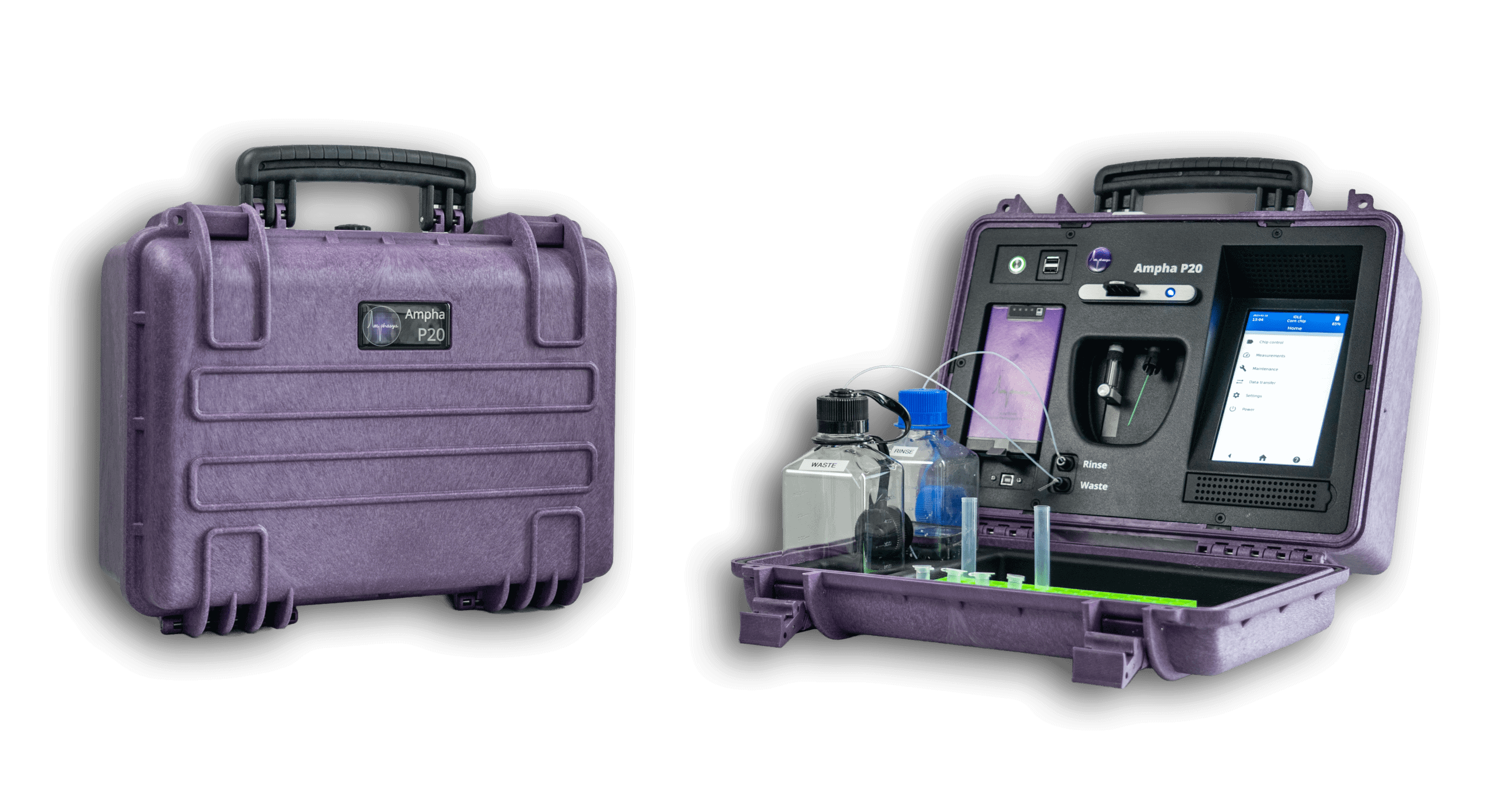
Portable, Field-Ready Design
The Ampha Z40 is the universal instrument for the seed industry to determine pollen viability and pollen quantity fast and reliably. Protocols can be adjusted to deep dive into specific research topics. Determination of microspore developmental stages can be used for embryo yield prediction and speed up DH production. Even ploidy of pollen can be determined in combination with viability and quantity.
Automated, Reproducible Analysis
No expert user knowledge required: with the Crop-specific chips and their, intuitive touchscreen menue and automated data analysis pollen measurements are straightforward and easy to perform. Consistent results without expert knowledge.
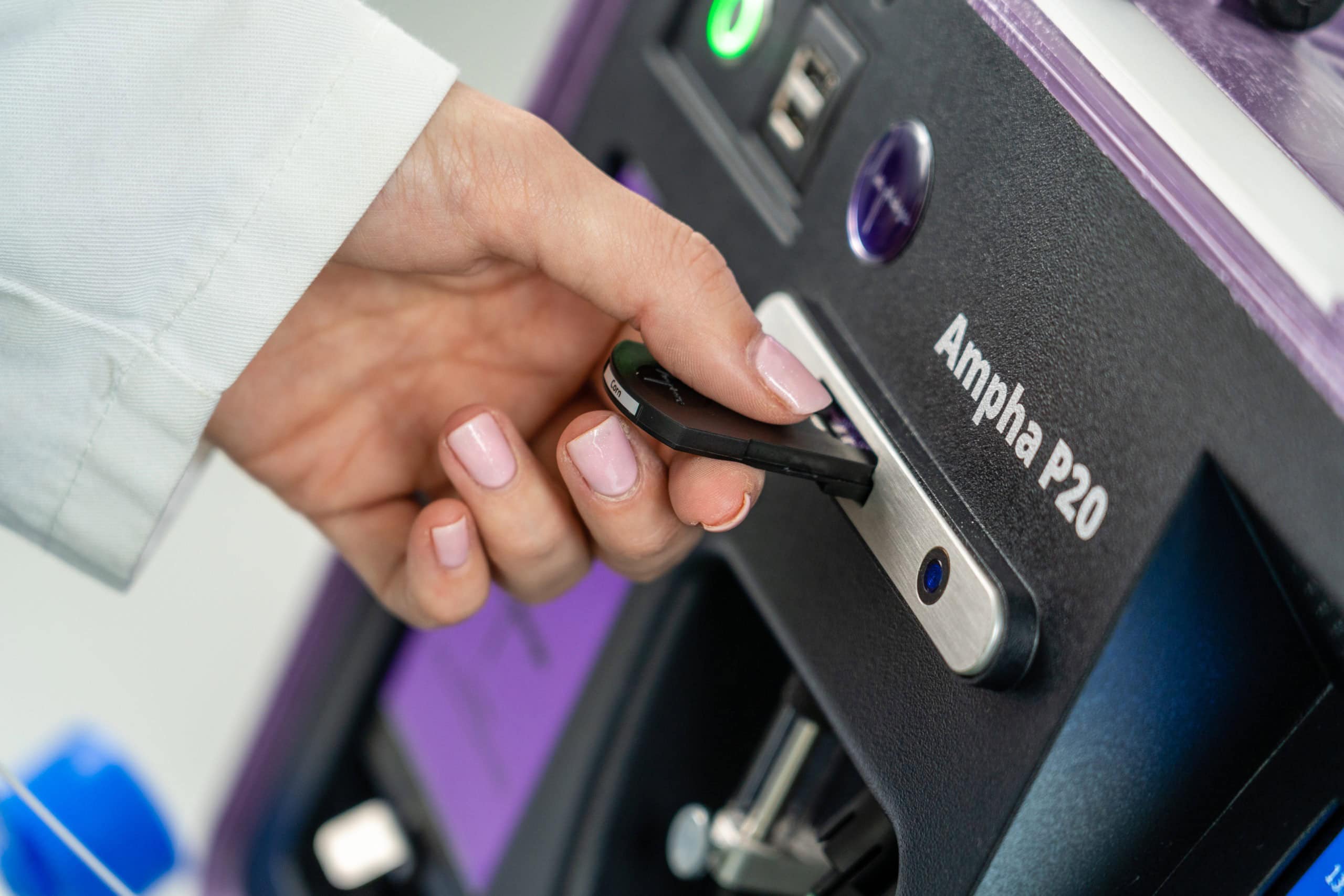
Short measurement time - Instant Results
Measuements with the Ampha P20 take less than a minute, making it ideal for time-critical workflows such as wheat and rice. The measurement can be followed on the screen in real-time and the result is displayed immediately at the end of the measurement.
A portable system delivering fast, automated pollen insights — anytime, anywhere.
From Breeding to Seed Production: One Portable Platform for All Key Workflows
The Ampha P20 is ideal for systematic pollen quality screening and routine pollen quality control. Information about viable, dead and aberrant cells, and pollen quantity are instantly available for breeding and seed production.

Plant Breeding
Precision pollen phenotyping of lines directly in the field
Viable, dead, aberrant cell and pollen quantity data for better line selection
Impact of abiotic stress on pollen quality

Production Research
Optimization of flowering synchronization
Improving female-to-male ratios
Determining the best location for crop placement

Seed Production
Routine quality control of pollen batches
Standardized results regardless of location
Development of Pollen storage and dilution protocols
Technology: Impedance-Based Single-Cell Cytometry

The Ampha P20 shares the same proven impedance flow cytometry technology platform with our laboratory system Ampha Z40 — but packaged in a fully portable format.
As individual pollen grains pass through the microfluidic chip’s sensing zone, a small alternating electrical field is applied. Changes in impedance reflect the grain’s physical and physiological properties.
This enables the Ampha P20 to quantify:
Viable, dead and aberrant cells based on their location on the scatterplot
Pollen concentration in the sample based on counting of every single cell
All measurements are label-free, fast, and operator-independent, ensuring consistent data even under field conditions.
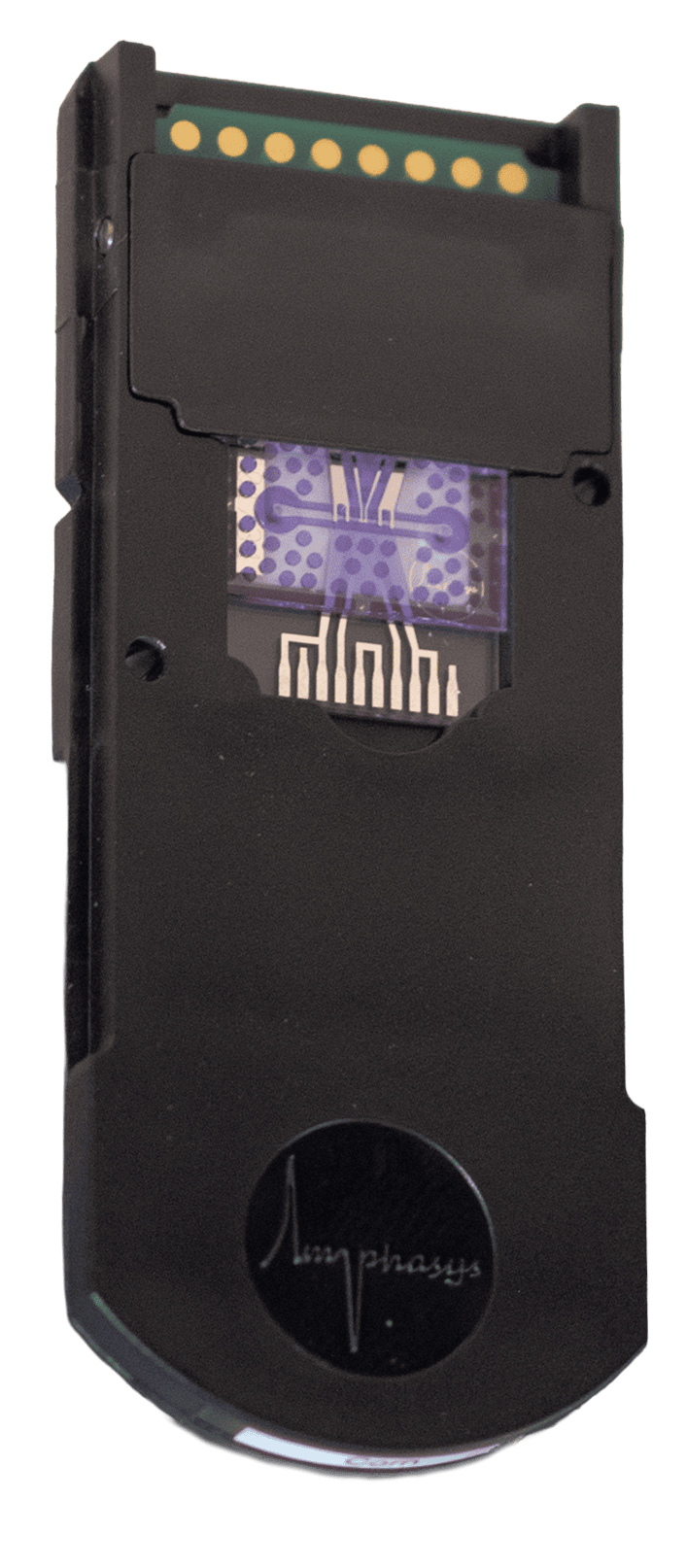
Crop-Specific Microfluidic Chips
The Ampha P20 is operated with crop-specific microfluidic chips. These patented microfluidic chips are equipped with microelectrodes. Pollen cells flow through precisely engineered microchannels which are available in different sizes, adapted to the size of the cell and optimized for highest sensitivity. The electrodes measure changes of the electrical resistance (impedance) of the fluidic medium when single cells pass through the applied electric field. The detection of cell size, membrane capacitance and cytoplasmic conductivity is translated into cell count, viability, and metabolic activity.
- Immediate results of viable and aberrant cells and cell quantity
- Automated data analysis
- Predefined sample preparation and measurement protocols
- Guarantee of 1000 measurements per chip
Crop-specific chips cover the most relevant crops and are operated with fixed sample preparation protocols and predefined analysis settings, allowing then fully automated data analysis without manual gating or data interpretation. This ensures fast, standardized and user-independent pollen quality assessment.
Available Applications







More applications under development




Frequently Asked Questions
How difficult is it to use the Ampha P20?
The Ampha P20 is designed for routine, daily use for even untrained users.
The intuitive menu on the touchscreen, the settings on the chip, and the automated data-analysis enable reliable and reproducible results.
How reproducible are the results in field conditions?
Impedance-based cytometry is highly reproducible because it does not need calibration like optical instruments. The robust case protects from dust and allows measurements in the field up to 45°C.
Which crops does the Ampha P20 support?
The Ampha P20 is based on crop-specific chips which offer automated data-analysis and an easy workflow. crops include tomato, pepper, brassicas, cucurbits, corn, wheat, sunflower, onion, carrot, beet — with more applications being added continuously.
How fast are the measurements?
The time for sample preparation can vary significantly, depending on the crop and the status of pollen (e.g., stored, fresh). One measurement to determine pollen quality typically takes less than a minute,
Ready to Unlock the Full Potential of Your Pollen?
With its innovative technology, Amphasys has revolutionized the seed industry and pollen quality has transitioned from an ignored to a core element of agricultural success.
Don’t ignore this critical aspect of reproduction anymore and apply pollen quality analysis for successful breeding and seed production strategies. Understanding pollen quality is essential for the future of global food production.