Fruit and Nut Production – Ensuring High Fruit Set through Pollen Quality Control
Fruit and Nut Pollen Quality Analysis
Overcoming fruit set issues with artificial pollination - and pollen quality monitoring
For fruit and nut crops, pollination is the crucial step that directly influences yield and thus economic success. However, several external factors are increasingly threatening this biological process. For instance, climate change is leading to asynchronous flowering of fruit trees and their pollen donors. In addition, heat stress and drought impair pollen viability and quantity. The decline in natural pollinators reduces fertilization efficiency.
To increase fertilization efficiency, growers therefore rely on additional artificial pollination. Here, too, success depends significantly on the quality of the pollen used.
For the quality control of pollen at pollen harvest and before application as well as for the development of pollen storage protocols, appropriate methods for the routine analysis are required.
Challenge:
Climate-Induced Pollination Failure
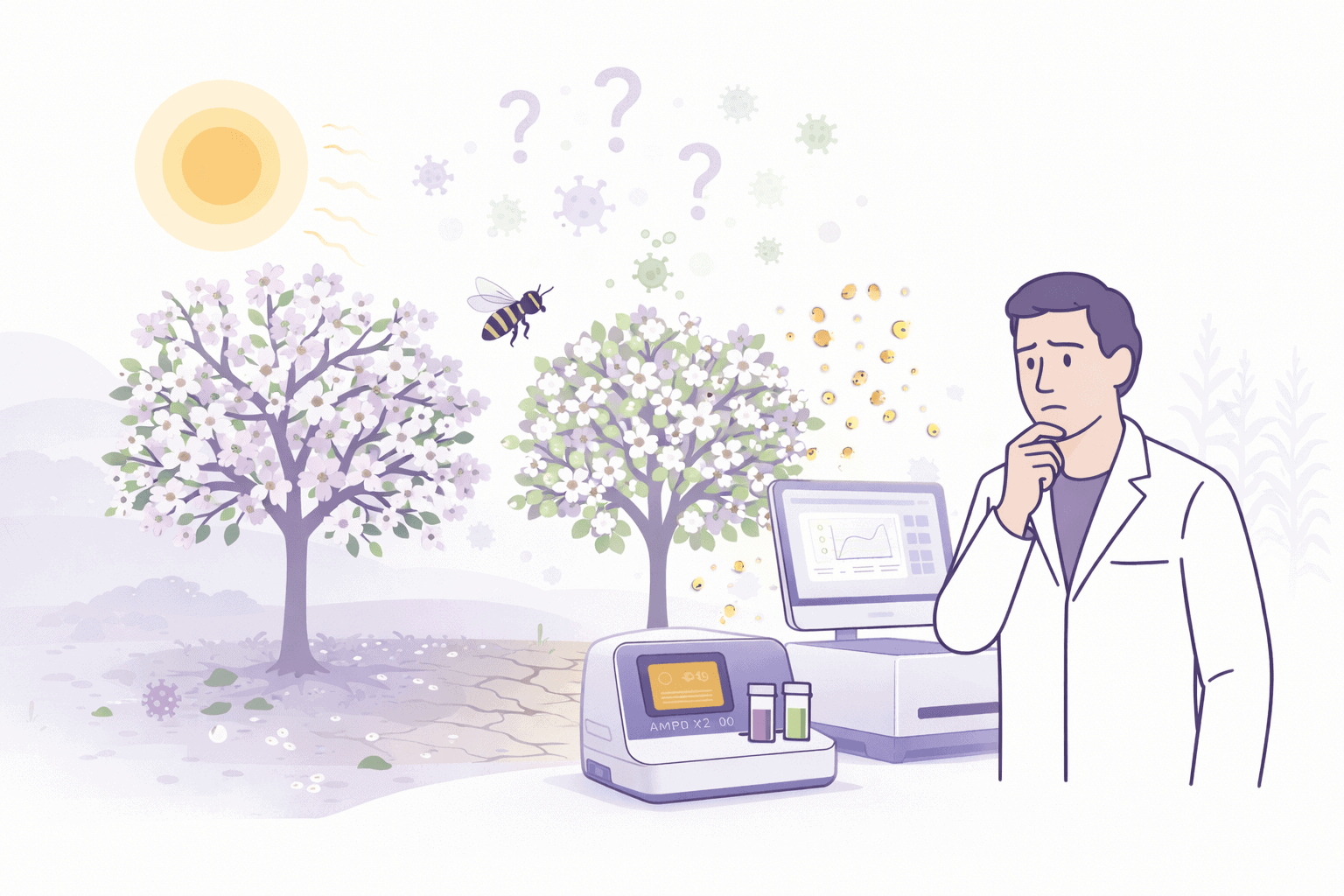
Climate change is causing fruit trees and their pollen donors to bloom at different times. Moreover, abiotic stress like heat and drought reduce pollen viability and quantity, and even rented bees do not compensate for reduced natural pollinators and don’t guarantee complete pollination. Consequently, to avoid yield losses in orchards, additional pollination measures using foreign pollen must be implemented.
Amphasys pollen analyzers enable the quality assessment of pollen batch before pollen harvest and before artificial application, ensuring consistently high pollen viability. Furthermore, the technology also allows for the development and validation of suitable pollen storage protocols.
Pollen suppliers can verify whether the pollen quality meets the required viability thresholds, while fruit growers can anticipate successful pollination.
Challenge:
Unknown Managed Pollination Results

If there is insufficient viable pollen available for the pollination of fruit trees, for example due to asynchronous flowering, fruit growers rely on artificial pollination using foreign pollen. Typically, drones or special sprayers are typically used; in some crops and in tree breeding, pollination is even carried out manually. To ensure successful fertilization, quality controls should be performed beforehand to guarantee that pollen of sufficient quality is used.
Through quantitative quality control of pollen used in artificial pollination services, Amphasys pollen analyzers ensure that pollen quality is not the limiting factor. In particular, real-time measurements, even onsite, allow fruit growers and tree breeders to verify whether the quality of the pollen used meets the requirements for viability and thus guarantee successful fertilization.
Challenge:
Protocol Development for Pollen Storage
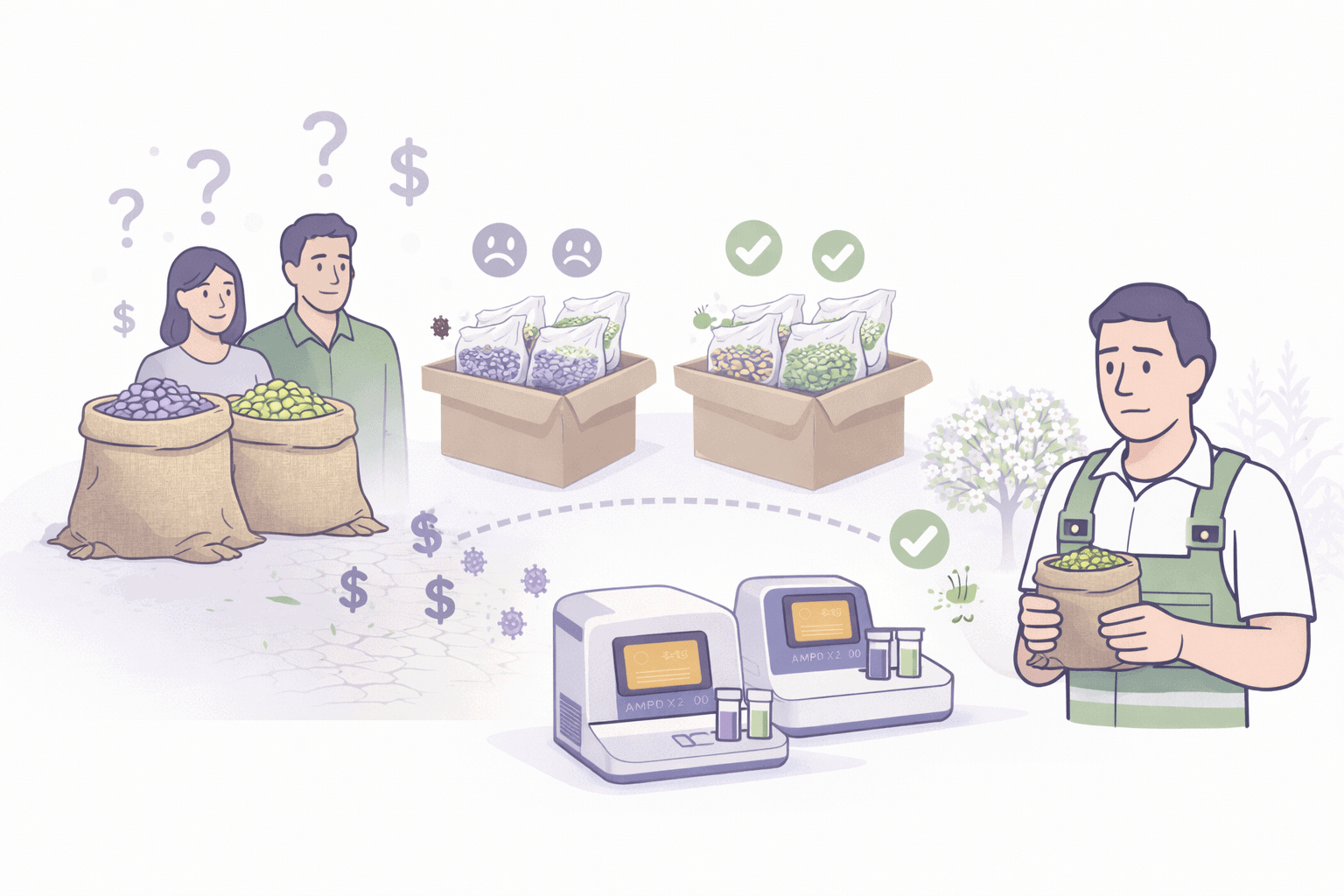
Suppliers of pollen for artificial pollination must ensure that the pollen has maximum viability at harvest time and that the storage protocol is optimized to maintain this viability over extended periods, because pollen vitality is the crucial factor for successful pollination. Similarly, fruit growers must be able to rely on the high quality of the pollen for subsequent use.
Amphasys pollen analyzers provide immediate information about the quality of fresh and stored pollen. With minimal sample preparation and the viability measurement within one minute, reliable pollen storage protocols can be developed and pollen quality can routinely be monitored before and after storage, and even along the supply chain. As a result, pollen producers can thus ensure that the best possible pollen is applied. Fruit growers can trustfully rely that high-quality pollen was used and fertilization is successful.
The Right Tools for Fruit and Nut Pollen Analysis
Amphasys provides analyzers that deliver rapid, label-free, and quantitative pollen quality measurements for all fruit and nut species. Specifically, with Amphasys pollen analyzers, pollen viability, concentration, and integrity can be determined in minutes, supporting data-driven decisions in the field or laboratory.
Ampha Z40
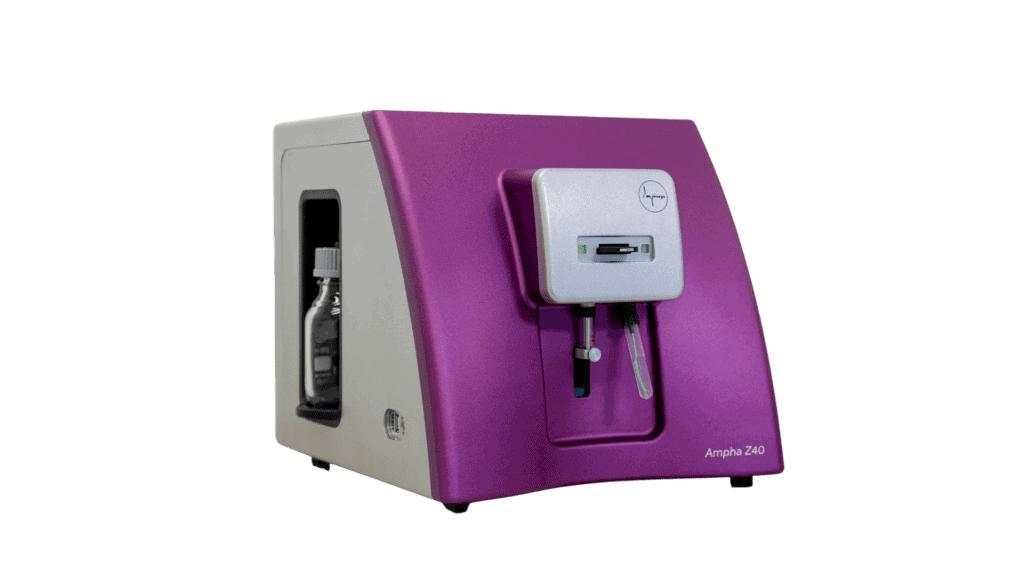
The Ampha Z40 enables instant pollen viability testing of any kind of fruit or nut. The instrument is ideal for routine quality control at pollen harvest and before pollen application. It allows the development of reliable pollen storage protocols and monitor pollen quality along the supply chain.
AmphaChip
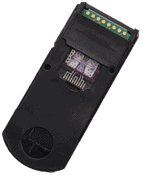
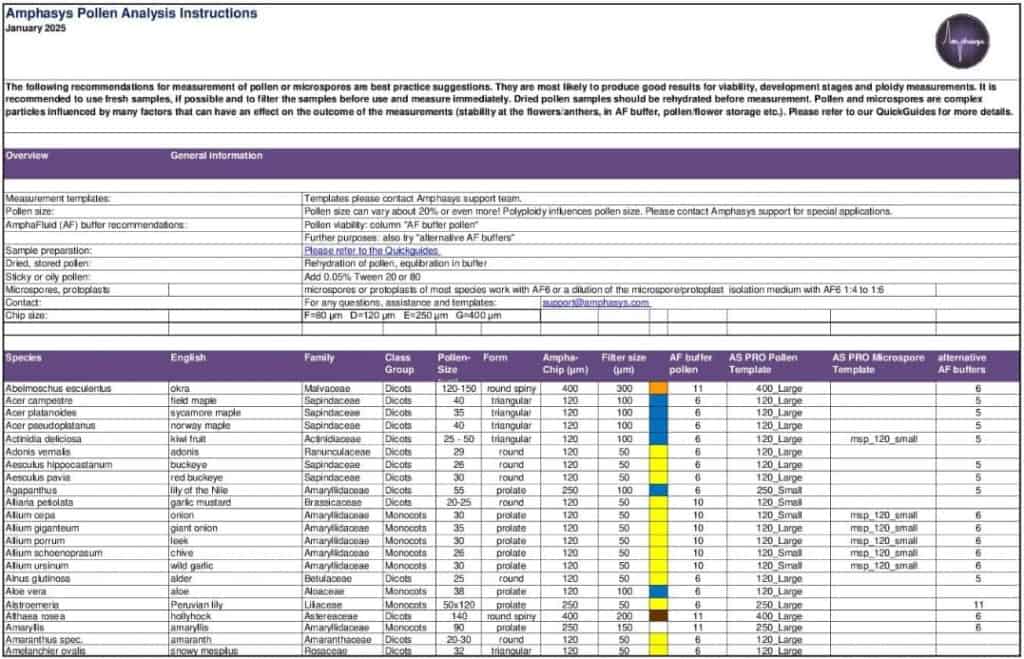
The AmphaChip technology enables label-free, single-cell analysis of all kind of fruit and nut pollen. Measurement chips of different diameters guarantee high sensitivity and optimal measurement conditions. Recommendations for a large variety of fruits, nuts and trees are available in the Amphasys Pollen Analysis Instructions.
Practical Applications in Fruit and Nut Production
Fast, quantitative pollen quality control enables fruit producers, tree breeders, and artificial pollination service providers to optimize pollination efficiency and ensure reliable pollination.
Fruit Production: Ensuring Complete Pollination and Full Fruit Set
In fruit and nut production, complete pollination is directly linked to commercial success. The availability and application of pollen of sufficient viability is the prerequisite for successful fertilization and fruit formation. Fruit producers must be confident that the applied pollen meets quality requirements.
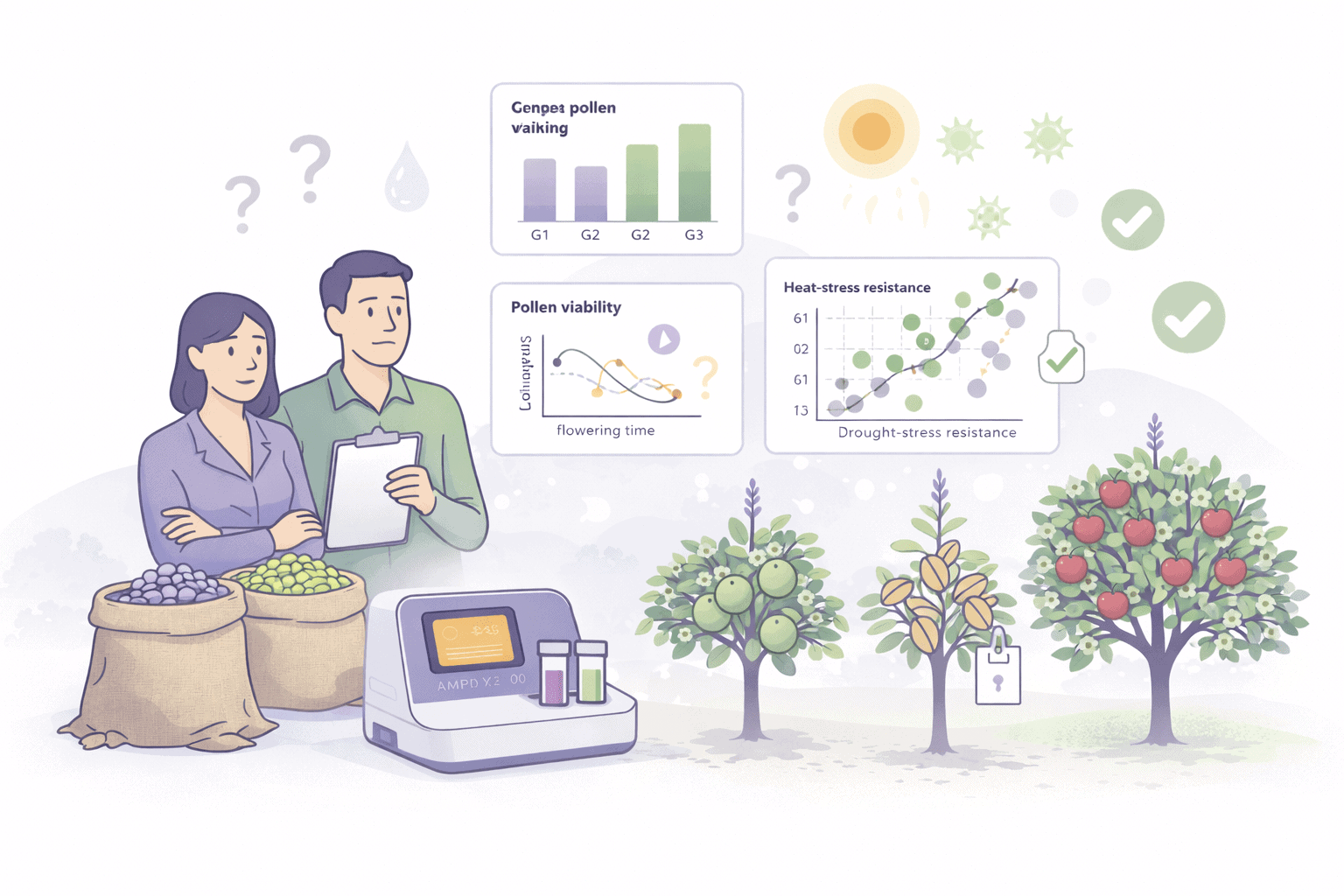
Fruit producers and tree breeders can use pollen quality data to:
- Evaluate that the applied pollen viability meets quality requirements
- Identify genotypes with continuous, stable pollen viability and quantity
- Identify genotypes with high pollen performance under stress conditions
Monitoring pollen quality enables successful fertilization in tree breeding and complete pollination for full fruit set.
Pollination Services: Ensuring Pollen Quality and Full Fruit Set
Commercial fruit and nut production relies on managed pollination and increasingly artificial pollination with drones, sprayers, and other devices is used. The applied pollen originates mostly not from the same orchard and often is stored for a certain period of time. Pollen quality directly impacts fertilization and fruit set success.
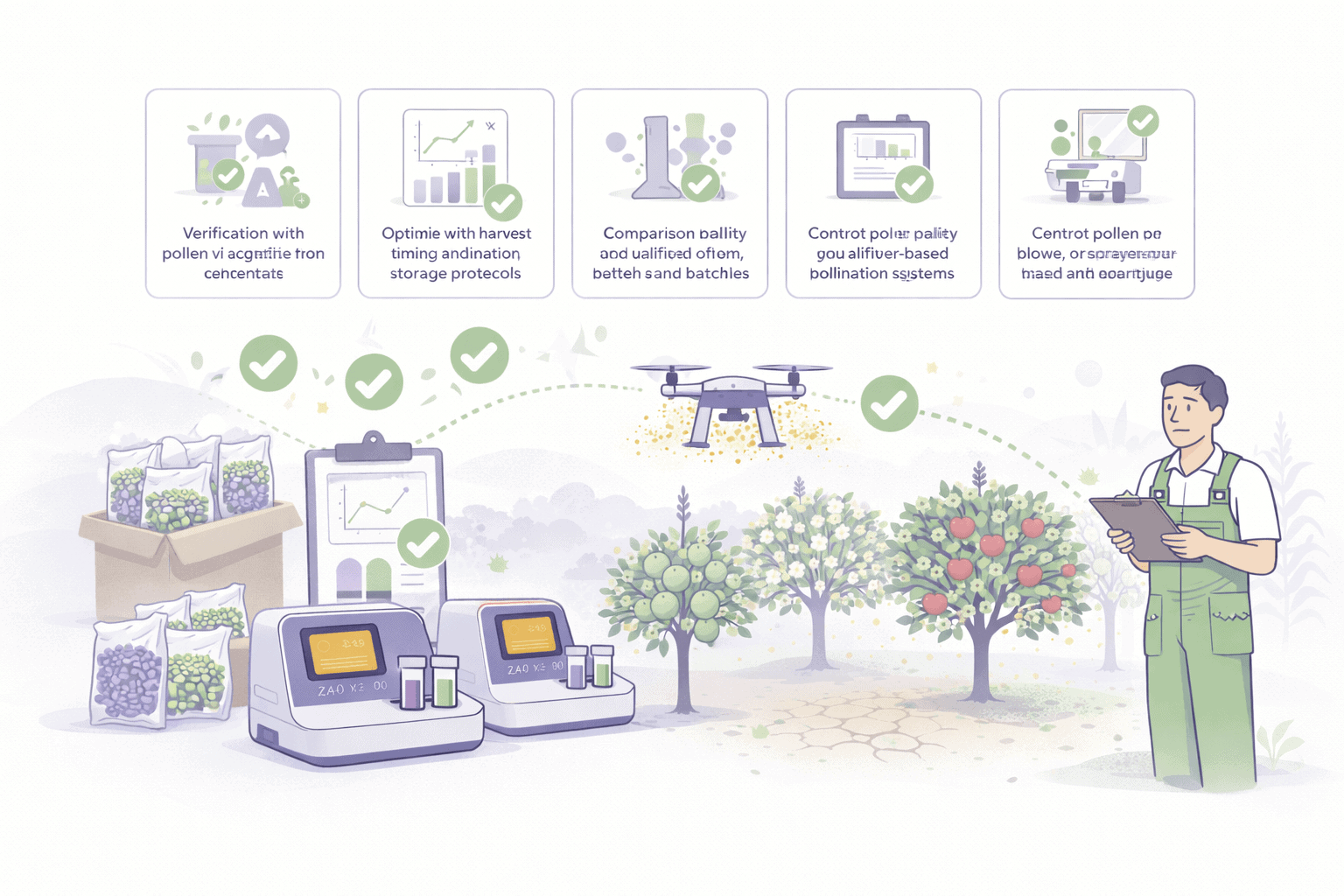
Quantitative pollen analysis enables pollination service providers to:
- Verify pollen viability before artificial pollination
- Optimize pollen harvest timing and validate storage protocols
- Compare and qualify pollen batches from different suppliers
- Ensure consistent pollen performance across orchards and production sites
Pollen quality is crucial for successful fertilization and ultimately for economically viable fruit and nut production. Routine pollen quality control allows for the monitoring and verification of the pollen used and ensures transparency in the pollination process.
Bottom line: In conclusion, Amphasys offers a technology for real-time pollen quality measurements. Verify pollen quality from pollen harvest to application and develop efficient storage protocols – for better results in fruit and nut production.

Verify pollen viability before artificial pollination

Optimize harvest timing and storage protocols

Validate supplier quality and ensure batch consistency

Maximize pollination success for stable yields
Learn More
Deepen Your Knowledge & Drive Better Results
Download expert resources to dive deeper into pollen quality analysis, measurement technology, and real-world results.
Video
The Power of Advanced Pollen Viability Testing for Precision Pollination Services
Discover the impact of advanced pollen viability testing with Gili Loven from Edete PTA. This session delves into how precise pollen analysis is revolutionizing pollination services, leading to improved crop yields and more efficient agricultural practices.
Video
The Role of Pollen Viability in Olive Production
Michele Faralli, University of Trento – Italy How pollen performance influences fertilization success in high-latitude olive orchards, with strategies for sustainable production in marginal climates.
Video
How Drone Technology Teams Up with Pollen Analysis - Dropcopter
In this video, Matt Koball, Co-Founder of Dropcopter, will provide an overview of the company’s business model and how pollen measurements help growers achieve better fruit set and harvest.
Video
Added Value in Breeding and Production
In this online session, Darío Sánchez talks about the importance and benefits of systematical pollen quality monitoring.
Video
Applications of Pollen
During this session Dr. Gorka Santos introduces Amphays’s technology and explains how pollen analysis and in particular our pollen analyzers be used to:













Frequently Asked Questions
Why is pollen quality critical for fruit and nut production?
In fruit and nut crops, pollination directly determines fruit set and ultimately economic success. If fertilization is empowered by managed pollination with alien pollen, the success of the operation depends largely on the application of sufficient quantity of viable pollen.
How does climate change affect pollination success?
Climate change is responsible for the asynchronous flowering of fruit trees and their pollen donors. Abiotic stress can also negatively affect pollen viability and quantity. In combination with a decrease of natural pollinators, pollination efficiency and fruit set is reduced.
Why is artificial pollination failing without quality control?
Managed pollination systems with the use of drones, sprayers or other devices, rely on the application of harvested or stored pollen. Quantitative pollen quality control guarantees that the applied pollen corresponds to the required quality needed for successful fertilization. Pollen batches of inferior quality can be identified and excluded from operations.
How can pollen batches for managed pollination be validated objectively?
Pollen batches can be validated through quantitative measurement of pollen viability before use. Within a minute of measurement time, the viability of each pollen batch can be measured. In such a way, different pollen batches can be compared and only pollen of the required quality applied in fruit production.
How does quantitative pollen analysis improve ROI in pollination?
Managed pollination increases the complexity and cost of fruit and nut production. To ensure the success of the investment, the pollen used must be of high quality. Quantitative pollen analyses guarantee that only pollen with high viability is used. By reducing pollination failures and improving fertilization efficiency, fruit producers achieve more consistent fruit set, more stable yields, and a higher return on investment.
Talk to a Fruit and Nut Pollen Expert
Ready to improve your breeding efficiency or seed production yield? Our experts are here to help you find the right solution for your specific needs.