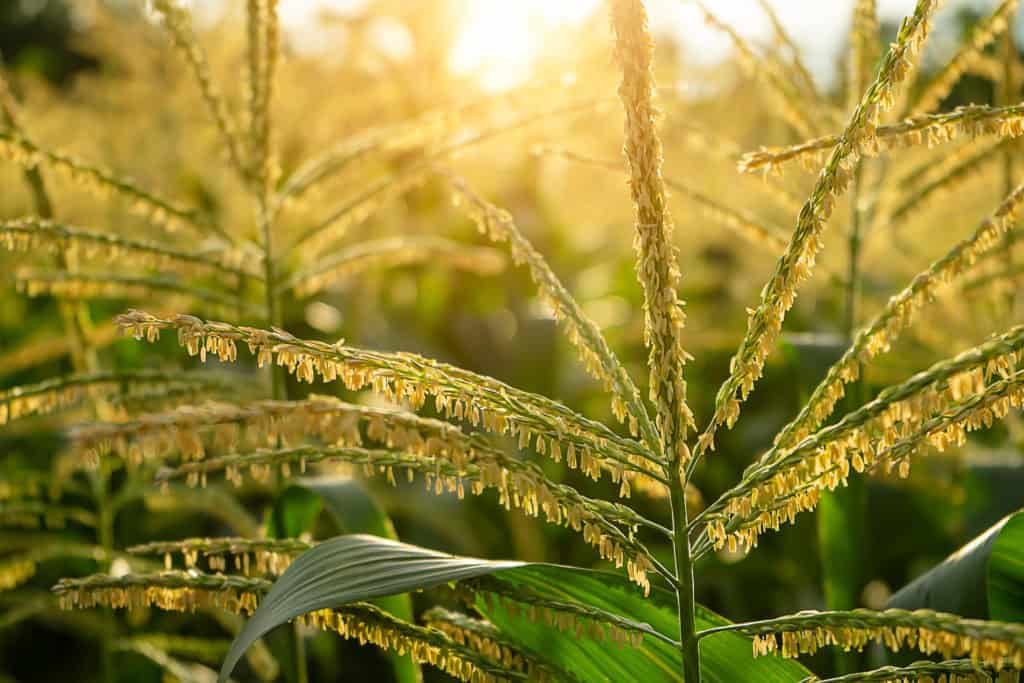
Corn Pollen Quality - The Key to Breeding and Seed Production Success
Corn Pollen Quality Analysis
Overcoming Corn Reproduction Challenges with Amphasys Pollen Analysis Technology
Successful line selection and high seed set depend on one key factor: efficient reproduction.The foundation of that is high pollen quality. Without knowing the pollen quality, crucial decision cannot be taken based on data. Consequently systematic screening of the reproductive characteristics of all lines helps to avoid wrong decisions in breeding and to optimize processes in seed production.
Amphasys helps overcome this challenge by providing tools and knowledge to systematically measure and understand reproductive traits. As a result, breeders and seed producers can make more informed decisions and achieve continuous improvements in both breeding and seed production workflows.
Challenge:
Unpredictable Hybrid Seed Set

Breeding new, commercially successful corn hybrids is a lengthy and arduous process, especially when reproductive traits of parent lines and offspring are unknown. Low pollen quality can cause failed crosses and late or wrong line selection decisions—leading to delayed time-to-market and increased costs.
Therefore Amphasys enables systematic pollen screening by exactly measuring viability, pollen quantity, and proportion of aberrant pollen cells. This allows breeders to map and compare reproductive performance of parent lines and offspring early on, thus accelerating and improving breeding success.
Challenge:
Planting the Right Number of Male Lines
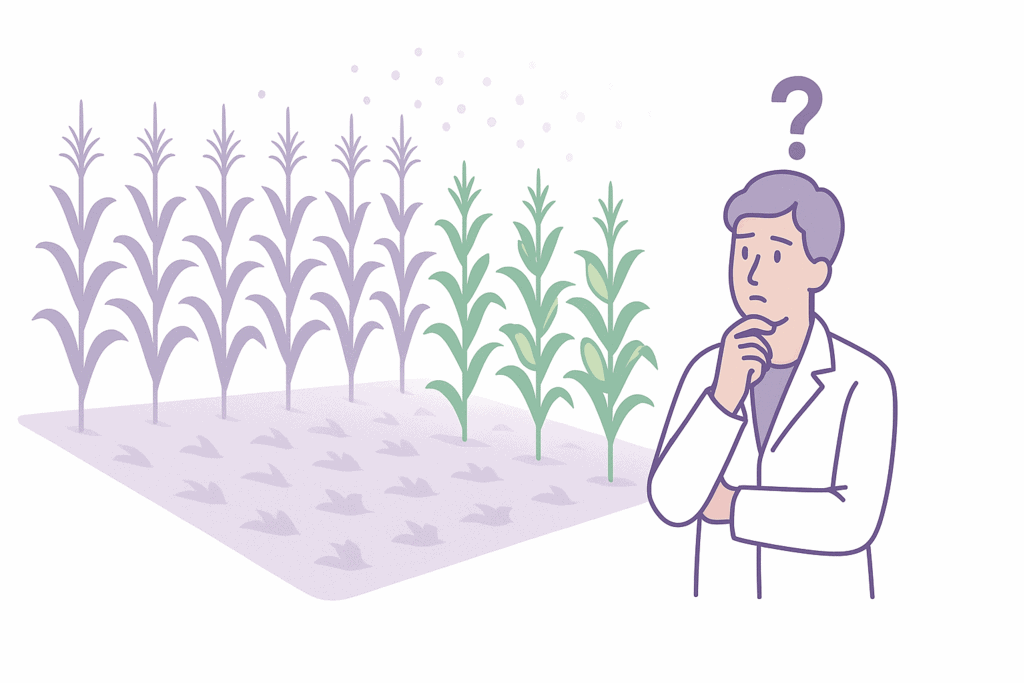
In hybrid seed production, the right female-to-male ratio determines the commercial success of a line. Planting enough male lines to be on the safe side promotes complete pollination but prevents a better seed yield. Too few male lines risk insufficient fertilization and therefore also a lower yield.
Precise pollen quality analysis with Amphasys Pollen Analyzers enables the optimization of production processes. Knowing line dependent pollen viability, quantity, stress susceptibility and shedding behavior allows for better flowering synchronization, crop placement, optimization of female-to-male ratios and thus more relable seed production and higher seed yield.
Challenge:
Hidden Impact of Environmental Stress
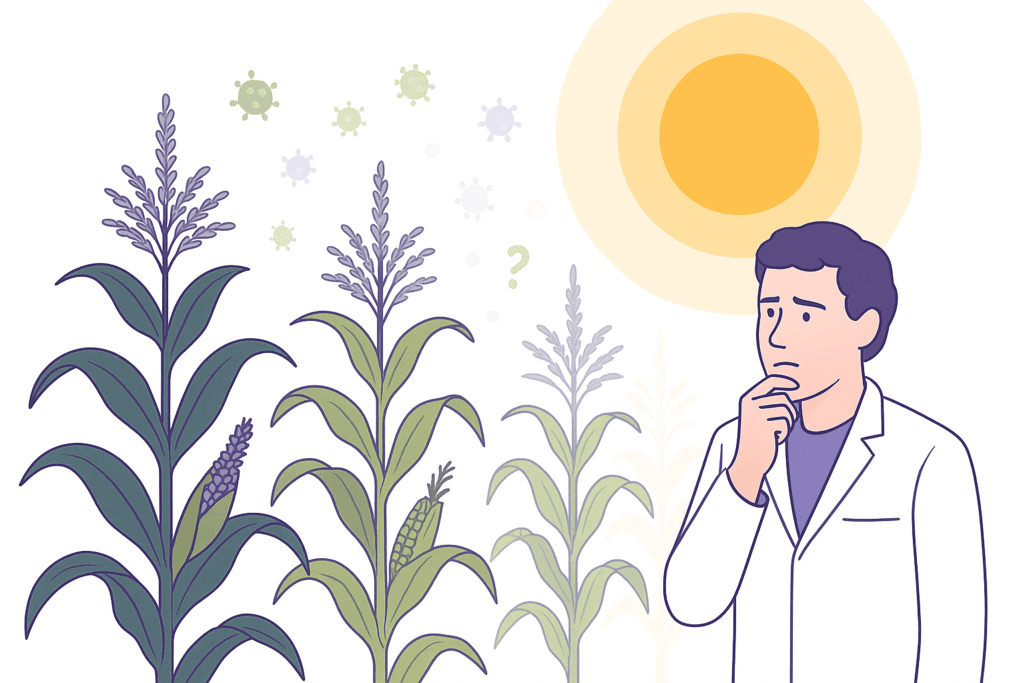
Abiotic stress, such as heat or drought during the flowering period, can lead to a reduction in pollen quality, which often manifests as reproductive problems or poor seed set. However using conventional methods, the effects of such abiotic stress factors on reproductive characteristics cannot be detected.
Amphasys helps identify stress-prone and stress-tolerant lines by precisely determining the reproductive characteristics of each line under specific environmental conditions. Moreover this ensures the optimal selection of pollinator lines in breeding and the determination of the right locations for crop placement in seed production.
Our Solutions for Corn Pollen Analysis
To support corn breeders and seed production teams in making fast, data-driven decisions, Amphasys offers a powerful combination of pollen analyzers and crop-specific microfluidic chips. Whether you work in the lab, greenhouse, or field, our tools are designed to deliver accurate, real-time insights into pollen quality—when and where you need them.
Ampha Z40
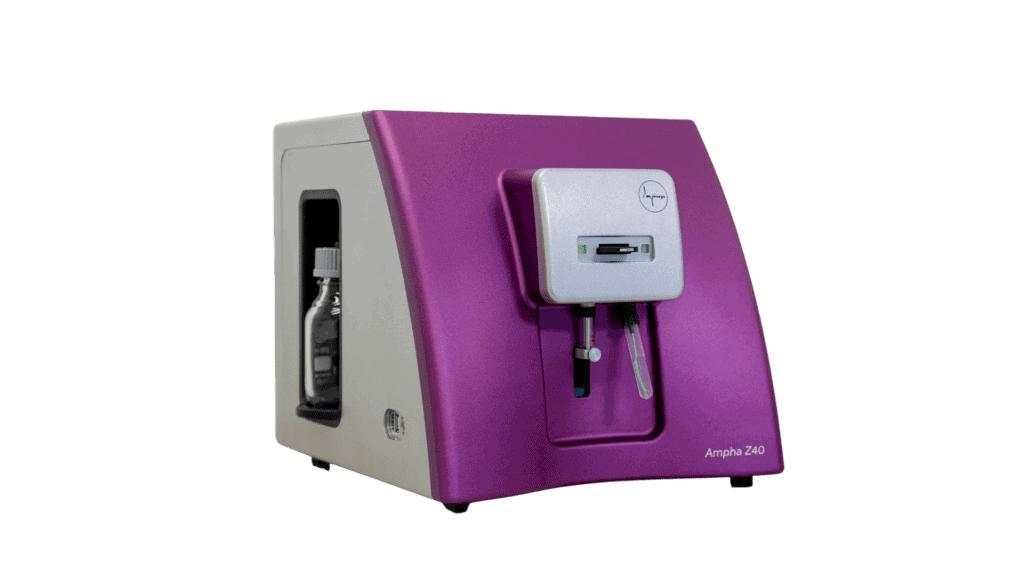
Designed for high-throughput and detailed research, the Ampha Z40 is ideal for all tasks from R&D to seed production. With full protocol flexibility, advanced analytics, and compatibility with all Amphasys measurement chips, it provides deep insights into pollen performance whether it be in corn breeding programs or seed production research.
Ampha P20

The portable, robust, and battery-powered Ampha P20 is ideal for remote measurements in greenhouse and field environments. It delivers real-time viability and concentration data, supported by automated data-analysis with the crop-specific AmphaChip Corn. Perfect for plant breeders and seed production teams who need fast and straightforward results without lab infrastructure.
AmphaChip Corn
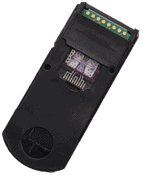
This chip, specifically designed for corn pollen analysis, is calibrated to the size and properties of corn pollen cells. It delivers precise and reproducible results on viability and quantity within one minute—whether you are screening lines in breeding or seed production. With its high sensitivity and plug-and-play handling, it is ideal for systematic screening in the greenhouse or field.
How Corn Pollen Analysis Works in Practice
For plant breeders and seed producers pollen quality control is crucial for achieving efficient breeding processes and high seed set. Amphasys Pollen Analyzers allow you to integrate pollen quality monitoring directly into your workflows—before issues arise.
Breeding: Enhanced Line Selection and Stress Resilience
In corn breeding, especially in hybrid breeding, it is essential to know the reproductive traits of each line. This should be known for each parent line and determined again for the offspring once homozygosity is reached. Pollen phenotyping provides relevant data that can be correlated with other plant characteristics or external measurements such as humidity, temperature, or light intensity.
Systematic screening of pollen quality allows breeders to:
- Characterize each line for pollen viability, quantity, and proportion of aberrant pollen cells
- Detect and identify lines which are heat-sensitive or prone to abiotic stress
- Measure pollen lifetime to detect lines with preferably longer pollen lifetime
- Select high-performing pollinator lines early in the breeding program
- Screen a large number of lines systematically and build up knowledge of reproductive properties

Seed Production: Operational Efficiency and Economic Optimization
Efficient corn seed production relies on the right production parameters, the right crop placement, and a reliable planning. This is based on knowledge of the reproductive properties which can be retrieved from systematic pollen quality screening.
Quantitative corn pollen quality data help seed producers to:
- Optimize female-to-male ratios
- Synchronize flowering of males and females
- Adapt production scheme according to shedding properties of male lines
- Adjust crop placement according to line-specific stress tolerance
- Select male lines with longer pollen lifespan for complete fertilization
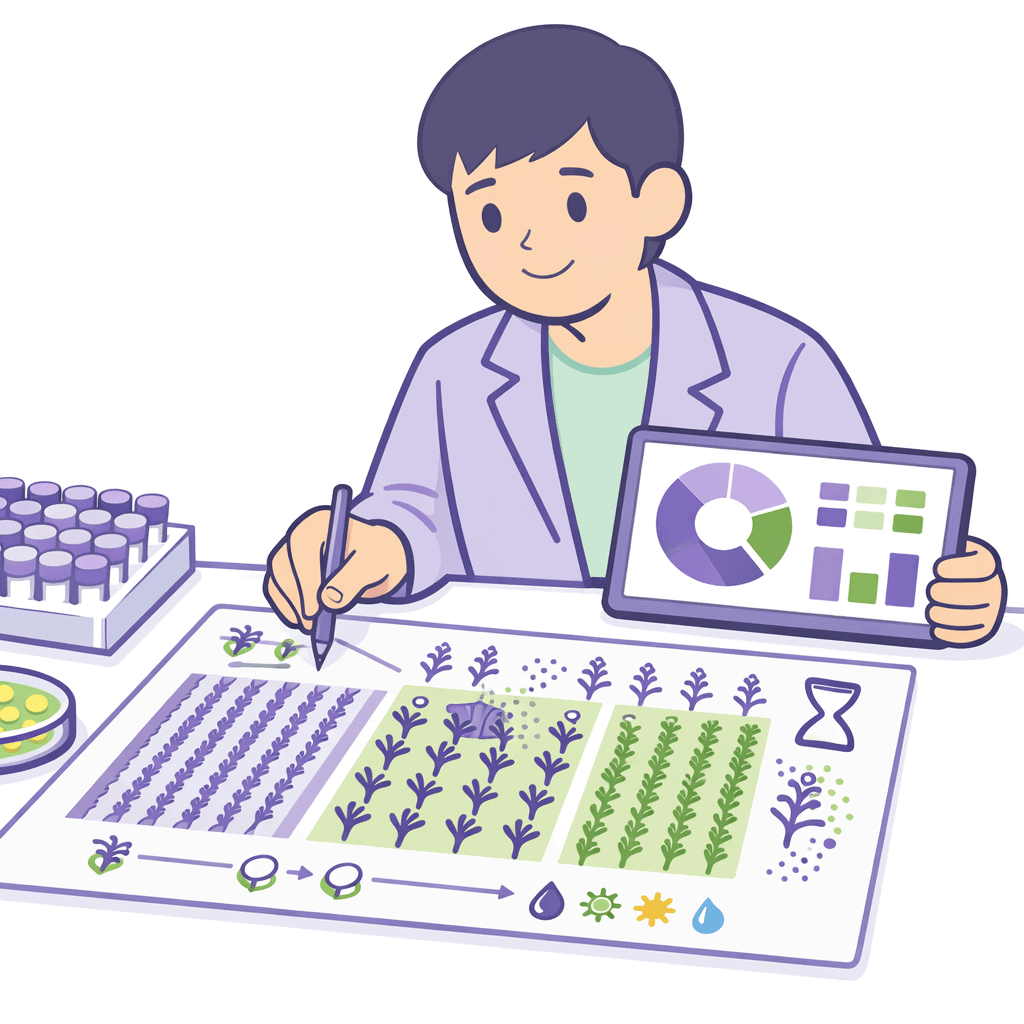
Bottom line: Amphasys offers a technology for real-time pollen quality measurements. Expand your knowledge of your lines’ reproductive traits for better, data-driven results in plant breeding and seed production.

Eliminate poor pollinators early in breeding

Identify stress-prone and stress-susceptible lines

Optimize female-to-male ratios precisely

Achieve perfect flowering synchronization
Learn More
Deepen Your Knowledge & Drive Better Results
Explore our curated resources to gain deeper insights into corn pollen quality, breeding optimization, and seed production efficiency. All materials are designed to help breeders, seed production managers, and crop scientists make smarter, data-driven decisions.
Corn Pollen Analysis with P20
The Ampha P20 Pollen Analyzer is an ideal instrument for the measurement of a large number of samples of corn pollen and for routine measurements wherever they are needed – even to check male sterility directly in the field.














Frequently Asked Questions
Why is pollen quality important in corn breeding and seed production?
Pollen quality includes pollen viability, pollen quantity, the proportion of aberrant cells and for corn also the lifespan of pollen. The availability of this information allows for data-based selection of the best pollinator lines in breeding and optimizing production parameters in seed production for a higher yield.
How can corn pollen shedding be measured?
Pollen shedding is an important parameter in corn line phenotyping for the selection of high performing lines as well as for production optimization in seed production. Amphasys offers the specific counting buffer AmphaCount which stabilizes corn pollen after shedding. Applied in a pollen trap, pollen can be collected and measured each day to determine the daily quantity over the shedding period.
Can I use the Ampha P20 in the greenhouse or field?
Yes. The Ampha P20 is a battery-powered, portable analyzer designed specifically for on-site use. You can analyze pollen directly in the field, which is especially helpful for corn pollen, as it has a short lifespan. Checking lines for male sterility directly in the field has shown to be of benefit as well.
What are the benefits of using the AmphaChip Corn?
The AmphaChip Corn is optimized for the specific size and properties of corn pollen. It ensures accurate and delivers instant results due to automated data-analysis. Combined with Amphasys devices, it provides highly reliable, real-time data to support breeding and production decisions.
How much training is needed to use the system?
Minimal. The system is designed to be intuitive and user-friendly. Most users can operate it confidently after a short training session. Automated data analysis and simple sample preparation make it accessible for lab technicians, breeders, and production staff alike.
Talk to a Corn Pollen Expert
Ready to improve your breeding efficiency or seed production yield? Our experts are here to help you find the right solution for your specific needs.