Optimize Carrot Breeding and Seed Production with Quantitative Pollen Quality Analysis
Carrot Pollen Quality Analysis
Reproductive Efficiency – A Crucial Challenge in Carrot Breeding and Seed Production
Carrots are biennial crops, meaning that each complete reproduction cycle requires two full growing seasons.
Reproductive failures due to poor pollination delay breeding progress and significantly reduce yield .
Coventional evaluation methods for pollen quality are not precise enough to identify the causes of poor reproductive success.
The reasons for reproductive problems are manifold.
Challenge:
Variation in Pollen Quality
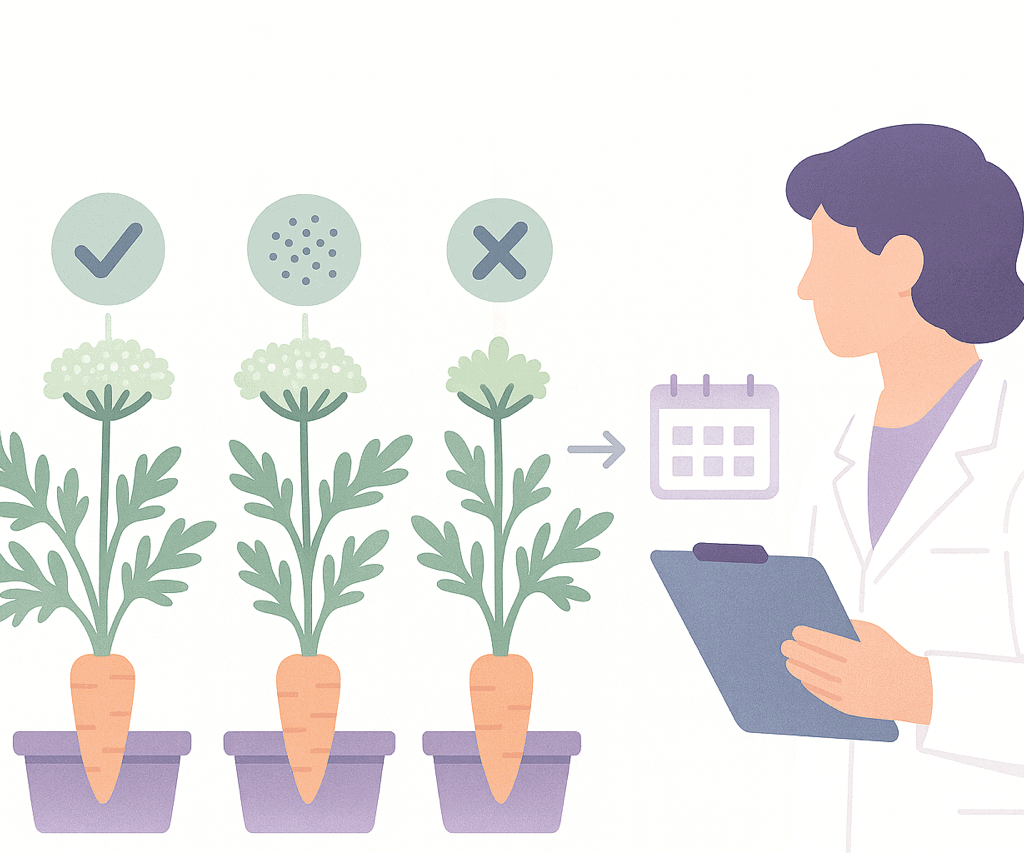
Carrot lines can exhibit strong variability in pollen viability and quantity. The selection and continuation of low-performing pollinator lines, combined with the biennial nature of carrots, leads to reproductive problems that are often detected late, making breeding progress inefficient and costly.
Amphasys enables the precise characterization of pollen viability, quantity, and proportion of aberrant cells for each line. Through systematic screening, breeders can identify and select high-performing pollinators early in the breeding process based on measurement data, thus effectively advancing the breeding process.
Challenge:
Susceptibility to Abiotic Stress
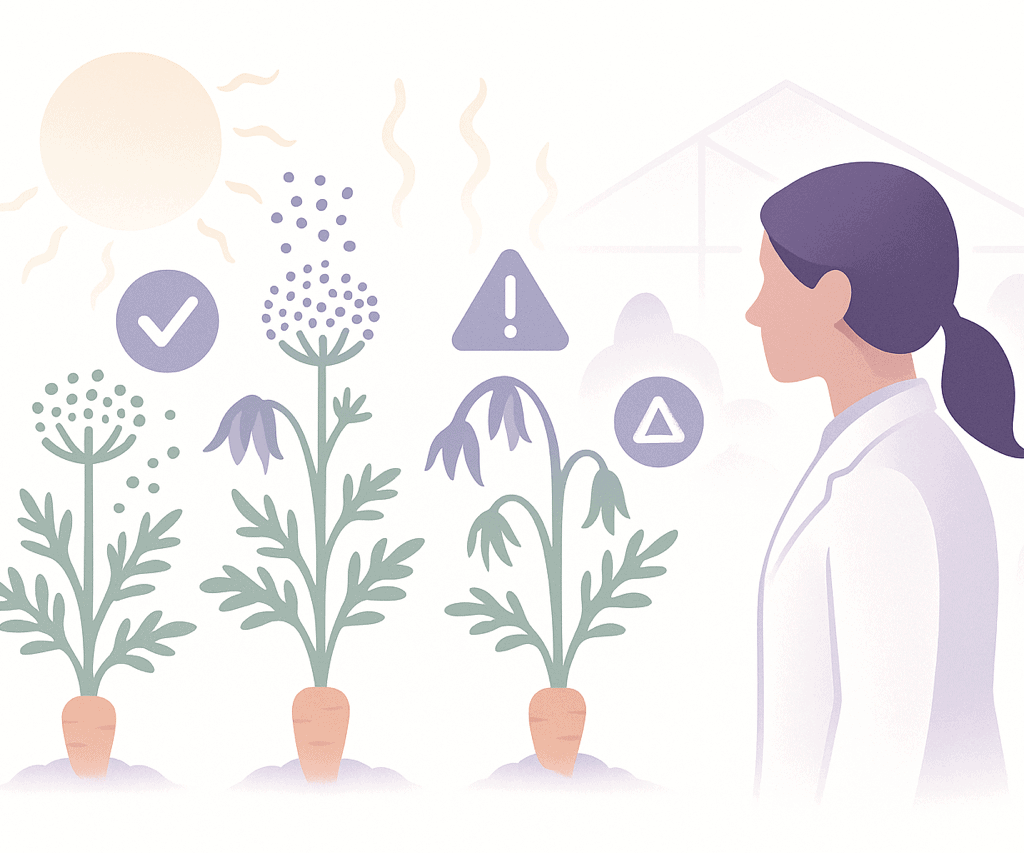
Heat and other abiotic stressors during flowering can severely impair pollen development in carrots. As a result, stress-prone lines exhibit drastically increased proportions of aberrant pollen cells – pollen that has died during maturation.
By measuring pollen viability, quantity, and the proportion of aberrant pollen cells using Amphasys technology, heat-sensitive or stress-prone lines can be identified early. This allows plant breeders to remove unsuitable lines from their breeding programs and seed producers to adapt their crop placement to the line-specific stress tolerance.
Challenge:
No Knowledge about Pollen Quantity
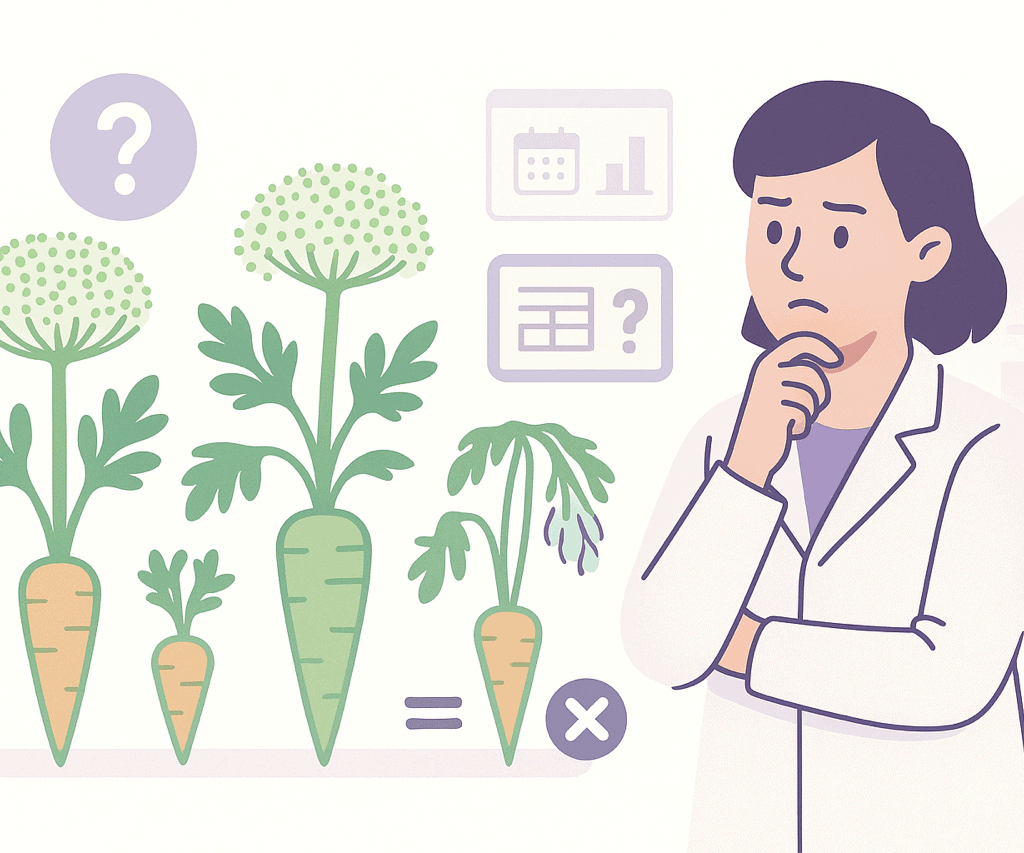
Not only does pollen viability vary between lines, but pollen quantity can also exhibit significant line-dependent differences. Conventional methods do not allow for an exact quantification of the number of pollen cells per umbellet or flower, leaving this crucial characteristic for plant reproduction undefined.
Amphasys quantifies the exact amount of pollen per umbellet or flower of each line and simultaneously measures pollen viability. This comprehensive data enables precise optimization of female-to-male ratio, improved flowering synchronization, and ultimately maximum seed production efficiency.
The Right Tools for Carrot Pollen Analysis
To support carrot breeders and seed production teams in making fast, data-driven decisions, Amphasys offers a powerful combination of pollen analyzers and corresponding crop-specific chips. Whether you work in the lab, greenhouse, or field, our tools are designed to deliver accurate, real-time insights into pollen quality—when and where you need them.
Ampha Z40
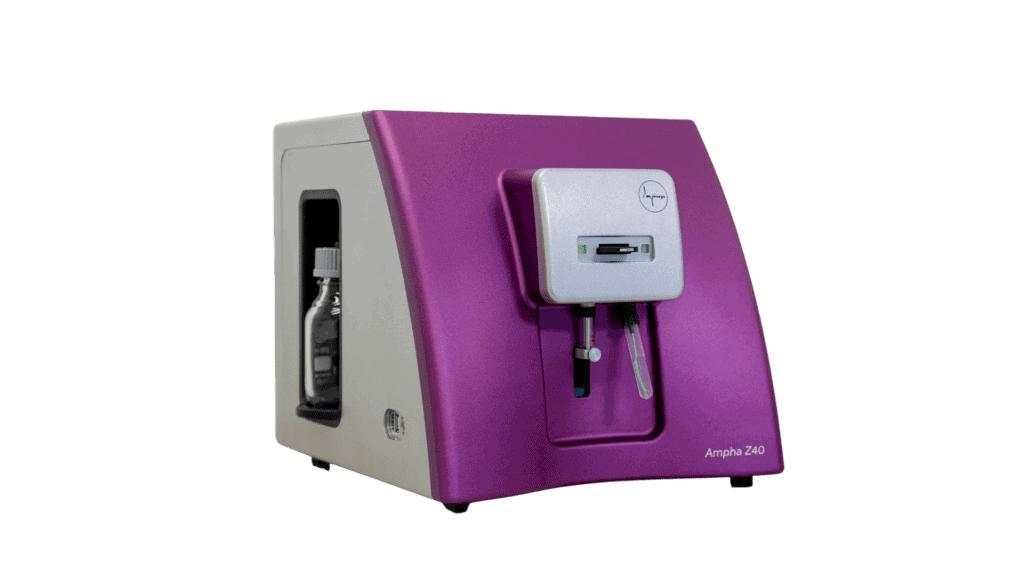
Designed for high-throughput and detailed research, the Ampha Z40 is ideal for all tasks from R&D to seed production. With full protocol flexibility, advanced analytics, and compatibility with all Amphasys measurement chips, it provides deep insights into pollen performance whether it be in breeding programs or seed production research.
Ampha P20

The portable, robust, and battery-powered Ampha P20 is ideal for remote measurements in greenhouse and field environments. It delivers real-time viability and concentration data, supported by automated data-analysis with the crop-specific carrot chip. Perfect for plant breeders and seed production teams who need fast and straightforward results without lab infrastructure.
AmphaChip Carrot
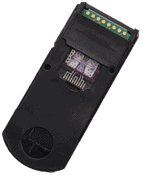
This chip, specifically designed for carrots (and other crops of the Apiaceae family like celery, fennel, parsley, dill), is calibrated to the size and properties of carrot pollen cells. It delivers precise and reproducible results on viability and concentration within one minute—whether you are screening lines in breeding or seed production. With its high sensitivity and plug-and-play handling, it is ideal for systematic screening in the lab, greenhouse, or field.
How Carrot Pollen Analysis Works in Practice
For plant breeders and seed producers pollen quality control is crucial for achieving efficient breeding processes and high seed set. Amphasys Pollen Analyzers allow you to integrate pollen quality monitoring directly into your workflows—before issues arise.
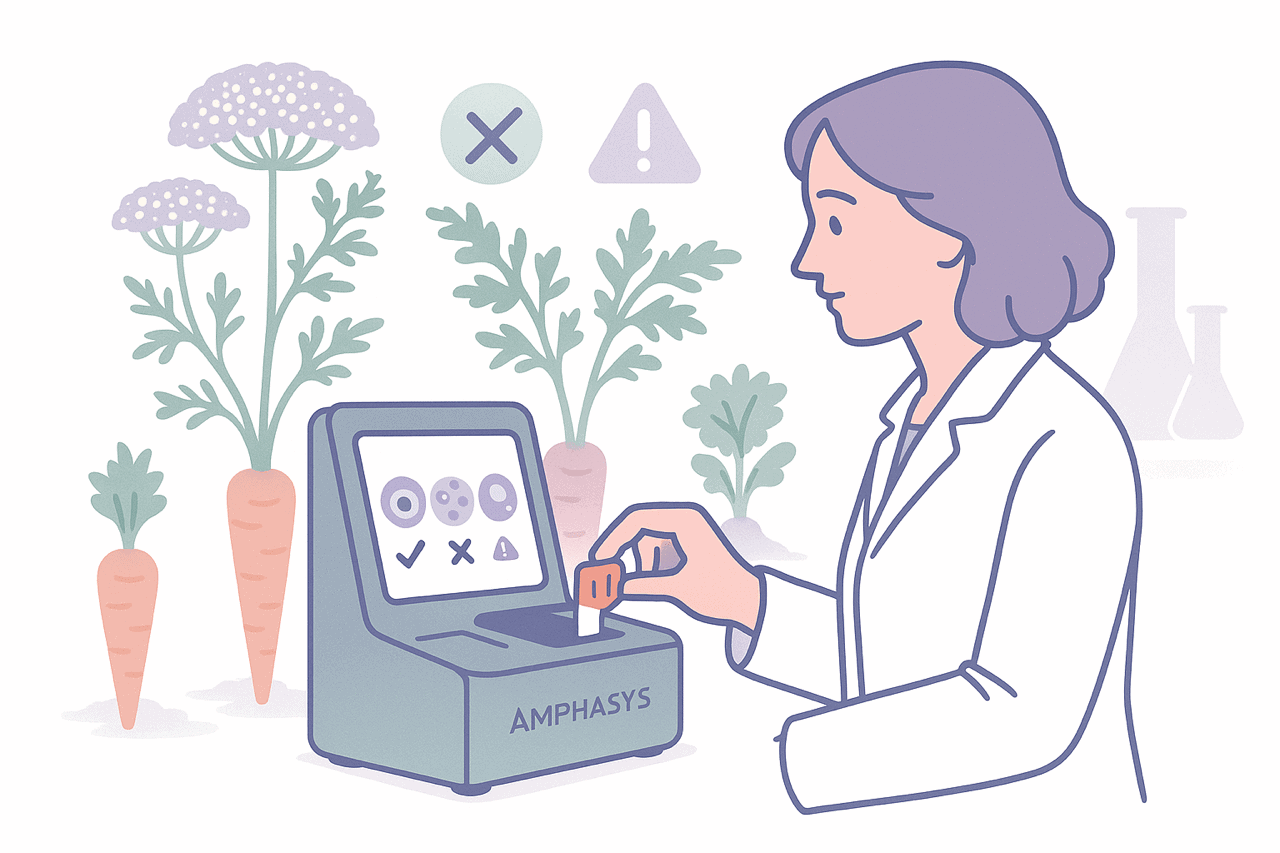
Breeding: Early Line Selection and Detection of Abiotic Stress
Characterization of Pollen Quality in Breeding
Reproduction success depends on the availability of viable pollen in sufficient quantity. However, a high variability among lines may be observed with significant differences in pollen viability, quantity and aberrant cell ratios.
Systematic screening of pollen quality allows breeders to:
- Characterize each line for pollen viability, quantity, and aberrant cell content
- Detect and identify lines which are heat-sensitive or prone to abiotic stress
- Select high-performing pollinator lines early in the breeding program
Seed Production: Reliable Pollination and High Seed Set
Avoid Poor Seed Set through optimized production processes
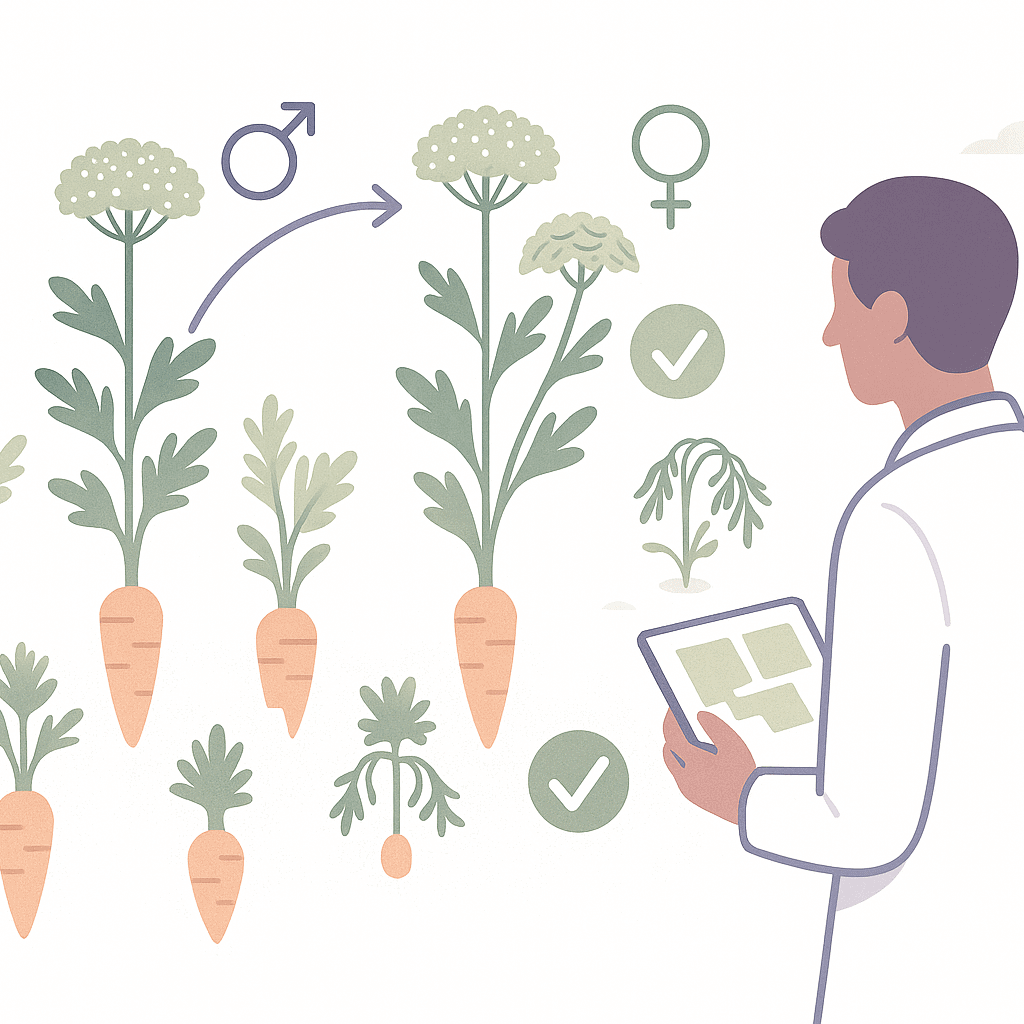
Efficient seed production relies on the right production parameters, the right crop placement, and a reliable planning. This is based on knowledge of the reproductive properties, which can be retrieved from systematic pollen quality screening.
Quantitative pollen quality data help seed producers to:
- Optimize female-to-male ratios
- Adjust crop placement according to line-specific stress tolerance
- Synchronize flowering of female and male lines
Bottom Line: Amphasys offers a technology for real-time pollen quality measurements. Expand your knowledge of your lines’ reproductive traits for better, data-driven results in plant breeding and seed production.

Identify stress-sensitive lines

Find best location for crop placement

Select best-performing pollinator lines

Accelerate breeding decisions
Learn More
Deepen Your Knowledge & Drive Better Results
Download expert resources to dive deeper into carrot pollen viability, measurement technology, and real-world results.
Video
Tracking Abiotic Stress
Insights into linking pollen quality with abiotic stress factors, optimizing planting windows, and applying biostimulants to protect pollen viability.
Video
Ampha P20 Pollen Analyzer
The Ampha P20 Pollen Analyzer is an ideal instrument for the measurement of a large number of samples of pollen and for routine measurements wherever they are needed.















Frequently Asked Questions
Which specific crops can be analyzed using the Carrot chip?
The Carrot chip is optimized for Daucus carota (carrot) but can be adapted for other Apiaceae family crops including celery (Apium graveolens), parsley (Petroselinum crispum), fennel (Foeniculum vulgare), and dill (Anethum graveolens). These umbellifer crops share similar pollen characteristics and reproductive mechanisms, making the impedance flow cytometry approach highly transferable within the family.
How does pollen count per umbellet impact carrot seed production?
Pollen quantity varies significantly between carrot lines, with some producing high counts but poor viability, while others show high viability with lower quantities. By quantifying exact pollen numbers per umbellet alongside viability data, producers can optimize female-to-male ratios precisely, improving fertilization efficiency and maximizing hybrid seed yields in this biennial crop.
Can I analyze stored carrot pollen samples?
Yes, stored carrot pollen can be analyzed effectively. The protocol requires a 5-minute equilibration time in AmphaFluid buffer (compared to 2 minutes for fresh pollen) and includes a rehydration step before measurement. Fresh pollen remains stable in buffer for over one hour, allowing flexible sampling schedules during field collection.
Why is heat stress detection critical for carrot breeding programs?
Heat sensitivity during flowering drastically reduces carrot pollen viability, often dropping below 20% while aberrant cell rates exceed 40%. Since carrots are biennial crops requiring two growing seasons per cycle, identifying heat-tolerant lines early through pollen analysis prevents investing two years in stress-sensitive genotypes that will fail under field conditions.
What's the optimal sampling protocol for carrot pollen analysis?
Collect pollen from 2-3 umbellets per sample (or 3-5 for critical lines) during midday to early afternoon when anthers are visibly open. Select fully developed umbels without brownish or aged flowers. Use the dry rack method to extract pollen before adding buffer, ensuring representative sampling of the genetic line's reproductive potential.
Talk to our Experts
Ready to improve your breeding efficiency or seed production yield? Our experts are here to help you find the right solution for your specific needs.