
Brassica Pollen Viability – The Key to Hybrid Breeding and Seed Production Success
Brassica Pollen Quality Analysis
Strengthen Brassica Breeding and Seed Production with Quantitative Pollen Analysis
To effectively Identify high-performing pollinator lines and optimize seed yield through label-free, single-cell impedance flow cytometry for brassica crops.
Brassica species — including vegetables such as broccoli, cabbage, and cauliflower, as well as oilseed rape (canola) — present diverse reproductive challenges. For instance, While each crop faces different constraints, they all share a common dependency on high pollen viability and sufficient pollen quantity for successful fertilization and consistent seed set.
Challenge:
Strong variation in pollen viability between lines

High variability in pollen quality across different breeding lines creates a major challenge. Furthermore, The selection of the wrong parental lines may only be discovered in seed productUltimately, ion. This leads to failed crosses, poor seed set, and consequently wasted breeding cycles. As a result, the selection process is not only inefficient but also costly.
Amphasys brings certainty to selection by systematically screening male lines for viability and quantity. The easily collected data enables breeders to select the highest-performing male lines early in the breeding process, thus ensuring efficient reproduction and high seed set in subsequent seed production.
Challenge:
Line-dependent susceptibility to abiotic stress

Brassica crops, like many other crops, are highly sensitive to heat and drought during flowering, when pollen cells are developing. As a result, These stressors can drastically reduce pollen viability and increase the ratio of aberrant cells. Specifically, These are pollen cells which were aborted during maturation and significantly reduce fertilization success.
The simple determination of viable and aberrant pollen cells of each line using Amphasys Pollen Analyzers helps to distinguish between stress-tolerant and stress-prone lines. This allows breeders to select the most robust lines and ensure successful reproduction even under challenging climatic conditions.
Challenge:
Optimizing production patterns with the right female-to-male ratio

Successful and efficient seed production relies on the optimal female-to-male ratio. However, ifIf reproductive characteristics are unknown, high potential can remain untapped due to too few or too many male lines. Without knowledge of pollen quantity, number of viable cells, and susceptibility to abiotic stress, optimization is like flying blind.
Amphasys Pollen Analyzers help optimize production patterns by simply measuring pollen quality. The determination of viable pollen and its quantity – also in relation to climatic conditions – allows for the selection of the optimal female-to-male ratio, thus achieving the optimal seed set.
The Right Tools for Brassica Pollen Analysis
To support brassica breeders and seed production teams in making fast, data-driven decisions, Amphasys offers a powerful combination of pollen analyzers and corresponding crop-specific chips. Whether you work in the lab, greenhouse, or field, our tools are designed to deliver accurate, real-time insights into pollen quality—when and where you need them.
Ampha Z40
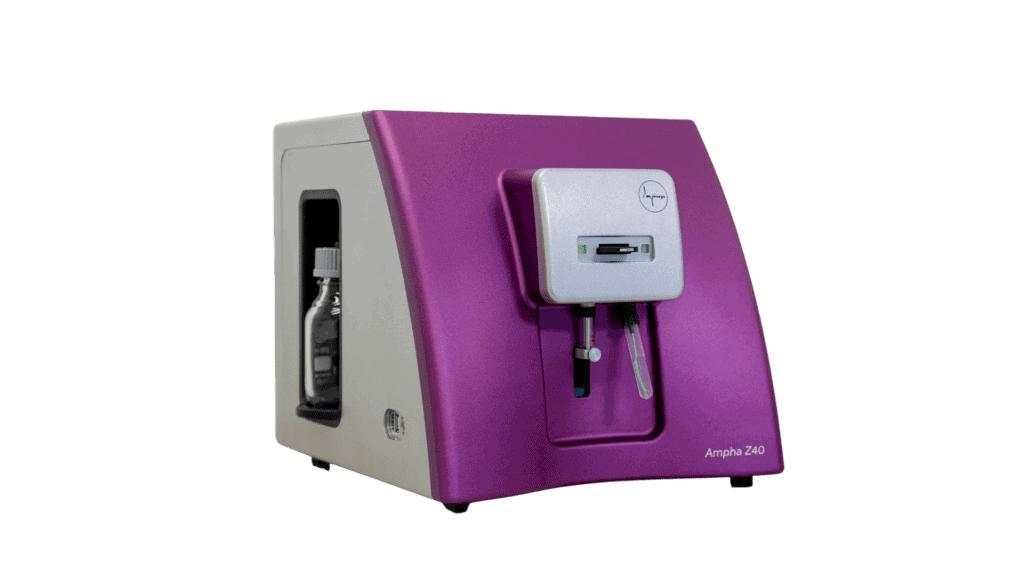
Designed for high-throughput and detailed research, the Ampha Z40 is ideal for all tasks from R&D to seed production. With full protocol flexibility, advanced analytics, and compatibility with all Amphasys measurement chips, it provides deep insights into pollen performance whether it be in breeding programs or seed production research.
Ampha P20

The portable, robust, and battery-powered Ampha P20 is ideal for remote measurements in greenhouse and fields. It delivers real-time viability and concentration results, supported by automated data-analysis with the crop-specific AmphaChip Brassica. Perfect for plant breeders and seed production teams who need fast and straightforward results without lab infrastructure.
AmphaChip Brassica
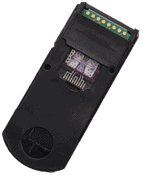
This chip, specifically designed for brassica crops, is calibrated to the size and properties of brassica pollen cells. Thanks to its automated data-analysis, it delivers precise and reproducible results on viability and concentration within one minute—whether you are screening lines in breeding or seed production. With its high sensitivity and plug-and-play handling, it is ideal for systematic screening in the lab, greenhouse, or field.
How Brassica Pollen Analysis Works in Practice
For plant breeders and seed producers pollen quality control is crucial for achieving efficient breeding processes and high seed set. Amphasys Pollen Analyzers allow you to integrate pollen quality monitoring directly into your workflows—before issues arise.
Breeding: Line Selection and Stress Tolerance Evaluation
Identifying the best performing male lines is critical in Brassica hybrid breeding. However, a high variability is often observed among lines with significant differences in pollen viability and aberrant cell ratios, even under identical conditions.
Systematic screening of pollen quality allows breeders to:
Screen lines in a fast and simple way for pollen viability and aberrant cell content
Identify the best performing pollinator lines with high viability and low aberrant cell rates
Evaluate abiotic stress sensitivity at the reproductive stage
Validate fertility restoration success in hybrid lines

Seed Production: Optimized Crop Placement and Production Patterns
Efficient seed production relies on the right production parameters, the right crop placement, and a reliable planning. This is based on knowledge of the reproductive properties, which can be retrieved from systematic pollen quality screening.
Pollen quality monitoring enables producers to:
Detect stress-affected lines and adjust crop placement accordingly
Ensure complete pollination through flowering synchronization
Enhance production efficiency through optimized female-to-male ratios
Reduce yield variability by using pollen quality as a key parameter

In summary, Amphasys offers a technology for real-time pollen quality measurement. Expand your knowledge of your lines’ reproductive traits for better, data-driven results in plant breeding and seed production.

Detect line-dependent variability in pollen viability

Select high-performing pollinators with high viability and low aberrant cells

Identify stress-prone lines by determining aberrant cells that were aborted during maturation due to abiotic stress

Select best locations for crop placement based on knowledge about reproductive behaviour under these conditions
Learn More
Deepen Your Knowledge & Drive Better Results
Download expert resources to dive deeper into brassica pollen viability, measurement technology, and real-world results.
Video
Tracking Abiotic Stress
Insights into linking pollen quality with abiotic stress factors, optimizing planting windows, and applying biostimulants to protect pollen viability.
Video
Crop-specific AmphaChip Brassica
Grit Schade talks about the new crop-specific chip with automated data analysis, robust sampling and sample preparation methods for pollen analysis.















Frequently Asked Questions
Which specific crops can be analyzed using the AmphaChip Brassica?
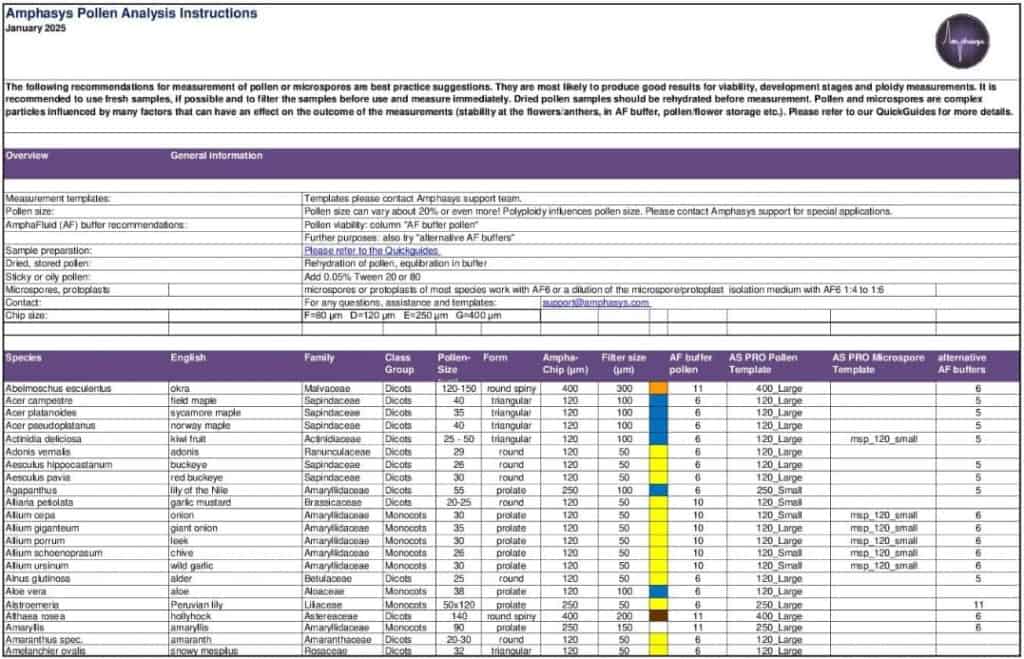
The system is optimized for a wide range of species within the family. This includes vegetable brassicas such as broccoli, cabbage, and cauliflower, as well as oilseed rape (canola). The dedicated AmphaChip Brassica with its automated data analysis allows for fast, easy and accurate measurement of pollen quality.
How does impedance flow cytometry compare to traditional staining or germination methods?
Unlike traditional methods that often require chemical staining or time-consuming germination assays (which can take hours), impedance flow cytometry is label-free and provides results in minutes - inccluding sample preparation. It analyzes the electrical properties of single cells, allowing for the screening of thousands of pollen grains instantly. This delivers statistically significant, quantitative data that is far more reproducible than manual microscopic observations.
Can I use the Ampha P20 pollen analyzer in the greenhouse or field?
Yes. The Ampha P20 is a battery-powered, portable cell analyzer designed specifically for on-site use. You can analyze pollen directly in greenhouses or fields, which is especially helpful to monitor pollen quality before pollination,
Is the system suitable for screening heat or drought tolerance in brassicas?
Absolutely. Pollen viability and the formation of aberrant cells are strongly influenced by environmental factors. By screening lines under different conditions (e.g., heat stress vs. control), breeders can objectively measure which genotypes maintain high fertility under stress. This makes the system a powerful tool for selecting climate-resilient lines for future breeding programs.
How much training is needed to use the Ampha P20?
Minimal. The system is designed to be intuitive and user-friendly. Most users can operate it confidently after a short training session. Automated data analysis and simple sample preparation make it accessible for lab technicians, breeders, and production staff and seasonal workers.
Talk to our Experts
Ready to improve your breeding efficiency or seed production yield? Our experts are here to help you find the right solution for your specific needs.