Yeast Cell Analysis
Viability, concentration, and metabolic state analysis – real-time in single-cell resolution.
SINGLE-CELL ANALYSIS FOR QUANTITATIVE YEAST CHARACTERIZATION IN REAL-TIME.
Yeast cell analysis is essential across biotechnology – from beer brewing and bioethanol production to pharmaceutical manufacturing. As one of the most frequently used host organisms, yeast requires reliable information about cell viability, concentration, and metabolic state for controlling and optimizing fermentation processes.
Precise knowledge of the yeast cell state at each stage of the process enables the control and maintenance of optimal cell conditions. Therefore, effective yeast fermentation monitoring requires a method that delivers real-time results at single-cell level. Amphasys’ impedance flow cytometry (IFC) achieves exactly this. Without calibration, staining, or incubation, it provides detailed results on viability, cell count, and metabolic status — allowing for faster decision-making at every stage of fermentation.
The Hidden Challenges in Yeast Fermentation
Yeast fermentation is a well studied process – yet better analytical method allow further improvements. Here are four challenges that impact process outcomes across industries:
01
Viability Is Not Binary
A cell can appear intact under a microscope or grow on a plate, yet already be metabolically compromised. Conventional methods like methylene blue staining or plating cannot differentiate between fully active cells and cells in a stressed or declining state. As a result, this leads to inaccurate pitching rates and unpredictable fermentation performance.
Metabolic State Remains Invisible
Yeast cells transition through distinct metabolic growth stages – lag phase, exponential growth, stationary phase, and decline. Consequently, these transitions directly affect productivity, by-product formation, and product quality. However, bulk measurements may correlate with viability but provide no information about the metabolic state of the cell population at the time of measurement.
02
03
Slow Methods, Slow Decisions
Plating requires 24–72 hours of incubation. Staining-based methods require sample preparation and counting, introducing subjectivity and delay. As a consequence, in time-sensitive processes like propagation, inoculation/ pitching, or fed-batch fermentation, results arrive too late to guide real-time process adjustments.
One Metric Is Not Enough
OD600 measures turbidity, not cell health. Plating counts colony-forming units but ignores non-culturable cells. Staining gives a binary dead/alive answer. In other words, none of these methods provide a simultaneous, multi-parametric view of cell count, viability, and physiological state from a single measurement.
04
Comparison of methods for yeast analysis
Different analytical methods address different needs. In particular, this overview highlights the specific requirements that Impedance Flow Cytometry fulfills.
| Requirement | OD600 Spectrophotometry | CFU plating Colony counting | Methylene blue Manual staining | Capacitance probes In-line, real-time | Amphasys Impedance Flow Cytometry Label-free, single-cell |
|---|---|---|---|---|---|
| Cell viability | No Turbidity only | Culturable only Misses VBNC cells | Binary Dead / alive | Trend Bulk viable biomass | Quantitative Label-free, single-cell |
| Cell count | Indirect Arbitrary units | Yes After 24–48 h | Manual / semi-automated Hemocytometer | Trend only | Direct Each cell counted individually |
| Metabolic state | No | No | No | No | Yes Lag, exponential, stationary, decline |
| Cell integrity | Intact | Intact Plated on agar | Altered Staining required | Intact Non-invasive | Intact Cells fully reusable |
| Time to result | < 1 min | 24–48 hours | 15–30 min | Real-time | < 1 min |
| Operator dependency | Low | High | High (manual) Low when automated | Low | Low Reproducible results |
| Sample preparation | Dilution + calibration Requires calibration per strain | Dilution + plating + incubation | Staining + microscopy | Calibration In-line | Dilution + filtration Label-free |
| Detects stressed cells | No | No | Limited May misclassify as viable | No | Yes Impedance signature changes |
Single-Cell Quantification Within A Minute
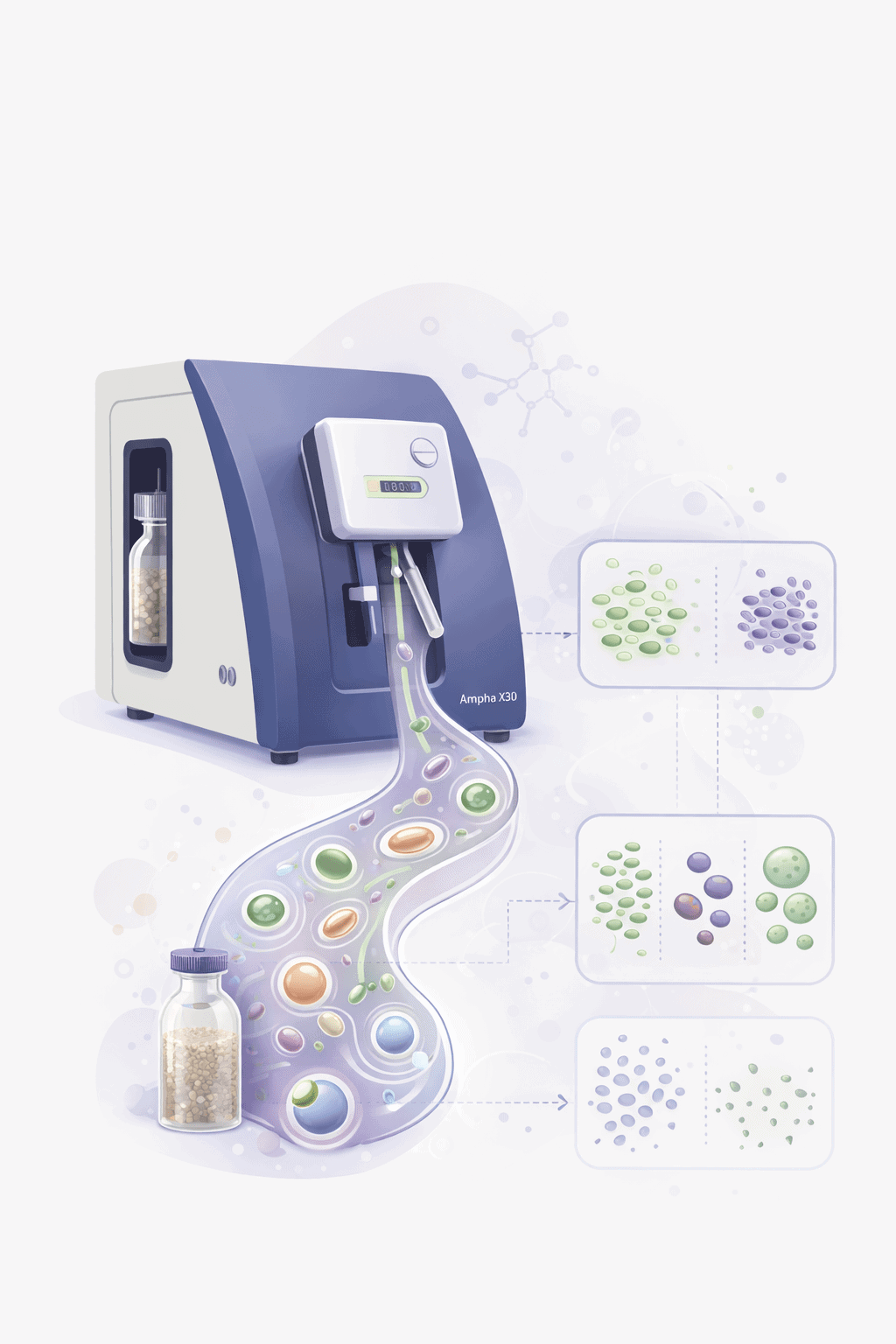
Impedance Flow Cytometry measures the electrical properties of individual yeast cells as they pass through a microfluidic channel. Each cell generates a unique impedance signal — reflecting its size, membrane integrity, and intracellular properties.
As a result, this is the only method in the comparison above that delivers viability, cell count, and metabolic state information simultaneously — without dyes, staining, or incubation.
This enables:
- Simultaneous determination of viability, concentration, and metabolic growth stage
- Differentiation of lag, exponential, stationary, and decline phase populations
- Detection of stressed or compromised cells
- Measurements in turbid fermentation media without interference
- Immediate measurement results — enabling real-time process decisions
- Minimum sample preparation: no staining, no incubation, no calibration
- Non-invasive method: no cell alteration, no cell stress
- Reproducible, operator-independent data ready for documentation
- GMP-ready
Impedance Flow Cytometry Workflow: From Sample to Decision
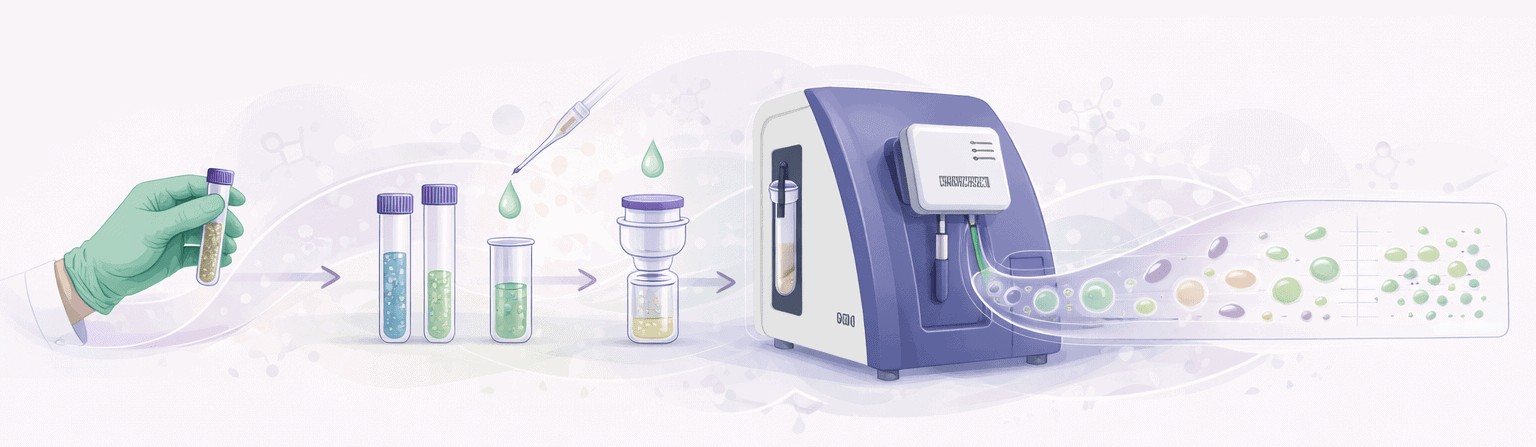
Take a cell sample
Optional dilution
Addition of conductive buffer
Filtration into sampling tube
Load into Ampha X30
Automated measurement
Data analysis + Result
Recommended System for Yeast Applications
Quantitative impedance-based yeast cell analysis enabled by the Amphasys cell analyzers and the right microfluidic chip:
Ampha X30
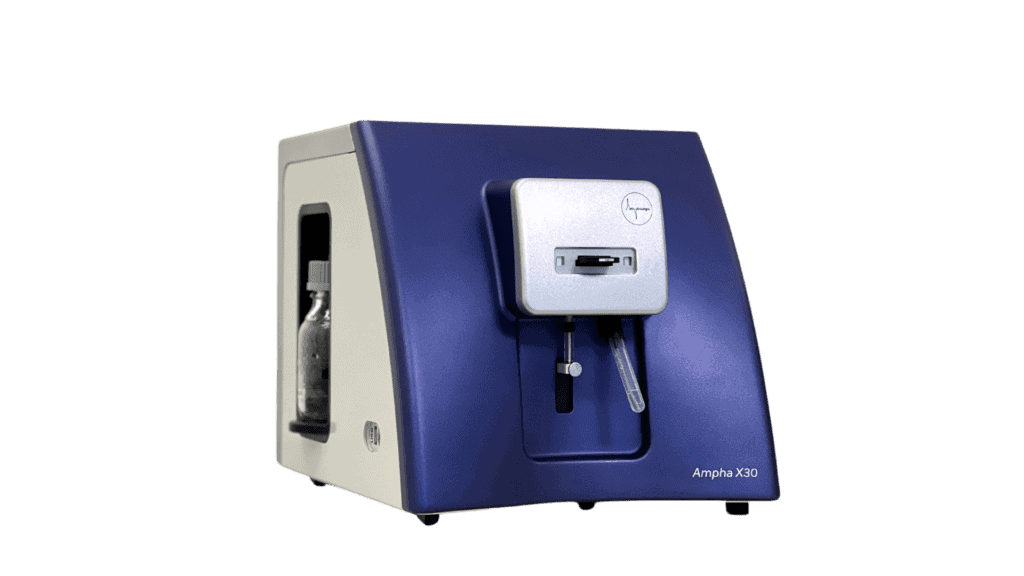
Specifically, the Ampha X30 is optimized for yeast applications and supports:
- High-resolution single-cell analysis
- Determination of yeast viability, cell count, and cell state
- Rapid sample-to-result workflow without stains, markers, and incubation
- Full flexibility in measurement protocol, gating strategy and data analysis
- Ideal for real-time bioprocess monitoring and cell culture analysis
Ampha X10
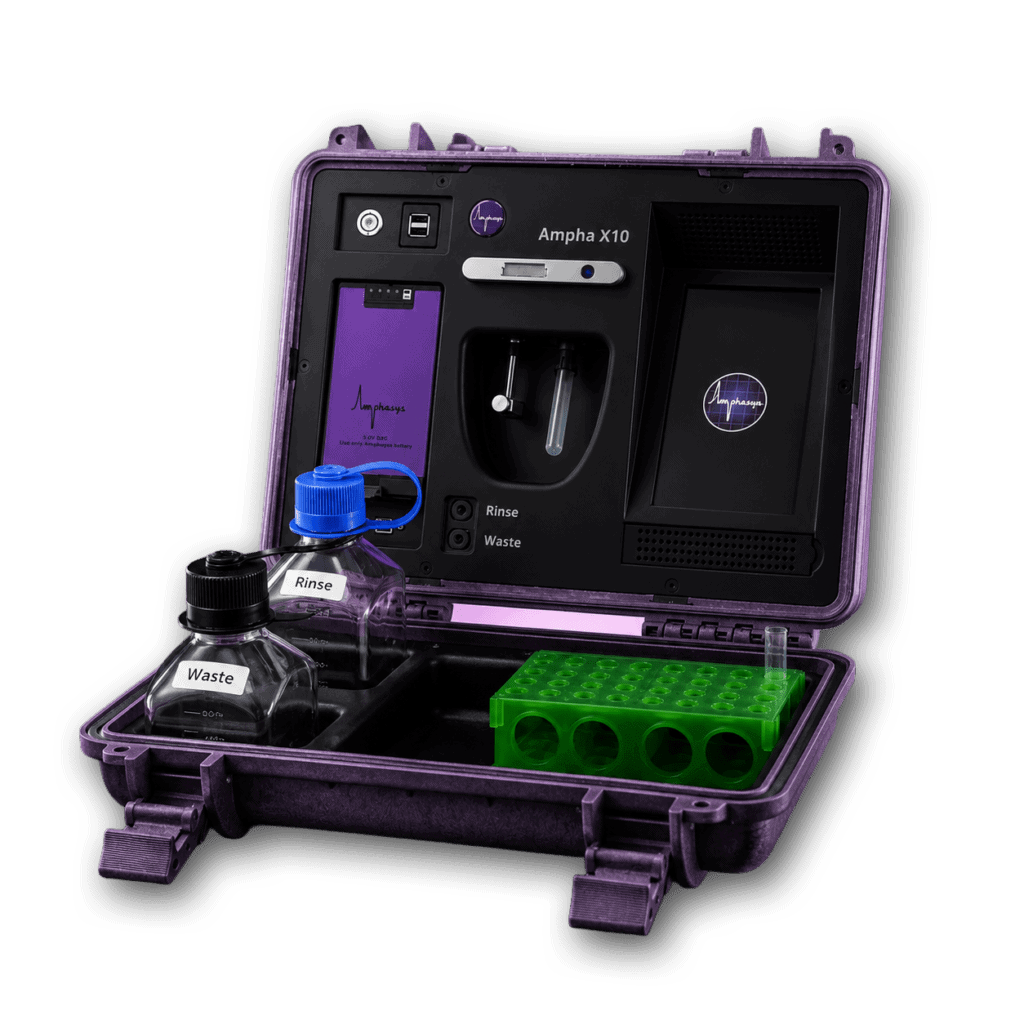

The portable Ampha X10 is dedicated to brewing yeast (Saccharomyces) and supports:
- Portable, battery-powered single-cell analysis
- Determination of viability, concentration and exponential growth
- Ready-to-pitch quantity calculated on the device
- Label-free workflow without stains, markers, or incubation
- Results in about a minute, on the brewery floor
AmphaChip
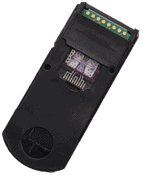
In addition, the microfluidic AmphaChip is tailored to specific cell sizes to ensure maximum sensitivity.
For yeast measurements:
- 30 µm channel size (optimized for yeast cell diameter)
- No interference from cell debris or turbidity
- Determination of cell size, membrane capacitance, and cytoplasmic conductivity
- High sensitivity even at low cell concentrations
- High throughpout for high statistical power
Case Studies
Case Study 1:
Beer Fermentation Monitoring
Setup: A 7-day beer fermentation was monitored using the Ampha X30. Cell viability and concentration were measured daily. The scatter plots show the shift from aerobic to anaerobic metabolism over the fermentation period.

Key Findings: In particular, IFC detected the metabolic transition from aerobic to anaerobic activity (visible as a leftward shift in the scatter plot from day 1 to day 3). Dead and viable cells were clearly separated. Furthermore, the metabolic state transition provided actionable insight into fermentation progression that OD600 or plating cannot deliver.
Relevance: Brewing process optimization, fermentation monitoring, yeast propagation control.
Case Study 2:
Real-Time Fermentation Monitoring
High-Resolution Monitoring Over 17+ Hours
Setup: Yeast fermentation was monitored at 10-minute intervals over more than 17 hours. Samples were measured without dilution or addition of dyes or markers.

Key Findings: After approximately 11 hours, the viable population decreased significantly – even though overall cell density continued to increase. This discrepancy would have been invisible with OD600 alone. The data exposed the lag phase, early exponential phase, and the onset of viability loss.
Relevance: Fermentation process control, early deviation detection, propagation timing optimization.
Additional Yeast Applications
Yeast Propagation & Pitching

Quantitative enumeration and viability assessment prior to inoculation for consistent pitching rates and improved batch reproducibility in beer fermentation.
Strain Comparison & Process Development

Objective comparison of yeast strains under defined stress, media, or growth conditions to support strain selection and process optimization.
Recombinant Protein & Biomanufacturing

Monitoring cell health during expression of recombinant proteins, enzymes, or metabolites in Pichia pastoris, S. cerevisiae, and other host systems.
QC, Batch Documentation & PAT

Operator-independent, reproducible viability and concentration data for batch records, regulatory documentation, and PAT integration
Learn More
Deepen Your Knowledge & Drive Better Results
Download expert resources to dive deeper into Label-free single-cell analysis for quantitative process control in microbial bioprocessing.
Video
Monitoring of Fermentation Processes by Means of IFC
Although beer brewing is one of the oldest fermentation processes, optimization is still possible. This session shows how Amphasys technology monitors yeast viability and concentration across fermentation cycles — ensuring consistent quality and efficient yeast reuse.
Video
Precision Fermentation: A Sustainable Cocoa Butter Alternative
Nils Thieme from Planet A Foods explains how his team used Amphasys technology to optimize precision fermentation of oleaginous yeasts — producing a cocoa butter alternative with over 90% reduced emissions.
Video
Closing the Loop: Automated Real-Time Monitoring
Amphasys CTO Marco Di Berardino presents automated, high-content microbial analysis integrating on-line sampling with label-free single-cell measurements for continuous tracking of viability, concentration, and metabolic status.







Frequently Asked Questions
Can IFC differentiate between metabolic growth stages in yeast?
Yes. The impedance signature of yeast cells changes as they transition between lag phase, exponential growth, stationary phase, and decline. Specifically, these shifts are caused by measurable changes in membrane capacitance and cytoplasmic conductivity. IFC detects these transitions in real time from a single measurement – information that OD600, plating, or methylene blue staining cannot provide. As a result, this makes it possible to correlate the physiological state of the population with process parameters such as dissolved oxygen, substrate concentration, or ethanol levels.
How does impedance-based counting compare to methylene blue staining?
Methylene blue staining provides a binary dead/alive classification based on dye exclusion. However, the result depends on subjective visual interpretation under the microscope and becomes unreliable at high cell densities. IFC measures each cell individually and quantitatively – delivering not just viability and cell count, but also information about cell size and metabolic state. Results are operator-independent and available in under 60 seconds, compared to 15–30 minutes for manual staining and counting. Importantly, IFC can identify stressed or metabolically compromised cells that would be misclassified as “viable” by methylene blue.
Which yeast strains can be measured?
The Ampha X30 has been used with a broad range of yeast species commonly found in research and industrial bioprocessing. This includes Saccharomyces cerevisiae (laboratory and industrial strains), Saccharomyces pastorianus (lager brewing), Pichia pastoris / Komagataella phaffii (recombinant protein production), Kluyveromyces marxianus, Yarrowia lipolytica, and others. Measurement protocols can be adapted for specific strains. Contact us for strain-specific application notes or to discuss your particular organism.
What sample preparation is required?
Sample preparation is minimal. A cell sample is taken from the culture, optionally diluted if the concentration is very high, and mixed with a conductive measurement buffer. Subsequently, after filtration the prepared sample is loaded into the Ampha X30. The entire process from sampling to result takes 2 to 3 minutes.
How does the system handle high-density yeast cultures?
The Ampha X30 is optimized for specific concentration ranges to ensure accurate single-cell resolution. For high-density cultures – common in late-stage fermentation or propagation – a simple dilution and filtration step is performed before measurement. No additional reagents, staining, or incubation are required.
Is the analysis method GMP-ready?
Yes. The method is GMP-ready and the software is compliant to 21 CFR11. The method needs to be validated for the specific application.
Can the Ampha X30 be integrated into automated or PAT workflows?
Yes. The Ampha X30 provides structured data output that can be exported for integration into process analytical technology (PAT) frameworks, LIMS, or custom data pipelines. Specifically, measurement data includes cell count, viability, size distributions, and impedance parameters in standardized formats suitable for batch records, trending, and automated reporting. For fully automated in-process monitoring concepts, refer to the Amphacademy 2025 session on closed-loop microbial monitoring.
Talk to a Bioprocessing Expert
Ready to improve your fermentation monitoring with real-time, label-free cell analysis? Our experts are here to help you find the right solution for your specific application.